Explore Cyprus with Our Interactive Map

Explore our top stories and discover ideas worth your time.

Flowers Bloom Without Leaves in Cyprus Autumn Woods

Flowers Bloom Without Leaves in Cyprus Autumn Woods

Picture this: as the summer heat fades in Cyprus, delicate white flowers suddenly pop up from the bare ground in the mountains, like little surprises from nature. Colchicum troodi is one of the island's special plants, blooming in fall and hiding a few secrets that make it both beautiful and a bit mysterious. But why does it flower "naked," and what ancient stories does it carry? www.inaturalist.org What Exactly Is This Quirky Cypriot Bloom? Colchicum troodi or “Troodos’s Naked lady” is a small, wild flowering plant that's unique to Cyprus — meaning it grows nowhere else in the world. It's a type of perennial that sprouts from an underground bulb-like structure called a corm, and it belongs to the Colchicaceae family, which includes other autumn-blooming flowers. Think of it as Cyprus's own version of an autumn crocus, adding a touch of color to the landscape when most plants are winding down. How Did This Flower Emerge from Cyprus's Ancient Past? The story of Colchicum troodi goes back to 1865, when Austrian botanist Theodor Kotschy discovered it during his travels across Cyprus and named it after the Troodos Mountains where he found it. The genus name "Colchicum" comes from Colchis, an ancient region on the Black Sea coast in what's now Georgia, tied to Greek myths about the sorceress Medea who…

Read more

Cyprus Beaches And Water Sports

Cyprus Beaches And Water Sports

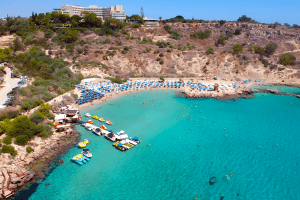
Cyprus ranks as the third largest island in the Mediterranean and boasts some of Europe's finest coastal areas, with 60 beaches marked with the Blue Flag, an international award in the field of ecology and environmental protection given to beaches and marinas. In practice this means incredibly clean beaches and crystal clear water. simcorner-com The eastern coast stands particularly renowned for its fantastic assortment of beaches considered by many to be the best on the entire island, with Ayia Napa and Protaras regions lined by glorious stretches of golden sand. The island's beaches offer something for everyone, from lively party atmospheres to secluded family-friendly coves, all benefiting from Cyprus's 340 days of sunshine annually and sea temperatures reaching 27 degrees Celsius during summer months. The Famous Beaches of Ayia Napa Nissi Beach stands as probably the most popular beach in Cyprus, stretching 500 meters with white sand and turquoise water. The water after entering remains quite shallow for a long distance and stays crystal clear with minimal waves. Nissi Beach got its name from an islet not far from the coast that visitors can reach when the tide is low in winter and spring, as a sand walkway unveils leading from the beach to the small island inhabited by low-level shrubs and pretty plants. atlanticahotels-com The beach has earned Blue…

Read more
Seasons of Cyprus

Seasons of Cyprus

Cyprus experiences four distinct seasons, each with dramatic differences across its varied landscape. The same day that sees snow on Mount Olympus can bring 20-degree sunshine to coastal beaches just an hour away. This climate diversity creates a unique Mediterranean island where visitors can ski in the morning and swim in the afternoon. Understanding these seasonal patterns helps explain both the natural beauty and the agricultural traditions that define Cyprus. royalcaribbean.com The island enjoys roughly 300 days of sunshine annually, with temperatures influenced heavily by elevation. Coastal areas maintain mild winters and hot summers, while the Troodos Mountains create their own weather patterns. Average annual temperature along the coast reaches 26 degrees Celsius during the day and 17 degrees at night. The warm season lasts eight months, from April through November, making Cyprus one of the warmest locations in the Mediterranean region of the European Union. Winter and the Unexpected Snow Season Winter in Cyprus runs from December through February, but coastal residents often consider it autumn by northern European standards. Average temperatures along the coast hover around 16 to 17 degrees Celsius during the day, with nights cooling to 5 to 7 degrees. Rain falls occasionally, concentrated in these winter months which receive about 60 percent of the annual precipitation. Despite the rain, sunshine remains abundant with an average…

Read more