Explore Cyprus with Our Interactive Map

Explore our top stories and discover ideas worth your time.

Omodos – Traditional Village & Monastery

Omodos – Traditional Village & Monastery

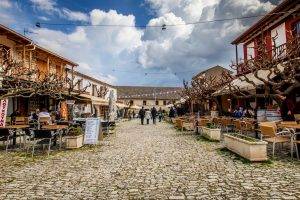
Omodos is a historic mountain village in Cyprus’s Troodos range, known for its Byzantine monastery, traditional architecture, and wine-making heritage. Located 42 kilometers northwest of Limassol at an elevation of 800 meters, the village lies within the Krasochoria district, the traditional wine-producing region of Cyprus. Its location in this wine heartland has shaped the local economy and identity for centuries. Shutterstock-com The village centers around a large cobblestone square, possibly the largest in Cyprus at 3,000 square meters, dating back to 1910. Stone houses with red-tiled roofs, wooden balconies, and flower-filled courtyards line narrow streets that wind through the settlement. The architecture reflects a careful balance between preservation and modern use, with many traditional homes now serving as guesthouses, wine cellars, and small museums. Globeguide-com Historical Foundation According to local legend, the village formed around a miraculous discovery. Residents from the neighboring villages of Ano and Kato Koupetra, which no longer exist, observed a mysterious fire appearing in the bushes at night. When they investigated at dawn, they found no trace of fire. After this event repeated over several nights, they excavated the site and uncovered a small cave that contained a wooden cross. A chapel was built above the cave to house the sacred relic, and this structure became the foundation of the Monastery of the Cross. Orthphoto-net The…

Read more

Cyprus Olympic Museum Nicosia Sports History

Cyprus Olympic Museum Nicosia Sports History

The Cyprus Olympic Museum preserves the athletic heritage of the island. It exhibits 400 artifacts that document Cyprus's participation in the Olympic Games and international sporting competitions since 1980. cyprushighlights-com The museum occupies all three floors of the Olympic House, the headquarters of the Cyprus Olympic Committee, located at 21 Amfipoleos Street in Nicosia. The Olympic House opened on September 16, 2006, in a ceremony attended by President Tassos Papadopoulos and International Olympic Committee President Jacques Rogge. The three-story building covers 7,500 square meters and cost 5.63 million Cyprus pounds to construct. The Cyprus Olympic Museum began operations in 2012, six years after the building's inauguration. The facility houses almost every sporting federation on the island, including sports not on the Olympic schedule. This centralized location makes the Olympic House a hub for athletic administration and a resource center for Cyprus's sporting community. The museum component transforms the building from merely an administrative center into an educational space that celebrates Cyprus's Olympic journey. Historical Background The Cyprus Olympic Committee was founded on June 10, 1974, and gained membership in the International Olympic Committee in 1979. Before this recognition, Cypriot athletes competed internationally under the Greek flag. Notable Cypriots who represented Greece include Ioannis Frangoudis, who won three shooting medals at Athens 1896, and Aristidis Konstantinidis, who claimed cycling gold at…

Read more
Rare Birds of Cyprus Flamingos Herons Storks

Rare Birds of Cyprus Flamingos Herons Storks

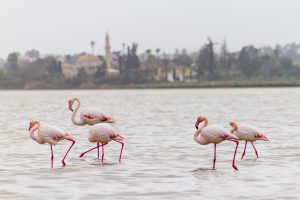
Cyprus sits at the heart of one of the four major migration flyways between Europe and Africa. This strategic location makes the island a critical stopover point for millions of birds traveling between continents each year. The position roughly 50 miles south of Turkey and 60 miles west of Syria places Cyprus directly in the path of birds moving between breeding grounds in Europe and wintering areas in Africa. Among the most spectacular visitors are greater flamingos, multiple heron species, and the elusive black stork. Shutterstock-com These rare birds depend on Cyprus's wetlands, salt lakes, and coastal areas for rest and feeding during their long journeys. The island's network of protected sites provides essential habitat that supports not just individual birds but entire populations of species that face threats throughout their range. More than 400 bird species have been recorded in Cyprus, with the majority occurring as regular passage migrants. Salt Lakes and Ancient Routes Cyprus's salt lakes hold special importance for migratory birds. The Larnaca Salt Lake complex consists of four interconnected lakes with a total surface area of 2.2 square kilometers, making it the second largest salt lake system in Cyprus after Limassol's Akrotiri Salt Lake. These lakes have been declared Ramsar Wetlands of International Importance, EU Natura 2000 sites, Special Protected Areas under the Barcelona Convention, and…

Read more