Explore Cyprus with Our Interactive Map

Explore our top stories and discover ideas worth your time.

Teucer of Salamis

Teucer of Salamis

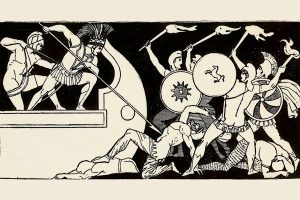
Teucer of Salamis was a legendary Greek hero from the Trojan War, famed as a skilled archer and half-brother to the mighty Ajax. Banished from his homeland after the war, he journeyed to Cyprus under divine guidance and founded the ancient city of Salamis, naming it after his lost island home. His tale of exile, resilience, and renewal weaves into Cyprus's cultural fabric, turning personal tragedy into a founding myth that still inspires thoughts on identity and fresh starts. The Legendary Archer Who Bridged Worlds Think of Teucer as more than just a side character in epic tales - he's a bridge between the chaos of war and the hope of new beginnings. In Greek mythology, he's the son of King Telamon of Salamis Island and Hesione, a Trojan princess captured during a raid on Troy long before the famous war. This mixed heritage made him a natural outsider: Greek by upbringing but with Trojan blood, nephew to King Priam and cousin to Hector and Paris. greeklegendsandmyths-com As an archer rather than a frontline brute, Teucer embodied precision and strategy, fighting from behind his brother's massive shield. But his real legacy lies in Cyprus, where he didn't conquer but created, founding Salamis as a haven for exiles like himself. It's a story that captures the island's essence - a melting…

Read more
Sanctuary of the Great Mother (Avdimou)

Sanctuary of the Great Mother (Avdimou)

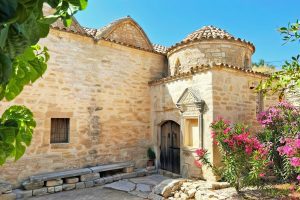
A cult site dedicated to the prehistoric fertility goddess, showing the continuity of worship from pagan fertility rites to later religious forms. facebook-com The Sanctuary of the Great Mother in Avdimou represents a timeless spiritual hub in Cyprus, where ancient veneration of a fertility goddess evolved into Christian devotion to the Virgin Mary. Located in the rural village of Prastio Avdimou near the south coast, this site embodies the island's layered religious history, blending prehistoric fertility cults with Byzantine and medieval Christian practices. It highlights Cyprus's role as a crossroads of civilizations, where pagan rites centered on life, birth, and renewal transitioned seamlessly into the worship of Panagia, the "All-Holy" mother figure, fostering a enduring tradition of pilgrimage and miracle-seeking that persists today. A Cult Site of Continuity The Sanctuary of the Great Mother, embodied in the Church of Panagia Diakinousa in Prastio Avdimou, stands as a testament to Cyprus's spiritual evolution, nestled in a serene valley amid olive groves and rolling hills. This site, spanning less than a hectare but rich in symbolic depth, draws from prehistoric roots where fertility goddesses were honored for their power over life and nature. In ancient times, Cypriots revered a "Great Goddess" depicted in cruciform statues symbolizing childbirth, with hundreds of artifacts dating to 3000-2500 BC found across the island. The Avdimou area,…

Read more

Cyprus Farming Rhythms and Seasonal Traditions

Cyprus Farming Rhythms and Seasonal Traditions

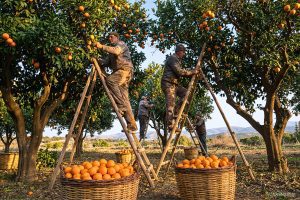
Cyprus agriculture follows ancient patterns shaped by Mediterranean climate and generations of farming wisdom. The island produces diverse crops throughout the year, from citrus fruits and potatoes to grapes and olives. Over 320 sunny days annually create ideal conditions for cultivation, though water scarcity challenges farmers who consume 70% of the island's resources for irrigation. nano-banana Small family farms dominate the landscape despite modernization. Agriculture contributes roughly 2% to GDP while employing 7% of the workforce. The sector supports rural communities and preserves village life across mountainous terrain. Traditional methods blend with contemporary techniques as Cyprus maintains its reputation for quality Mediterranean produce. Ancient Roots Shape Modern Agriculture Farming traditions in Cyprus stretch back to the 2nd millennium BC, with archaeological evidence of olive pressing from the 13th century BC. The island cultivated grains, vines, and olive trees for millennia. Ottoman rule introduced land classifications that persisted through British colonial administration until independence in 1960. nano-banana The Church of Cyprus emerged as the largest private landowner, controlling an estimated 5.8% of arable land before 1974. British authorities reformed ownership laws in 1946, allowing unrestricted private land ownership for the first time. Agricultural cooperatives formed in 1909 after farmers toured Britain and Germany, studying their systems. Today, farming faces mountainous terrain that complicates mechanical cultivation. The government promotes drought-resistant crops and…

Read more