Explore Cyprus with Our Interactive Map

Explore our top stories and discover ideas worth your time.

Ancient Enkomi Cyprus Bronze Age City

Ancient Enkomi Cyprus Bronze Age City

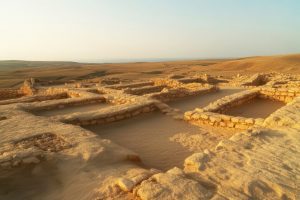
On the eastern coast of Cyprus near today’s Famagusta, Enkomi was one of the most important Bronze Age cities in the Mediterranean. For over 600 years, this walled city controlled much of the region’s copper trade and acted as a key link between the Near East, Egypt, and the Aegean world. visitnorthcyprus-com Enkomi was a major Late Bronze Age settlement, occupied from around 1650 BCE to 1050 BCE. The city grew near a Mediterranean inlet, which has since filled with silt, leaving the ruins several kilometers from the sea. At its height, between 1340 and 1200 BCE, Enkomi was one of Cyprus’s main centers for copper production and export. Historical Background Enkomi was first settled in the Middle Bronze Age, around 2000 BCE, when Cyprus traded with Egypt’s Middle Kingdom. Activity at the site slowed during the 17th and 16th centuries BCE, possibly because Hyksos control in Egypt disrupted trade. mail-com The city became important again after 1550 BCE, when Egypt’s Eighteenth Dynasty reunited the country and started importing copper again. This period marked the start of Enkomi’s rise as a major urban center. During the Late Bronze Age, Cyprus was part of a wider trade network across the eastern Mediterranean. Cities like Ugarit, Byblos, Sidon, and Tyre became regular trading partners, and by 1400 BCE, Mycenaean Greeks also developed…

Read more

Artisanal and Industrial Fishing Cyprus

Artisanal and Industrial Fishing Cyprus

kiprinform.com Fishing in Cyprus faces significant external pressures and rising socio-economic concerns rather than a simple quiet balance. Small-scale artisanal fishers still work close to shore using selective, traditional methods, while a limited number of industrial operations supply markets with consistency and volume. Both exist within the same narrow waters, governed by strict regulation and ecological limits. Understanding this balance explains not only how seafood reaches Cypriot tables, but also how culture, sustainability, and modern life intersect around the sea. An island that learned to read the sea Cyprus has always depended on the Mediterranean in practical ways. Long before engines or harbours, coastal communities relied on observation, memory, and seasonal rhythm. Fishing was guided by wind, water temperature, and experience passed quietly between generations. As the island modernised during the twentieth century, fishing evolved rather than disappeared. Motors replaced oars, ice replaced immediate consumption, and ports became more organised. Yet many families continued to fish in familiar ways, preserving a working connection between past and present rather than treating tradition as nostalgia. What artisanal fishing really looks like fishingtourism.org Artisanal fishing in Cyprus is defined by proximity and restraint. Boats are small, usually under twelve metres, and operations remain close to the coast. Gear is chosen not for volume, but for precision. Common methods include trammel nets laid carefully…

Read more
Ancient Amathus, Cyprus

Ancient Amathus, Cyprus

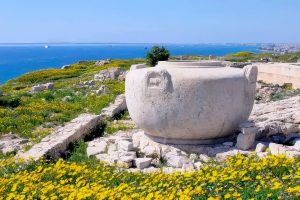
Amathus is one of the oldest royal cities on the island of Cyprus. Situated on the southern coast, just 11 kilometers east of modern Limassol, it sits among sandy hills and coastal cliffs overlooking the Mediterranean Sea. googleusercontent.com The city dates back to around 1100 BC, making it over three thousand years old. For centuries, it was one of the most powerful and wealthy kingdoms on the island. Today, its ruins tell a story of trade, religion, myth, and survival that stretches across dozens of generations. Historical Background The first people to settle in Amathus were the Eteocypriots, an indigenous group who lived on Cyprus before both the Greeks and the Phoenicians arrived. They chose a rocky coastal hill for a reason: it offered a natural harbor below and a defensible position above. The earliest signs of human presence at the site date to around 1100 BC, which places its founding right at the start of the Iron Age in the Eastern Mediterranean. The name itself likely comes from the Greek word "amathos," which simply means "sand," a fitting reference to the dunes and sandy hills surrounding the city. Legend, however, tells a different story. According to myth, the city was founded by a king called Cinyras, who named it after his mother, Amathous. Other myths connect the place to…

Read more