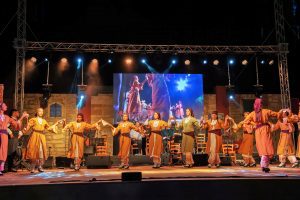
Sonic Evolution Cyprus Tradition Meets Fusion
Music in Cyprus has never existed in isolation. It has always moved with people, landscapes, rituals, and political change. From shepherds playing flutes in mountain pastures to electrified bands performing in divided city streets, Cypriot music reflects the island’s role as a cultural meeting point in the Eastern Mediterranean. Today, that long tradition is not fading. It is transforming. Contemporary Cypriot musicians are reshaping ancient sounds into new forms, proving that heritage survives not by standing still, but by adapting. An Island Shaped by Crossing Sounds Cyprus sits at the intersection of Greek, Byzantine, Ottoman, and Western European worlds, and its music carries traces of each. Rather than following Western major and minor scales, traditional Cypriot music is built on modal systems influenced by Byzantine echoes and Ottoman makam. These modes allow for subtle microtonal shifts that give the music its emotional depth and distinctive colour. For centuries, these sounds were not concert material. They were woven into daily life: agricultural cycles, religious festivals, weddings, and communal gatherings. Music functioned as memory, communication, and identity, not entertainment alone. Voices Without Sheet Music At the heart of Cypriot folk tradition lies the concept of fones, literally meaning “voices.” These are not fixed songs, but melodic frameworks passed orally from generation to generation. Singers adapt poetic verses to these melodic shapes, allowing…
Read more