Explore Cyprus with Our Interactive Map

Explore our top stories and discover ideas worth your time.

Salamis to Paphos Historic Routes

Salamis to Paphos Historic Routes

The story of Cyprus roads spans over 3,000 years, from Bronze Age trade routes to Roman highways and modern infrastructure. This network transformed the island from scattered settlements into a connected civilization, linking major cities and remote villages while facilitating trade across the Mediterranean. In-Cyprus-com The earliest roads in Cyprus date back to the Bronze Age, when the island served as a crucial trading hub between the Aegean, Egypt, and the Levant. Cyprus became the principal intermediary station for Mycenaean Greece in accessing Middle Eastern markets, largely due to its copper resources in the Troodos Mountains. By the end of the Hellenistic period, the road network encircled the entire island. During the Late Bronze Age between 1400 and 1150 BCE, trade with Minoan Crete and Mycenaean Greece increased dramatically. Archaeological evidence shows that Mycenaean pottery exports to Cyprus surged to over 3,500 vases across nearly two centuries. These goods traveled along established land routes that connected coastal ports to interior settlements. Historical Context The Romans transformed Cyprus's road infrastructure after annexing the island in 58 BCE. The first Roman roads were funded directly by the Emperor, though by the Severan dynasty the island had grown wealthy enough to finance its own construction. Roads converged on Salamis, the main economic center, with minor roads radiating outward to connect the surrounding agricultural…

Read more
Makronissos Beach

Makronissos Beach

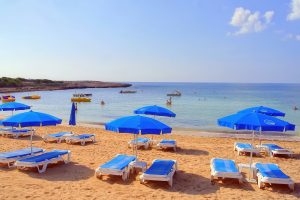
The Makronissos beach takes its name from the small peninsula where it sits. The word Makronissos comes from Greek and means "long island," a reference to the tail-shaped landmass that was once separated from the mainland. The main beach stretches westward, while two smaller bays branch off toward the southwest and southeast. These natural formations create protected swimming areas with calm waters throughout most of the season. make-trip-ru The golden sand is fine and soft, without the pebbles or coarse grains common at many Mediterranean beaches. The waters remain shallow for a considerable distance from shore, which allows children to wade and play safely. Parents can relax knowing that the gentle slope of the seabed means their kids can walk quite far out while still touching bottom. The southwestern section falls within a Natura 2000 protected area, part of a European network of conservation sites. This designation reflects the ecological importance of the coastal environment and ensures that development balances tourism with environmental protection. Historical Background The Makronissos Necropolis sits just behind the beach and contains 19 rock-cut tombs from the Hellenistic and Roman periods. The Municipality of Ayia Napa sponsored intensive excavations between November 1989 and January 1990. These tombs had been targets of illegal digging since 1872, which damaged many of the burial chambers and removed valuable artifacts…

Read more
Carob Trees Cyprus Black Gold Tradition

Carob Trees Cyprus Black Gold Tradition

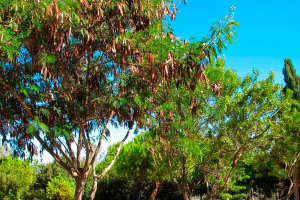
For centuries, the carob tree quietly underpinned life in Cyprus. Long before sugar, tourism, or modern industry reshaped the island, carob sustained rural families economically, nutritionally, and socially. Known locally as “black gold,” it was never glamorous, but it was dependable. In a land shaped by drought, invasion, and uncertainty, the carob tree endured, feeding people, funding villages, and anchoring tradition in the Cypriot landscape. A Tree Built for Hard Conditions The carob tree, Ceratonia siliqua, is perfectly adapted to Cyprus’s dry Mediterranean climate. Its deep roots draw moisture from far below the surface, allowing it to survive long summers without irrigation. Thick, leathery leaves reduce water loss, and slow growth produces a tree that can live for centuries. This resilience explains why carobs thrived where other crops failed. On rocky slopes and marginal land unsuitable for cereals, carob trees continued to produce reliable harvests. For rural communities, they were less a crop and more a form of insurance, offering stability in an unpredictable environment. Why It Was Called “Black Gold” The name "black gold" was not a poetic exaggeration. Ripe carob pods darken to a deep brown, almost black, and for generations, they ranked among Cyprus's most valuable exports. Even in years when wheat failed or rainfall was scarce, carob trees continued to bear fruit. For many families, a…

Read more