Explore Cyprus with Our Interactive Map

Explore our top stories and discover ideas worth your time.

Troodos Mountains Biodiversity and Climate Core

Troodos Mountains Biodiversity and Climate Core

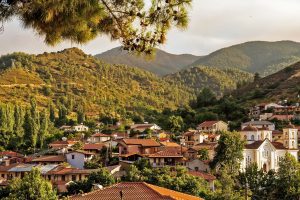
The Troodos Mountains rise from the heart of Cyprus as the island’s highest mountain system, with Mount Olympus reaching 1,952 meters above sea level. More than a scenic landscape, this mountain range forms the ecological and climatic core of the island. Its slopes regulate water supply, shape weather patterns, and support an extraordinary concentration of life found nowhere else in the Mediterranean. What makes Troodos truly exceptional is its geological origin. The mountains expose one of the most complete sections of ancient oceanic crust ever discovered on land, creating conditions that shaped a unique and fragile ecosystem over millions of years. britannica-com Historical Background The Troodos Mountains formed approximately 92 million years ago at the bottom of the ancient Tethys Ocean, nearly 8,000 meters below the sea surface. Molten rock from the Earth’s mantle rose through fractures in the ocean floor, solidifying into layers of basalt, gabbro, and peridotite. When the African and Eurasian tectonic plates collided, this section of oceanic crust was pushed upward rather than sinking back into the mantle. Geologists describe this phenomenon as an ophiolite complex, and Troodos represents the best preserved and most accessible example in the world. chooseyourcyprus-com Uplift began around 20 million years ago, with Mount Olympus at its center. Over time, erosion stripped away upper layers and exposed deeper geological formations normally…

Read more
Necropolis of Salamis Royal Tombs Cyprus

Necropolis of Salamis Royal Tombs Cyprus

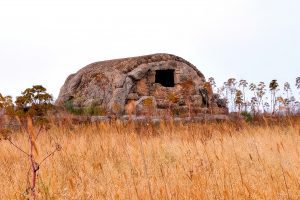
The necropolis consists of two distinct burial areas that reflect ancient social hierarchy. The Royal Tombs, sometimes called the Tombs of the Kings, hold nine massive built chamber tombs where nobility and wealthy elites were buried with spectacular ceremony. These tombs feature long dromos passages, monumental entrances called propylaea, and burial chambers constructed from enormous limestone blocks. visitncy-com About 400 meters away sits the Cellarka cemetery, a network of over 100 smaller rock-cut chamber tombs carved directly into hard limestone. These served the general population of Salamis from the 7th through the 4th centuries BCE. The name Cellarka comes from the Greek word for cells, describing how closely the tombs cluster together. Historical Background According to Greek legend, Teucer founded Salamis around 1180 BCE after being exiled from his homeland, the island of Salamis near Athens. He named his new city after the place he left behind. Archaeological evidence suggests these stories contain some truth, as excavations found a chamber tomb south of the later Temple of Zeus that dates to the 11th century BCE, confirming a settlement existed here at roughly the time the legends describe. visitncy-com The earliest tombs may date back to the 11th century BCE, suggesting Salamis coexisted with nearby Enkomi, an earlier Bronze Age settlement that was gradually abandoned. The main period of tomb construction…

Read more
Cyprus Railway Museum Evrychou History Facts

Cyprus Railway Museum Evrychou History Facts

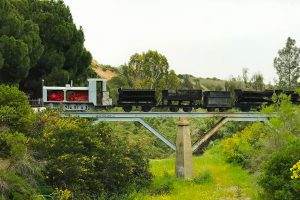
The museum occupies the original Evrychou railway station, a sandstone building constructed in 1906 in the foothills of the Troodos Mountains. The station operated as the western terminus of the Cyprus Government Railway from June 14, 1915, until December 31, 1931, when the final five miles of the railway were abandoned due to financial losses. atlasobscura-com After the railway closed completely in 1951, the building served various purposes, first as a health center and later as a forest workers' dormitory. EOKA fighters damaged and burned the building during their campaign against British rule, as the railway represented colonial infrastructure. The Department of Antiquities restored the station between 2003 and 2012, with new tracks laid in 2010 to 2012 in a Y-shape formation covering about 100 meters. The museum officially opened in September 2016, becoming Cyprus's only railway museum. British expats and local railway enthusiasts contributed significantly to the museum's development, and their contributions are acknowledged in the entrance hall. Historical Background The Cyprus Government Railway operated from October 21, 1905, to December 31, 1951, covering 76 miles across the island. British High Commissioner Sir Garnet Wolseley proposed building a railway when Britain took control of Cyprus in 1878, but uncertainty about how long Britain would govern the island delayed the project for decades. Frederick Shelford submitted a feasibility study on…

Read more