Explore Cyprus with Our Interactive Map

Explore our top stories and discover ideas worth your time.

Salamis to Paphos Historic Routes

Salamis to Paphos Historic Routes

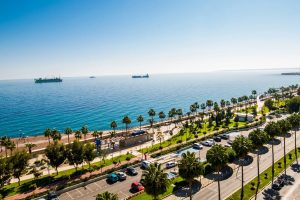
The story of Cyprus roads spans over 3,000 years, from Bronze Age trade routes to Roman highways and modern infrastructure. This network transformed the island from scattered settlements into a connected civilization, linking major cities and remote villages while facilitating trade across the Mediterranean. In-Cyprus-com The earliest roads in Cyprus date back to the Bronze Age, when the island served as a crucial trading hub between the Aegean, Egypt, and the Levant. Cyprus became the principal intermediary station for Mycenaean Greece in accessing Middle Eastern markets, largely due to its copper resources in the Troodos Mountains. By the end of the Hellenistic period, the road network encircled the entire island. During the Late Bronze Age between 1400 and 1150 BCE, trade with Minoan Crete and Mycenaean Greece increased dramatically. Archaeological evidence shows that Mycenaean pottery exports to Cyprus surged to over 3,500 vases across nearly two centuries. These goods traveled along established land routes that connected coastal ports to interior settlements. Historical Context The Romans transformed Cyprus's road infrastructure after annexing the island in 58 BCE. The first Roman roads were funded directly by the Emperor, though by the Severan dynasty the island had grown wealthy enough to finance its own construction. Roads converged on Salamis, the main economic center, with minor roads radiating outward to connect the surrounding agricultural…

Read more
Cyprus Mouflon Wildlife and Habitat

Cyprus Mouflon Wildlife and Habitat

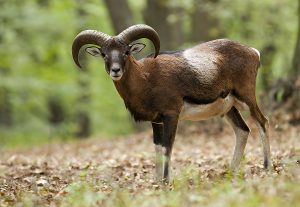
The Cyprus mouflon represents the only wild sheep endemic to Cyprus and the largest wild land mammal on the island. This subspecies stands about one meter tall at the shoulder and exhibits the classic features of mouflon: reddish to dark brown coats with distinctive black dorsal stripes and lighter saddle patches. The name "mouflon" comes from the Corsican words "mufro" for males and "mufra" for females. In Cyprus, locals call this animal "agrino," derived from the Greek word "Αγρινό." Adult males weigh up to 50 kilograms, while females typically reach around 35 kilograms. Males develop spectacular curved horns that grow in nearly complete circles, reaching lengths up to 85 centimeters. Most females do not develop horns, though some carry small versions. The Cyprus mouflon demonstrates island dwarfism, with shoulder heights averaging 15 centimeters less than their closest relatives, the Armenian mouflon. Ancient Arrivals and Near Extinction Archaeological evidence places sheep bones at the Neolithic village of Khirokitia, dating the mouflon's presence on Cyprus to approximately 10,000 years ago. Scientists believe early settlers brought wild sheep from Anatolia or the Levant during the early stages of sheep domestication. These animals later became feral, adapting to the island's mountain environments. Genetic studies show strong phylogenetic relationships between Cyprus and Anatolian mouflons, with origins likely traced to northwest Iran. visitcyprus-com The mouflon thrived…

Read more
Agios Nikolaos tis Stegis

Agios Nikolaos tis Stegis

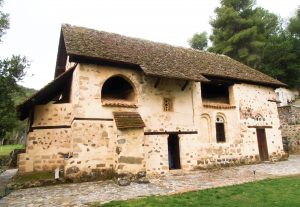
Agios Nikolaos tis Stegis, near Kakopetria in the Solea Valley, is one of Cyprus’s most important painted churches, preserving multiple phases of Byzantine frescoes inside a modest mountain building. Its steep timber roof, added for protection, helped these wall paintings survive centuries of harsh weather and shifting rule. This article explains how the church evolved, what the fresco layers show, and why the site remains a rare visual record of Byzantine life in Cyprus. Agios Nikolaos tis Stegis stands on the western bank of the Karkotis River, near the village of Kakopetria, at an elevation of roughly 700 meters. dreamstime-com This mountain setting explains one of the church’s most defining features. Unlike urban Byzantine churches, which display their domes openly, this church is wrapped beneath a steep, timber roof covered in flat tiles. The roof was added in the medieval period to protect the masonry and paintings from heavy rain and winter snow. The solution was practical, not symbolic, yet it transformed the church’s identity. The word Stegis means “of the roof,” and the shelter became so closely associated with the building that it distinguished this Saint Nicholas from countless others across the Orthodox world. What began as a climatic adaptation ultimately became a defining architectural signature unique to the Troodos region. From Monastery to Mountain Archive The church was…

Read more