Explore Cyprus with Our Interactive Map

Explore our top stories and discover ideas worth your time.

Following Seasons of the Sea Cyprus Fishing

Following Seasons of the Sea Cyprus Fishing

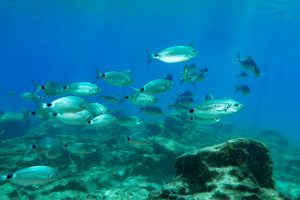
Fishing in Cyprus has never been a matter of going out to sea and taking whatever is available. For centuries, coastal communities shaped their lives around the rhythms of the Mediterranean, fishing when conditions allowed, resting when they did not, and adjusting methods as fish moved, spawned, or disappeared. These seasonal patterns were not written rules but accumulated knowledge, refined through observation and necessity. Understanding traditional fishing in Cyprus means understanding how people learned to work with the sea rather than against it. fishingtourism.org A Relationship Built on Timing The Mediterranean is not a uniform or endlessly predictable environment. Around Cyprus, subtle seasonal changes in temperature, light, and currents strongly influence where fish gather and how active they become. Traditional fishers understood that the sea does not offer the same opportunities all year. Knowing when to fish mattered as much as knowing how. Fishing activity shifted with the calendar, but also with conditions that could not be reduced to dates alone. A warmer spring, an extended calm period, or a sudden change in wind could alter expectations. Over time, fishers learned to read these signs, developing an intuitive sense of timing that guided their decisions long before modern forecasting existed. Knowledge Passed by Observation, Not Instruction Seasonal fishing knowledge in Cyprus was never formalised in manuals. It was learned through…

Read more

Resilient Cyprus Brooms

Resilient Cyprus Brooms

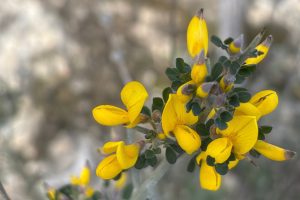
Imagine stepping onto a sun-drenched hillside in Cyprus as spring awakens the land. Suddenly, the dry, thorny scrub lights up with bright bursts of golden yellow, as though someone has scattered handfuls of sunshine across the rocks. These vivid displays come from the brooms of the Genisteae tribe – tough, spiny shrubs that turn the island’s classic maquis into a sea of gold. www.inaturalist.org Pea-Family Pioneers of the Mediterranean Scrub The Genisteae belong to the great legume family Fabaceae, the same group that gives us peas, beans and clover. In Cyprus, two standout members bring the colour and character: Genista fasselata (Fassel’s broom) and Calycotome villosa (hairy thorny broom). Both are evergreen or semi-evergreen shrubs perfectly suited to the island’s rugged, sun-baked slopes from sea level to the cooler heights of the Troodos. Born of Fire and Centuries of Change These plants tell a story as old as the Mediterranean itself. Long before people arrived around 6000 BC, Cyprus wore a cloak of dense forest. Over millennia, human activities – clearing land, grazing goats and accidental fires – transformed much of that woodland into today’s maquis and garigue. In these open, rocky habitats the brooms found their perfect home. Early naturalists exploring the island in the 1860s, such as Unger and Kotschy, noted the aromatic, spiny scrub clothing the hills,…

Read more
Cyprus Railway Museum Evrychou History Facts

Cyprus Railway Museum Evrychou History Facts

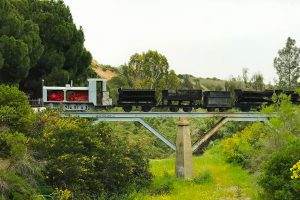
The museum occupies the original Evrychou railway station, a sandstone building constructed in 1906 in the foothills of the Troodos Mountains. The station operated as the western terminus of the Cyprus Government Railway from June 14, 1915, until December 31, 1931, when the final five miles of the railway were abandoned due to financial losses. atlasobscura-com After the railway closed completely in 1951, the building served various purposes, first as a health center and later as a forest workers' dormitory. EOKA fighters damaged and burned the building during their campaign against British rule, as the railway represented colonial infrastructure. The Department of Antiquities restored the station between 2003 and 2012, with new tracks laid in 2010 to 2012 in a Y-shape formation covering about 100 meters. The museum officially opened in September 2016, becoming Cyprus's only railway museum. British expats and local railway enthusiasts contributed significantly to the museum's development, and their contributions are acknowledged in the entrance hall. Historical Background The Cyprus Government Railway operated from October 21, 1905, to December 31, 1951, covering 76 miles across the island. British High Commissioner Sir Garnet Wolseley proposed building a railway when Britain took control of Cyprus in 1878, but uncertainty about how long Britain would govern the island delayed the project for decades. Frederick Shelford submitted a feasibility study on…

Read more