Explore Cyprus with Our Interactive Map

Explore our top stories and discover ideas worth your time.

Cyclopean Walls and Temples of Kition

Cyclopean Walls and Temples of Kition

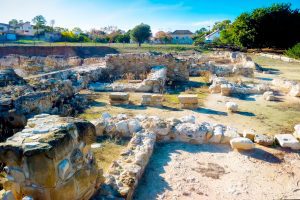
A sacred complex in Kition constructed with massive stone blocks, housing temples dedicated to Astarte and Melqart, serving the Phoenician community. larnakaregion-com The Cyclopean Walls and Temples of Kition represent a cornerstone of Cyprus's ancient heritage, where monumental architecture and religious devotion intertwined to form a vibrant sacred precinct in the heart of the island's earliest urban center. Located in modern Larnaca, ancient Kition was one of Cyprus's ten city-kingdoms, thriving as a hub of trade, culture, and spirituality from the Late Bronze Age onward. This complex, characterized by its imposing walls built from enormous limestone blocks, enclosed a series of temples primarily dedicated to the Phoenician deities Astarte, goddess of fertility and war, and Melqart, a protector figure akin to Heracles. Serving the Phoenician settlers who dominated the city from the 9th century BC, the site facilitated rituals, offerings, and communal gatherings that reinforced social bonds and economic ties across the Mediterranean. As a testament to Cyprus's role in bridging Eastern and Western civilizations, Kition's sacred spaces evolved over centuries, blending indigenous Cypriot traditions with influences from Mycenaean Greece, Phoenicia, and beyond, offering modern visitors a window into the island's multifaceted past. A Sacred Complex in Ancient Kition The Cyclopean Walls and Temples of Kition formed the defensive and spiritual core of the ancient city, sprawling across several hectares…

Read more

Amathus Sacred Grove of Aphrodite Cyprus

Amathus Sacred Grove of Aphrodite Cyprus

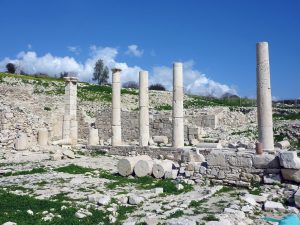
Geographic and Historical Setting Amathus, located on the southern coast of Cyprus near modern Limassol, was one of the most important ancient city-kingdoms of the island. Among its most significant religious features was the Sacred Grove of Aphrodite, a sanctuary associated with fertility, royal authority, and long-standing local traditions that predated classical Greek influence. Unlike urban temple complexes built in later periods, the sacred grove represented an earlier form of worship in which natural landscape and ritual space were closely connected. The site functioned as a center of spiritual life where religious practice was embedded within the rhythms of nature, agriculture, and seasonal renewal. pinterest-com Archaeological and literary evidence suggests that Amathus maintained a distinct cultural identity within Cyprus, blending indigenous traditions with influences from the eastern Mediterranean. The worship of Aphrodite at Amathus was deeply rooted in pre-Hellenic fertility cults that later merged with the Greek conception of the goddess. This layered religious history gave the sanctuary a unique character. Rather than serving solely as a mythological birthplace, as in Palaepaphos, Amathus became known as a living center of ritual activity that linked divine fertility with political and social order. Sacred Landscape and Ritual Environment The Sacred Grove at Amathus was not confined to a single temple building but extended across a natural setting that included trees, open spaces,…

Read more
Gallery Kypriaki Gonia, Cyprus

Gallery Kypriaki Gonia, Cyprus

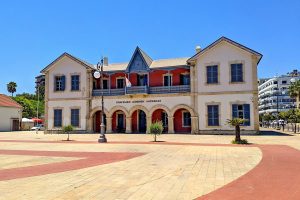
Gallery Kypriaki Gonia stands as one of Larnaca's most established independent art spaces. Located at 45 Stadiou Street in central Larnaca, this gallery has operated continuously since 1993. The name "Kypriaki Gonia" translates to "Cypriot Corner," which accurately reflects its core mission to showcase art by local and international artists. The gallery maintains a focus on both traditional and contemporary artistic approaches, giving visitors exposure to different styles and periods of Cypriot art. googlemaps-com Over three decades, the gallery has built a reputation for consistent quality in its exhibition program. It provides a platform where established artists can present major bodies of work and emerging artists can gain visibility. The space operates as a commercial gallery while also functioning as a cultural venue that contributes to Larnaca's artistic infrastructure. Historical Context By 2013, Gallery Kypriaki Gonia celebrated its 20th anniversary with a significant group exhibition. This show brought together works by 70 Cypriot and foreign artists across multiple media, including paintings, sculpture, ceramics, etchings, and photography. The exhibition received the auspices of the Mayor of Larnaca, and the opening ceremony was performed by Petros Christodoulou. All works were offered at modest prices of up to 200 euros, with 50 percent of revenue directed to the Larnaca Municipality Community Store. This charitable component demonstrated the gallery's commitment to community service alongside…

Read more