Explore Cyprus with Our Interactive Map

Explore our top stories and discover ideas worth your time.

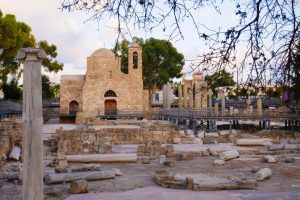
Panagia Chrysopolitissa Basilica Cyprus Heritage Site

Panagia Chrysopolitissa Basilica Cyprus Heritage Site

Panagia Chrysopolitissa stands as one of the most significant early Christian sites in Cyprus. This archaeological complex in Kato Paphos preserves the remains of the largest Byzantine basilica ever built on the island, along with one of Christianity's most powerful symbols, St. Paul's Pillar. nashaplaneta-net The Chrysopolitissa site brings together multiple layers of Christian history in one location. The complex includes the ruins of a massive 4th-century Byzantine basilica covering approximately 1,600 square meters, the remains of a 13th-century Franciscan Gothic church, the active stone church of Agia Kyriaki built around 1500 AD, and the famous marble pillar where St. Paul was reportedly flogged. The site combines active worship spaces with archaeological preservation, creating a unique blend of past and present. Historical Background According to Christian tradition and the Acts of the Apostles, St. Paul visited Cyprus around 45 AD during his first missionary journey with Barnabas and John Mark. The trio arrived to preach Christianity in an empire where the new faith faced persecution. In Paphos, Paul encountered resistance from a false prophet and faced the Roman governor Sergius Paulus. Tradition states that Paul was tied to a marble column and received 39 lashes for spreading Christianity. The punishment used a special whip with 13 heads attached to a single handle, so each strike delivered 13 lashes. Paul endured…

Read more
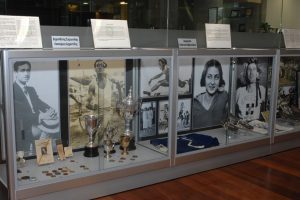
Cyprus Olympic Museum Nicosia Sports History

Cyprus Olympic Museum Nicosia Sports History

The Cyprus Olympic Museum preserves the athletic heritage of the island. It exhibits 400 artifacts that document Cyprus's participation in the Olympic Games and international sporting competitions since 1980. cyprushighlights-com The museum occupies all three floors of the Olympic House, the headquarters of the Cyprus Olympic Committee, located at 21 Amfipoleos Street in Nicosia. The Olympic House opened on September 16, 2006, in a ceremony attended by President Tassos Papadopoulos and International Olympic Committee President Jacques Rogge. The three-story building covers 7,500 square meters and cost 5.63 million Cyprus pounds to construct. The Cyprus Olympic Museum began operations in 2012, six years after the building's inauguration. The facility houses almost every sporting federation on the island, including sports not on the Olympic schedule. This centralized location makes the Olympic House a hub for athletic administration and a resource center for Cyprus's sporting community. The museum component transforms the building from merely an administrative center into an educational space that celebrates Cyprus's Olympic journey. Historical Background The Cyprus Olympic Committee was founded on June 10, 1974, and gained membership in the International Olympic Committee in 1979. Before this recognition, Cypriot athletes competed internationally under the Greek flag. Notable Cypriots who represented Greece include Ioannis Frangoudis, who won three shooting medals at Athens 1896, and Aristidis Konstantinidis, who claimed cycling gold at…

Read more

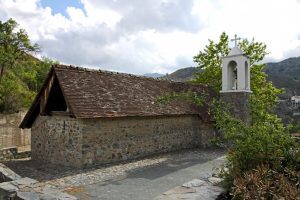
Church of the Transfiguration in Palaichori

Church of the Transfiguration in Palaichori

Church of the Transfiguration in Palaichori is a 16th-century Byzantine chapel in Cyprus's Troodos Mountains, renowned for its post-Byzantine frescoes that illustrate the persistence of Orthodox artistic traditions under foreign rule. Part of the UNESCO-listed Painted Churches, it preserves vivid paintings blending theological narratives with symbolic depth, reflecting medieval devotion in a rural setting. This site captures how faith endured and adapted, offering insights into Cyprus's cultural resilience amid external influences. sobory-ru A Testament to Enduring Faith in the Mountains The Church of the Transfiguration exemplifies the resilience of Byzantine religious architecture in Cyprus's highland regions, dedicated to Christ's Transfiguration - a pivotal event symbolizing divine glory and human potential for spiritual elevation. Situated in Palaichori village at an elevation of about 700 meters, amid orchards and pine-clad slopes, the chapel's modest stone form and interior art reflect the era's fusion of local Orthodoxy with subtle Western elements. Its construction and frescoes highlight the persistence of Byzantine traditions during Venetian (1489-1571) and early Ottoman (1571-1878) periods, when Catholic or Muslim influences challenged but did not erase island faith. As one of the ten Painted Churches inscribed on UNESCO's World Heritage List in 1985, it contributes to a group that collectively showcases Cyprus's medieval religious landscape, where rural isolation fostered artistic continuity amid political shifts. httpssobory-ru The chapel's location in the…

Read more