Explore Cyprus with Our Interactive Map

Explore our top stories and discover ideas worth your time.

Endemic Crocuses of Cyprus

Endemic Crocuses of Cyprus

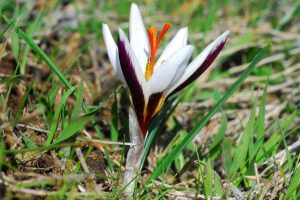
As winter's grip loosens on Cyprus's high peaks, delicate blooms emerge like whispers of color against the white. Cyprus is home to three special crocuses — endemic treasures found nowhere else — that brighten rocky slopes with lilac, white, and purple hues. But what makes each one unique, and how have they survived in this island paradise for millennia? www.inaturalist.org What Are These Charming Little Snow Defiers? These crocuses are small, wild flowers that grow from hidden bulbs underground, much like the colorful ones we plant in gardens. They're part of the iris family, a big group of plants known for their elegant petals and roles in everything from spices to myths. In Cyprus, these three — Crocus cyprius, Crocus hartmannianus, and Crocus veneris — add a touch of magic to the island's wild spots, blooming when most plants are still asleep. A Blooming Legacy from Cyprus's Ancient Times The crocus family sprouted in the Miocene, spreading across the Mediterranean and giving Cyprus its own versions, first noted by 19th-century explorers Boissier and Kotschy who named them after the island's beauty. Envisioning Three Distinctive Mountain Beauties Each of these crocuses has its own look that sets it apart. Crocus cyprius, or Κύπριος κρόκος (meaning "Cypriot crocus"), grows 5-10 cm tall with grass-like leaves striped white in the middle and funnel-shaped…

Read more

Mesaoria Alluvial Deposits & River Systems of Cyprus

Mesaoria Alluvial Deposits & River Systems of Cyprus

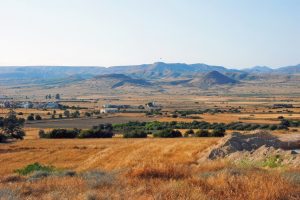
Between the Troodos Mountains in the south and the Kyrenia Range in the north lies a broad plain that has been the agricultural heart of Cyprus for thousands of years. The Mesaoria wasn't always dry land. About one million years ago, this central area was still underwater, an ancient bay that slowly filled with sediments washed down from the surrounding mountains. Today, those sediments form the fertile soils that feed the island, delivered by rivers that flow only in winter and disappear completely by summer. fergusmurraysculpture-com The Mesaoria is a flat plain that extends across central Cyprus from Morphou Bay in the west to Famagusta Bay in the east. The name comes from Greek and means "between the mountains," which perfectly describes its position sandwiched between the Troodos and Kyrenia ranges. The plain measures 96 kilometers long and varies between 16 to 32 kilometers wide, covering roughly 1,000 square kilometers of land. The average elevation across the Mesaoria sits around 100 meters above sea level, though some areas near Nicosia rise to 325 meters. Unlike the mountainous regions that surround it, the Mesaoria is mostly flat with gentle slopes. This flatness makes it ideal for agriculture but also creates drainage problems when the seasonal rivers flood. Historical Background About 25 million years ago during the Lower Miocene era, the Troodos…

Read more
Necropolis of Salamis Royal Tombs Cyprus

Necropolis of Salamis Royal Tombs Cyprus

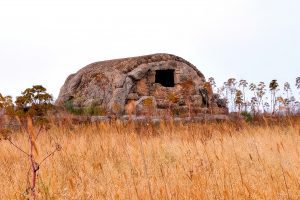
The necropolis consists of two distinct burial areas that reflect ancient social hierarchy. The Royal Tombs, sometimes called the Tombs of the Kings, hold nine massive built chamber tombs where nobility and wealthy elites were buried with spectacular ceremony. These tombs feature long dromos passages, monumental entrances called propylaea, and burial chambers constructed from enormous limestone blocks. visitncy-com About 400 meters away sits the Cellarka cemetery, a network of over 100 smaller rock-cut chamber tombs carved directly into hard limestone. These served the general population of Salamis from the 7th through the 4th centuries BCE. The name Cellarka comes from the Greek word for cells, describing how closely the tombs cluster together. Historical Background According to Greek legend, Teucer founded Salamis around 1180 BCE after being exiled from his homeland, the island of Salamis near Athens. He named his new city after the place he left behind. Archaeological evidence suggests these stories contain some truth, as excavations found a chamber tomb south of the later Temple of Zeus that dates to the 11th century BCE, confirming a settlement existed here at roughly the time the legends describe. visitncy-com The earliest tombs may date back to the 11th century BCE, suggesting Salamis coexisted with nearby Enkomi, an earlier Bronze Age settlement that was gradually abandoned. The main period of tomb construction…

Read more