Explore Cyprus with Our Interactive Map

Explore our top stories and discover ideas worth your time.

Cyprus Cliffside Horizons

Cyprus Cliffside Horizons

Cyprus is often imagined as a land of calm beaches and gentle shorelines, but some of its most striking coastal landscapes rise sharply instead of stretching outward. In several parts of the island, the land ends abruptly in high limestone cliffs that fall straight into the Mediterranean, creating views that feel expansive, exposed, and quietly dramatic. These vertical coastlines offer a very different way of experiencing Cyprus, one shaped by height, light, and the sudden meeting of land and sea. facebook-com Where Cyprus Breaks the Horizontal Line Most Mediterranean coastlines encourage the eye to travel sideways. Cyprus’s cliffs do the opposite. They pull the gaze downward and outward at once, creating a sense of scale that feels rare in a region better known for gentle beaches. These dramatic drops appear along several stretches of the island, each with a different character. In the east, Cape Greco’s pale limestone edges meet intensely blue water in clean, sculpted forms. Along the south coast near Pissouri, the white cliffs of Cape Aspro rise sharply and uninterrupted, some reaching heights of over 250 metres. In the west, the Akamas Peninsula remains rugged and untamed, where steep land meets sea without much warning or infrastructure. What unites these places is not just their height, but the feeling they create. Standing at the edge of these…

Read more
Cypriot Greek Dance Music Rhythm and Commu

Cypriot Greek Dance Music Rhythm and Commu

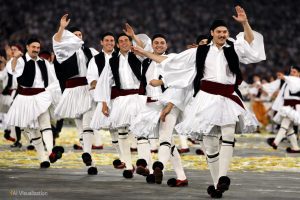
Greek and Cypriot dance music is not background sound. It is structure, instruction, and memory working at the same time. Across villages, islands, and generations, specific rhythms have guided how people move together, celebrate together, and mark life’s most important moments. This article explains how three core dance forms, Syrtos, Sousta, and Ballos, shape the musical language of Cyprus and Greece, why their rhythms matter, and how they continue to function not as performances, but as social glue. Music That Tells the Body What to Do In Greek and Cypriot tradition, dance music is practical before it is expressive. Its primary job is not to impress the listener, but to tell the dancer when to step, pause, turn, or leap. This is why rhythm matters more than melody. The structure of the beat dictates how bodies move together, whether in long communal lines or intimate pairs. Over time, certain rhythmic patterns became deeply familiar, allowing dancers to respond instinctively without instruction. Two broad movement styles dominate this musical world: Dragging, grounded movement, where dancers glide horizontally across the ground Leaping, spring-like movement, where energy rises and falls vertically These qualities are not abstract. They are felt immediately in the music. Syrtos: The Music of the Line and the Circle The Syrtos is the backbone of Greek and Cypriot dance music.…

Read more

Cyprus Artisanal Sweets

Cyprus Artisanal Sweets

Cyprus has developed a distinctive collection of traditional sweets that reflect centuries of cultural exchange between Greece, the Middle East, and the Mediterranean. These artisanal treats are not luxury items but essential parts of daily life, religious celebrations, and village festivals. shutterstock-com From honey-soaked dough balls to sesame confections and refreshing milk puddings, Cypriot sweets combine simple ingredients with time-tested techniques to create memorable flavors. Each sweet tells a story of the island's agricultural abundance, its position as a crossroads of civilizations, and its commitment to preserving culinary heritage. Historical Context The tradition of sweet-making in Cyprus dates back to ancient Greece and Byzantium. Historical texts reveal that many current recipes have roots in Byzantine-era treats called plakoundes, pemmata, or melipikta. These early sweets were made with dough and natural sweeteners like honey, carob syrup, or grape must. The word halva derives from the Arabic term for sweetness, reflecting the Ottoman influence that shaped Cypriot cuisine for centuries. Loukoumades trace their history to 776 BC, when ancient Greeks offered honey-soaked dough balls as prizes to Olympic athletes. The tradition survived through Byzantine times, when monasteries made these treats during Lent because they contained only flour, yeast, water, and honey. As different cultures settled in Cyprus, they brought their own variations and techniques, creating the diverse sweet traditions that exist today.…

Read more