Explore Cyprus with Our Interactive Map

Explore our top stories and discover ideas worth your time.

Pepper Trees of Cyprus

Pepper Trees of Cyprus

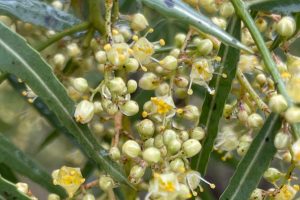
Imagine strolling through a sun-drenched village square or along a quiet coastal road in late summer. A graceful tree with feathery, weeping branches catches your eye, its small greenish-white flowers having given way to clusters of shiny pink-red berries that sparkle like strings of tiny jewels. These are the Schinus species of Cyprus – elegant South-American guests whose light, peppery fragrance and airy beauty have quietly woven themselves into the island’s everyday scenery. The Pepper Trees of the Cashew Family Schinus belongs to the Anacardiaceae family – the same remarkable group that includes pistachios (Pistacia vera), mastic trees (Pistacia lentiscus), cashews, mangoes and even sumacs. This family is known for resinous bark, compound leaves and often aromatic fruits. The genus Schinus contains about 30 species, nearly all native to South America. In Cyprus the two most common are Schinus molle (Peruvian pepper tree or false pepper tree) and Schinus terebinthifolius (Brazilian pepper tree). Locally they are called Αρτυμαθκιά (Artumathkiá – “pepper tree”) for S. molle, and Μαστισιά (Mastisiá – “mastic-like”) or Σχίνος η τερεβινθόφυλλη for S. terebinthifolius, evoking their resinous family ties. A Journey from the Andes to Cypriot Soil Both species are native to subtropical and tropical South America. Schinus molle comes from the Andes foothills of Peru, Bolivia and neighbouring countries, while S. terebinthifolius hails from Brazil, Argentina…

Read more
Street Arts Music Festivals

Street Arts Music Festivals

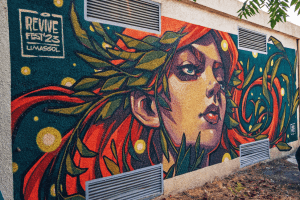
Cyprus is often described through its beaches and ancient monuments, but some of the island’s most revealing cultural moments happen in public streets, squares, and parks. Across cities and towns, music spills into old neighbourhoods, walls become canvases, and everyday spaces are temporarily reshaped by performance and visual art. Street arts and music festivals offer a direct way to experience modern Cypriot creativity as it is lived, shared, and shaped in real time. Rather than separating culture from daily life, these events place it exactly where people already are. When the City Itself Becomes the Venue What distinguishes Cyprus’s street arts and music festivals is not scale, but placement. Performances rarely stay confined to formal halls. Instead, they unfold across pedestrian streets, municipal gardens, historic squares, waterfront paths, and occasionally repurposed industrial sites. The city is not just a backdrop. It is part of the performance. This approach changes how people experience art. Audiences do not arrive, sit, and leave. They move, pause, follow sound, and discover things unintentionally. A concert might lead into a street theatre scene. A mural might become the focal point of a gathering. Culture becomes something encountered rather than scheduled. From Traditional Gatherings to Contemporary Festivals Public celebration has long been part of Cypriot life. Village festivals, religious feast days, and seasonal events once structured…

Read more

Green Transportation Options in Cyprus

Green Transportation Options in Cyprus

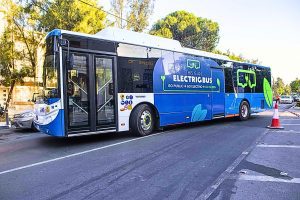
Cyprus faces a unique transportation challenge. With 658 automobiles per 1,000 people, the island holds one of the highest car ownership rates globally. Only 3% of journeys in Greater Nicosia use public transport, while cycling accounts for just 2%.  i-ytimg-com This heavy reliance on private vehicles contributes to traffic congestion, air pollution, and carbon emissions. However, the island is actively developing sustainable alternatives through government initiatives, infrastructure improvements, and European Union support. Building a Greener Transport Network Cyprus has committed to ambitious environmental targets. The National Energy and Climate Plan aims to increase renewable energy sources to 23% of total consumption and 14% in the transport sector by 2030.  sb-cyprus The government launched Sustainable Urban Mobility Plans for Limassol and Larnaca, with a combined investment of over €100 million. These plans include 62 kilometers of improved transport corridors, dedicated bus lanes, cycling paths, three central bus stations, and four park-and-ride facilities. Larnaca began implementing its plan in late 2025, delivering new cycling lanes, redesigned bus corridors, improved pavements, and upgraded traffic systems through January 2027. dom-com-cy Cyprus Public Transport introduced the island's first electric buses in 2023. These Yutong buses measure 12 meters long, accommodate up to 80 passengers, and feature accessible seating with designated wheelchair areas. The company is developing an advanced energy management system that integrates solar photovoltaic…

Read more