Explore Cyprus with Our Interactive Map

Explore our top stories and discover ideas worth your time.

House of Eustolios Cyprus Roman Villa Mosaics

House of Eustolios Cyprus Roman Villa Mosaics

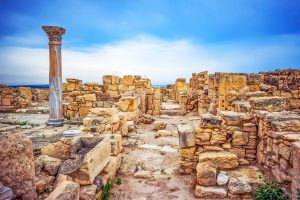
britonthemove-com Perched on the southern cliffs of ancient Kourion near modern Limassol, the House of Eustolios stands as one of Cyprus's most fascinating archaeological sites. This late 4th-century complex blends Roman luxury with early Christian devotion, creating a unique window into a transformative period in Mediterranean history. Originally built as a private villa, the structure evolved into a public recreation center that served Kourion's citizens for over two centuries. Historical Background traveladventures-org The House of Eustolios rose from the ruins of catastrophe. In 365 AD, a massive earthquake devastated the eastern Mediterranean, striking Kourion with particular force. The ancient city, which had thrived as one of Cyprus's major kingdoms since the 13th century BC, lay in rubble. Buildings collapsed, infrastructure crumbled, and the population struggled to survive among the wreckage. Twenty-five years after the disaster, Kourion remained in a dismal state. Into this scene returned Eustolios, a wealthy Christian citizen who had been away from his hometown. Shocked by the continued suffering of his fellow citizens, he made a remarkable decision. Rather than simply rebuild for himself, Eustolios constructed an elaborate complex on the ruins of an earlier Roman villa and donated the entire facility for public use. The timing proved significant. Emperor Theodosius I had just made Christianity the official religion of the Roman Empire in 380 AD. Eustolios…

Read more
The Silvery Sentinels of Cyprus Slopes

The Silvery Sentinels of Cyprus Slopes

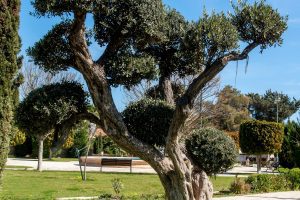
On rocky hillsides and gentle terraces across Cyprus, trees with shimmering silver-green leaves stand like wise elders, their twisted trunks telling stories of centuries under the Mediterranean sun. These are the olive trees, living treasures that have shaped the island’s landscape, diet and culture since the dawn of human settlement here. www.inaturalist.org A Classic Evergreen of the Olive Family Known to science as Olea europaea, the olive belongs to the family Oleaceae within the order Lamiales. In Cyprus it thrives both as the familiar cultivated form in orchards and as the wild oleaster (Olea europaea var. sylvestris), a tougher, smaller-fruited version that grows naturally in maquis and garigue vegetation alongside carob and wild pistachio. www.inaturalist.org Echoes from the Dawn of Cypriot Civilisation Olives have been part of Cyprus since at least the Bronze Age, with ancient pollen records and archaeological finds showing they were already valued for oil and fruit more than 4,000 years ago. Phoenician, Greek and Roman settlers expanded their cultivation, while the wild oleaster formed part of the original maquis shrublands described in 19th-century British forest reports. Over time, centuries of human care turned scattered wild trees into the productive groves that still cloak the island’s lower slopes today. Graceful Form and Enduring Strength The olive is an evergreen tree reaching 8–15 metres, with a short, often…

Read more
Saint Neophytos Cyprus Cave Monastery Writing

Saint Neophytos Cyprus Cave Monastery Writing

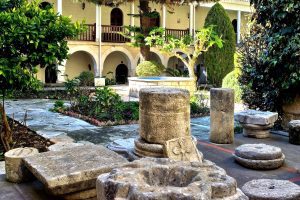
Saint Neophytos spent most of his life alone in a cave. That was his choice, and he fought for it at every turn. Born in 1134 in the small mountain village of Kato Drys near Lefkara, he was the son of farmers, one of eight children. julipapasgardens.com He became a monk at 18, a hermit by 25, and spent over 60 years sealed inside a rock-cut cave above Paphos. Yet for all his devotion to solitude, Neophytos was one of the most outspoken and prolific writers Cyprus has ever produced. He wrote about politics, religion, natural disasters, the suffering of ordinary people, and the foreign rulers who oppressed them. His cave was small, but his voice reached far beyond it. Historical Background Neophytos grew up poor and illiterate. When his parents arranged a marriage for him, he refused and fled to the Monastery of Saint John Chrysostomos in the Turkish-occupied part of Cyprus. There, he learned to read and write for the first time. He was given the role of assistant sacristan, but what he really wanted was to be left alone. His superiors told him he was too young for that kind of life. In 1158, they let him travel to the Holy Land instead. He spent six months visiting monasteries and sacred sites in Jerusalem, but came back…

Read more