Explore Cyprus with Our Interactive Map

Explore our top stories and discover ideas worth your time.

Epiphany Water Blessings Cyprus

Epiphany Water Blessings Cyprus

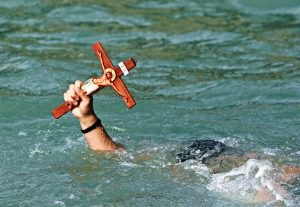
Epiphany in Cyprus marks the conclusion of the 12-day Christmas period on January 6, commemorating Christ's baptism in the Jordan River by John the Baptist. Known as Theophania or Ta Fota meaning Feast of Lights, the celebration centers on water blessing ceremonies that purify homes, drive away evil spirits, and renew communities for the coming year. dom-com The most dramatic ritual involves priests throwing a wooden cross into the sea, rivers, or lakes while brave swimmers dive into cold winter waters to retrieve it. The person who successfully recovers the cross receives blessings and good fortune for the entire year ahead. Beyond the cross diving spectacle, Epiphany includes church services, home blessings, distribution of holy water, children's caroling, and traditional sweets. The day officially ends the presence of Kalikantzari, mischievous goblins believed to plague homes during the Christmas period, restoring order and spiritual cleanliness to Cypriot households and communities. Historical Background The Feast of Epiphany commemorates the moment when Jesus was baptized by John the Baptist in the Jordan River, marking the public beginning of his ministry. According to the Gospels, when Christ emerged from the water, the heavens opened and the Holy Spirit descended in the form of a dove while God's voice proclaimed Jesus as his beloved son. This event represents the Theophany or manifestation of the Holy…

Read more
Lines and Nets: Fishing Traditions of Cyprus

Lines and Nets: Fishing Traditions of Cyprus

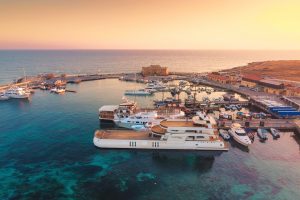
Fishing has shaped life along the Cypriot coast for thousands of years. From small family boats setting out before sunrise to modern vessels working farther offshore, the way fish are caught reflects deeper stories about culture, sustainability, and identity. This article explores how artisanal and industrial fishing coexist in Cyprus, why certain marine species matter so deeply to local life, and how food, regulation, and global recognition are reshaping the island’s relationship with the sea. adobe-stock-com Understanding the Two Worlds of Fishing At its simplest, fishing in Cyprus today exists in two parallel worlds. One is artisanal fishing, rooted in tradition, small-scale effort, and close ties to local communities. The other is industrial fishing, shaped by modern technology, larger vessels, and wider markets. adobe-stock-com Artisanal fishing usually involves small boats operated by their owners, often with help from family members. These fishers work close to shore, rely on experience passed down through generations, and bring back relatively small catches that are sold fresh, often the same day. Industrial fishing, by contrast, uses larger, motorized vessels and mechanized gear to harvest greater volumes of fish, sometimes destined for processing or export rather than immediate local consumption. Both forms are legal and regulated, and both contribute to the island’s food supply. Yet they differ not just in scale, but in how they…

Read more

Salamis Gymnasium

Salamis Gymnasium

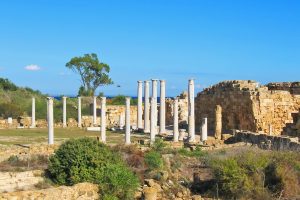
The Salamis Gymnasium stands as one of Cyprus's most remarkable ancient structures. Located just north of modern Famagusta on the eastern coast of Cyprus, this impressive complex reveals the sophisticated approach ancient civilizations took toward physical fitness and public bathing. Built over earlier Hellenistic foundations during the 2nd century AD, the gymnasium represents the pinnacle of Roman architectural achievement on the island. encyclopedia-com Salamis itself dates back to around 1100 BC. According to ancient Greek tradition, the city was founded by Teucer, son of King Telamon, after the Trojan War. Archaeologists believe the city was actually established by settlers from the nearby Bronze Age site of Enkomi following an earthquake in 1075 BC. The city benefited from Cyprus’ rich copper resources and quickly became a major trade center and the island’s capital. For nearly a thousand years, Salamis served as the main port and political center of Cyprus. Historical Background The gymnasium complex has witnessed multiple cycles of destruction and rebuilding. Archaeological evidence shows that a Hellenistic gymnasium originally stood on this site. This earlier structure was destroyed by an earthquake and rebuilt during the reign of Emperor Augustus. The building faced another catastrophe in 76 AD during the reign of Emperor Vespasian when another powerful earthquake struck the region. The gymnasium as we see it today was restored by…

Read more