Explore Cyprus with Our Interactive Map

Explore our top stories and discover ideas worth your time.

How Infrastructure Overcomes Cyprus’s Rugged Terrain

How Infrastructure Overcomes Cyprus’s Rugged Terrain

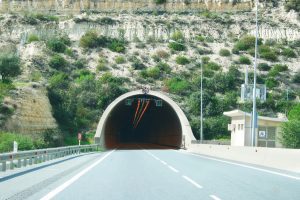
The Troodos Mountains cover roughly one-third of Cyprus, stretching across most of the western portion. Mount Olympus rises to 1,952 meters, making it the island's highest peak. These mountains formed through the collision of African and European tectonic plates, pushing ancient seabed rock formations skyward over millions of years. Climbfinder The landscape varies dramatically within short distances. Coastal areas sit at sea level while mountain villages perch at elevations exceeding 1,000 meters. Steep valleys cut through the terrain, with rivers carving gorges that modern roads must somehow cross. Wanderlog In 2011, heavy rainfall triggered 128 separate landslide incidents in Paphos, causing significant damage to roads and buildings. These geological realities force engineers to constantly assess slope stability when planning new infrastructure. The island's geology includes unstable clay-rich soils and fractured rock formations that shift during rainfall, creating ongoing maintenance demands. Building Motorways Through Mountains Cyprus developed its motorway network relatively recently compared to European neighbors. The A1, completed in October 1985, became the island's first motorway. Despite this late start, Cyprus now leads all European Union members with 36.8 kilometers of motorway per 100,000 inhabitants. The network totals approximately 7,206 kilometers of paved roads and 4,387 kilometers of unpaved routes. No toll roads exist anywhere on the island. The Public Works Department manages motorways and major roads, while municipalities handle…

Read more
Cinematic Sea Cliffs and Stone Fortresses

Cinematic Sea Cliffs and Stone Fortresses

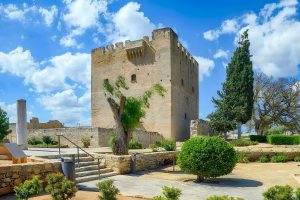
These fortifications originally served as watchtowers and defensive positions against Arab raids from the 7th to 10th centuries, with guards using fire signals to communicate between castles and warn coastal cities of approaching enemies. The strategic positioning allowed 360-degree views across both northern and southern coasts, with Kantara's summit offering visibility extending to Turkey, Lebanon's mountains 160 kilometers away, and across the Karpasia Peninsula. oloi-cy Saint Hilarion's Fairytale Architecture Saint Hilarion Castle occupies an impregnable position on a rocky outcrop at 732 meters, creating a structure believed to have inspired Walt Disney's design for Snow White and the Seven Dwarfs castle. The fortress divides into three distinct levels embedded into mountain rock, each featuring hidden rooms, secret tunnels, and gardens offering panoramic views of the Mediterranean and surrounding countryside. Byzantine builders originally constructed the castle in the 10th or 11th century, though some sources suggest earlier origins. pinterest-com The Lusignan dynasty from 1192 to 1489 expanded the fortifications extensively, adding chambers for knights, royal families, and administrative functions. The castle served simultaneously as military outpost and royal summer residence, with the upper level containing royal apartments that provided escape from coastal heat. The Venetians who ruled from 1489 to 1571 added heavy defensive walls and strong towers, though they later abandoned mountain castles in favor of coastal fortifications at Kyrenia,…

Read more
Trahanas Preserving In Cyprus

Trahanas Preserving In Cyprus

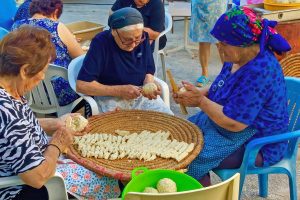
Trahanas is not a soup in the usual sense. It is a solution shaped by necessity. Long before refrigeration, electricity, or supermarkets, Cypriot households needed a way to preserve the abundance of summer milk and turn it into nourishment for the colder, damp months that followed. Trahanas emerged as a practical answer to this challenge, turning perishable ingredients into a stable, nourishing reserve. homeiscyprus-com Tangy, filling, and deeply comforting, trahanas sits at the centre of Cyprus’s food memory not because it is impressive, but because it worked when it mattered most. To eat trahanas is to taste the logic of survival shaped by land, climate, and patience. A Food Designed to Last, Not Impress At its core, trahanas is made from sour sheep’s or goat’s milk combined with cracked wheat, often called konari in Cyprus. The mixture is fermented, cooked, shaped, and then dried under the summer sun until it becomes hard and shelf-stable. Months later, it is rehydrated with water or stock and slowly boiled into a thick, warming soup. cyprusfoodmuseum-com This transformation is the point. Trahanas begins as liquid, becomes solid, and returns to liquid again, with every stage designed to extend life rather than enhance appearance. The rough texture, the sourness, and the muted colour are not flaws. They are evidence of a food designed with intention,…

Read more