Explore Cyprus with Our Interactive Map

Explore our top stories and discover ideas worth your time.

Cyprus Carob Black Gold

Cyprus Carob Black Gold

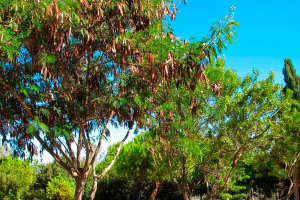
For centuries, the carob tree quietly underpinned life in Cyprus. Long before sugar, tourism, or modern industry reshaped the island, carob sustained rural families economically, nutritionally, and socially. Known locally as “black gold,” it was never glamorous, but it was dependable. In a land shaped by drought, invasion, and uncertainty, the carob tree endured, feeding people, funding villages, and anchoring tradition in the Cypriot landscape. A Tree Built for Hard Conditions The carob tree, Ceratonia siliqua, is perfectly adapted to Cyprus’s dry Mediterranean climate. Its deep roots draw moisture from far below the surface, allowing it to survive long summers without irrigation. Thick, leathery leaves reduce water loss, and slow growth produces a tree that can live for centuries. This resilience explains why carobs thrived where other crops failed. On rocky slopes and marginal land unsuitable for cereals, carob trees continued to produce reliable harvests. For rural communities, they were less a crop and more a form of insurance, offering stability in an unpredictable environment. Why It Was Called “Black Gold” The name "black gold" was not a poetic exaggeration. Ripe carob pods darken to a deep brown, almost black, and for generations, they ranked among Cyprus's most valuable exports. Even in years when wheat failed or rainfall was scarce, carob trees continued to bear fruit. For many families, a…

Read more

A Tapestry of Cyprus Sacred Spaces

A Tapestry of Cyprus Sacred Spaces

Most visitors to Cyprus know about its Greek Orthodox churches and ancient Christian monasteries, but the island's religious story is far richer and more complex. For millennia, Cyprus has been home to Jewish communities, Muslim mosques, Armenian and Maronite Christians, Sufi mystics, and Latin Catholic cathedrals - each faith leaving monuments that testify to survival, migration, and remarkable coexistence. orthodoxtimes.com Walking through Cyprus's cities means encountering this layered religious landscape where synagogues stand near mosques, Gothic cathedrals became prayer halls, and sacred springs were shared by people of different beliefs. Where Many Faiths Met and Mingled Cyprus has never belonged to a single religious tradition. Its position at the meeting point of Europe, Asia, and Africa made it a crossroads not only for trade and armies but also for belief systems. Long before Orthodox Christianity became dominant in the medieval period, Cyprus hosted Jewish traders and craftsmen, pagan mystery cults, and early Christian congregations mentioned in the New Testament. Later waves brought Islamic institutions during Ottoman rule, Armenian refugees fleeing persecution, Maronite Christians migrating from Lebanon and Syria, and Western European Crusaders establishing Latin Catholic strongholds. Rather than existing as isolated enclaves, these religious minorities participated actively in Cyprus's economy, diplomacy, and urban life. Their monuments - synagogues, mosques, churches of different denominations, and Sufi lodges - aren't marginal curiosities…

Read more
Byzantine Frescoes & Iconography

Byzantine Frescoes & Iconography

The Troodos Mountains of Cyprus contain one of the most remarkable collections of Byzantine religious art in the world. Ten churches and monasteries, all designated as UNESCO World Heritage Sites, preserve frescoes and paintings that span from the 11th to the 16th centuries. travel-rambler-ru These mountain sanctuaries hold more than just beautiful artwork. They represent a continuous tradition of Christian artistic expression that survived invasions, political upheaval, and changing empires. The paintings on their walls tell biblical stories in vivid colors that remain surprisingly bright after 900 years. What makes these sites particularly valuable is their completeness. Unlike many Byzantine monuments that suffered damage or destruction, the remote mountain locations protected these churches from the Arab raids that devastated coastal areas between the 7th and 10th centuries. The steep-pitched wooden roofs, specifically designed to handle mountain snow and rain, also helped preserve the interior artwork. Historical Background Cyprus became part of the Byzantine Empire when Constantinople was founded in 324 AD. The island inherited artistic traditions from both ancient Greek and Roman culture, which Byzantine artists developed into a distinctive Christian visual language. The first major period of Byzantine art in Cyprus lasted from the late 4th century until the 7th century. istanbultouristpass-com During this time, craftsmen built large basilicas with wooden roofs and created three exceptional apsidal mosaics. The…

Read more