Fishing traditions and seafood cuisine

Articles: Fishing traditions and seafood cuisine

Stories in this category and its subcategories.

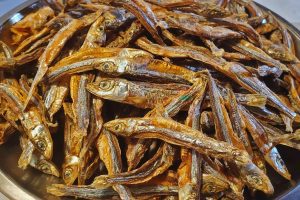
Fish Preservation Techniques In Cyprus

Fish Preservation Techniques In Cyprus

For much of Cyprus’s history, the challenge was never catching fish. It was keeping it. Long before ice, refrigeration, or fast transport, fresh fish could spoil within hours under the Mediterranean sun. To survive, coastal communities developed preservation methods that turned a fragile, short-lived food into something durable, transportable, and dependable. Salting, drying, and smoking were not culinary experiments. They were practical responses to climate, distance, and necessity, shaping how Cypriots ate, traded, and lived. fire-food-com Understanding these techniques reveals more than food history. It shows how knowledge, cooperation, and environment came together to support life across the island. Why Preservation Was Essential In pre-modern Cyprus, fresh fish was a luxury of proximity. Coastal villages could eat what they caught…

Read more

Traditional Caique and Dghajsa Boats Cyprus

Traditional Caique and Dghajsa Boats Cyprus

Along the Cypriot coast, the sea was never a distant backdrop. It was a working space, a source of food, and a route that connected villages to the wider Mediterranean. For generations, this relationship depended on small wooden boats shaped by experience rather than theory. Among them, the caïque and the varka (or local skiff) represent traditions of craftsmanship and seamanship. This article explores how these boats were built, how they were used, and why they still matter, not as romantic symbols, but as practical responses to life by the sea. Boats Designed by Water, Not by Paper Traditional Mediterranean boats were not designed on drafting tables. They were shaped directly by water conditions, weather patterns, and daily use. Boatbuilders…

Read more
Following Seasons of the Sea Cyprus Fishing

Following Seasons of the Sea Cyprus Fishing

Fishing in Cyprus has never been a matter of going out to sea and taking whatever is available. For centuries, coastal communities shaped their lives around the rhythms of the Mediterranean, fishing when conditions allowed, resting when they did not, and adjusting methods as fish moved, spawned, or disappeared. These seasonal patterns were not written rules but accumulated knowledge, refined through observation and necessity. Understanding traditional fishing in Cyprus means understanding how people learned to work with the sea rather than against it. fishingtourism.org A Relationship Built on Timing The Mediterranean is not a uniform or endlessly predictable environment. Around Cyprus, subtle seasonal changes in temperature, light, and currents strongly influence where fish gather and how active they become. Traditional…

Read more
Lines and Nets: Fishing Traditions of Cyprus

Lines and Nets: Fishing Traditions of Cyprus

Fishing has shaped life along the Cypriot coast for thousands of years. From small family boats setting out before sunrise to modern vessels working farther offshore, the way fish are caught reflects deeper stories about culture, sustainability, and identity. This article explores how artisanal and industrial fishing coexist in Cyprus, why certain marine species matter so deeply to local life, and how food, regulation, and global recognition are reshaping the island’s relationship with the sea. adobe-stock-com Understanding the Two Worlds of Fishing At its simplest, fishing in Cyprus today exists in two parallel worlds. One is artisanal fishing, rooted in tradition, small-scale effort, and close ties to local communities. The other is industrial fishing, shaped by modern technology, larger vessels,…

Read more
Community-Based Fishing Villages of Cyprus

Community-Based Fishing Villages of Cyprus

Along the Cypriot coast, fishing was never simply a job carried out at sea and forgotten once boats returned to shore. It was a shared way of life that shaped villages, relationships, and daily rhythm. In small coastal communities, fishing organised how people worked, ate, celebrated, and supported one another. Boats and nets mattered, but cooperation mattered more. Understanding Cyprus’s fishing villages means looking beyond catches and techniques to the social systems that grew around them and quietly endured. Adobe-Stock-com Villages Built Around Shared Work Community-based fishing villages developed where fishing was not an individual pursuit but a collective responsibility. Boats were small, crews were familiar, and labour depended on trust rather than contracts. Knowledge, tools, and effort were shared…

Read more