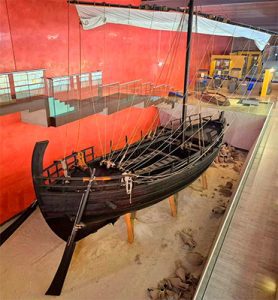

Cyprus and the Sea

Articles: Cyprus and the Sea

Stories in this category and its subcategories.

Waterfront Streets of Cyprus

Waterfront Streets of Cyprus

Cyprus waterfront streets stand as living examples of Mediterranean coastal architecture. These narrow lanes wind between stone homes and harbors where fishing boats bob in the water. The combination creates a picture that has defined Cypriot coastal life for centuries. The architecture reflects practical needs adapted over generations, with thick stone walls built to withstand salt air and coastal weather. Shutterstock-com Fishermen positioned their homes steps from the water, creating communities where daily life revolved around the sea. Today these streets preserve traditional building methods and materials while continuing to function as active neighborhoods. The stone structures, colorful boats, and winding pathways offer a direct connection to Cyprus's maritime heritage. Waterfront Architecture in Cyprus The relationship between Cyprus and the…

Read more
Cyprus Ports and Maritime Trade

Cyprus Ports and Maritime Trade

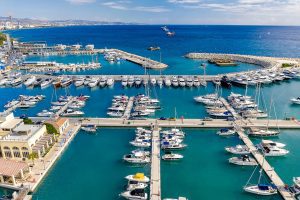
Cyprus operates as one of the Mediterranean's most important maritime hubs, with ports handling approximately 4.7 million tonnes of cargo annually and the island controlling the third largest merchant fleet in the European Union. The strategic location at the crossroads of Europe, Asia, and Africa has made Cyprus a natural transhipment center for European-Far East trade routes. Limassol serves as the main port, processing around 90 percent of the island's exports and imports with capacity for 500,000 twenty-foot equivalent units. The Cyprus ship registry ranks eleventh globally with over 2,200 ocean vessels totaling more than 25 million gross tons. Limassol city has evolved into Europe's largest third-party ship management center, with over 200 shipping companies managing approximately 20 percent of…

Read more
Cyprus Ancient Naval Influence

Cyprus Ancient Naval Influence

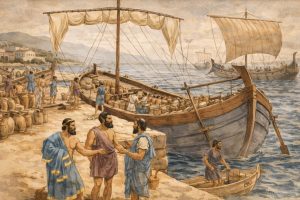
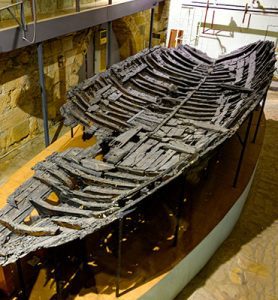
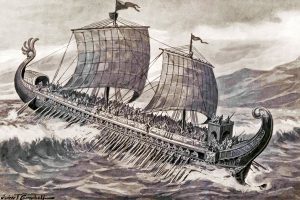
For much of antiquity, Cyprus was less an island on the map and more a working platform of the sea. Positioned between the Aegean, the Levant, and Egypt, it became a testing ground where Phoenician and Greek seafarers refined ships, navigation, and maritime organisation. This article explains how those two cultures approached the sea differently, why Cyprus mattered to both, and how their overlapping naval traditions quietly transformed the island into one of the Mediterranean’s most connected societies. dom-com An Island That Made Sense Only from the Water Cyprus’s importance is easiest to understand when viewed from a ship’s deck. Sitting at the eastern edge of the Mediterranean, the island lies directly along the sea lanes linking the Aegean world…

Read more
Piracy and Naval Conflict in Cyprus

Piracy and Naval Conflict in Cyprus

For centuries, Cyprus lived with a constant awareness of the sea. Its position at the crossroads of Europe, the Middle East, and North Africa brought trade, wealth, and cultural exchange, but it also exposed the island to piracy and naval warfare. Ships on the horizon were never neutral. They could mean commerce and connection, or sudden violence and loss. Over time, this uncertainty shaped how Cyprus was built, governed, and defended. Piracy and naval conflict were not interruptions to Cypriot history. They were defining forces. An Island That Could Not Be Ignored Cyprus sits directly along major east–west Mediterranean sea routes. Any ship moving between the Aegean, the Levant, and Egypt passed close to its shores. This made the island…

Read more
Fish Preservation Techniques In Cyprus

Fish Preservation Techniques In Cyprus

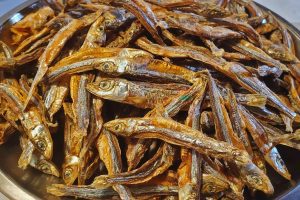
For much of Cyprus’s history, the challenge was never catching fish. It was keeping it. Long before ice, refrigeration, or fast transport, fresh fish could spoil within hours under the Mediterranean sun. To survive, coastal communities developed preservation methods that turned a fragile, short-lived food into something durable, transportable, and dependable. Salting, drying, and smoking were not culinary experiments. They were practical responses to climate, distance, and necessity, shaping how Cypriots ate, traded, and lived. fire-food-com Understanding these techniques reveals more than food history. It shows how knowledge, cooperation, and environment came together to support life across the island. Why Preservation Was Essential In pre-modern Cyprus, fresh fish was a luxury of proximity. Coastal villages could eat what they caught…

Read more
Traditional Caique and Dghajsa Boats Cyprus

Traditional Caique and Dghajsa Boats Cyprus

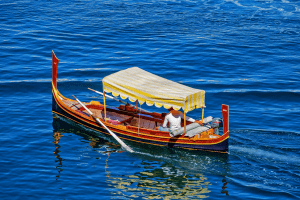
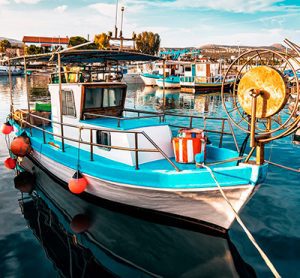
Along the Cypriot coast, the sea was never a distant backdrop. It was a working space, a source of food, and a route that connected villages to the wider Mediterranean. For generations, this relationship depended on small wooden boats shaped by experience rather than theory. Among them, the caïque and the varka (or local skiff) represent traditions of craftsmanship and seamanship. This article explores how these boats were built, how they were used, and why they still matter, not as romantic symbols, but as practical responses to life by the sea. Boats Designed by Water, Not by Paper Traditional Mediterranean boats were not designed on drafting tables. They were shaped directly by water conditions, weather patterns, and daily use. Boatbuilders…

Read more
Modern Naval Heritage in Cyprus

Modern Naval Heritage in Cyprus

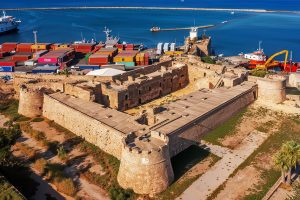
Cyprus has never treated the sea as a boundary. For centuries, its coastline functioned as a working edge where trade, defense, administration, and daily life met. In the modern period, this relationship was shaped most clearly by two naval powers: the Ottoman Empire and the British Empire. Their presence did not simply leave behind forts and harbors. It reshaped how the island was governed, how its ports functioned, and how Cypriots understood their place within the wider Mediterranean world. globalgrasshopper-com This article explores how Ottoman and British naval priorities transformed Cyprus from a regional outpost into a strategic maritime asset, and why that legacy still defines the island’s identity today. An Island Positioned to Be Watched Cyprus sits at a…

Read more
Following Seasons of the Sea Cyprus Fishing

Following Seasons of the Sea Cyprus Fishing

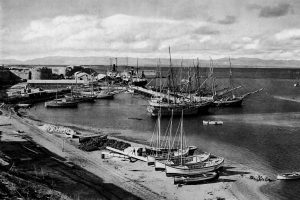
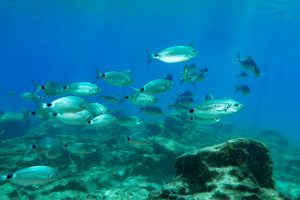
Fishing in Cyprus has never been a matter of going out to sea and taking whatever is available. For centuries, coastal communities shaped their lives around the rhythms of the Mediterranean, fishing when conditions allowed, resting when they did not, and adjusting methods as fish moved, spawned, or disappeared. These seasonal patterns were not written rules but accumulated knowledge, refined through observation and necessity. Understanding traditional fishing in Cyprus means understanding how people learned to work with the sea rather than against it. fishingtourism.org A Relationship Built on Timing The Mediterranean is not a uniform or endlessly predictable environment. Around Cyprus, subtle seasonal changes in temperature, light, and currents strongly influence where fish gather and how active they become. Traditional…

Read more
Cyprus at the Crossroads of the Eastern Mediterranean

Cyprus at the Crossroads of the Eastern Mediterranean

Cyprus sits quietly at sea, but its position has never been passive. For thousands of years, the island has stood close to the main maritime routes linking Europe, the Middle East, and North Africa. Empires did not value Cyprus for its size or population, but for its ability to observe, connect, and influence movement across the eastern Mediterranean. To understand Cyprus is to understand the sea around it, because the island’s history, economy, and regional role have always been shaped by passing ships and shared horizons. wikipedia-com Where Geography Turns into Influence A strategic maritime position is not about domination; it is about proximity. Cyprus lies near the natural crossroads of the eastern Mediterranean, where east–west and north–south sea routes…

Read more