Contact Us

Cyprus Discovery brings together stories of places, heritage, and everyday life across the island. Whether you have a question about an article, a tip about a location we should visit, or a historical detail to share, we read every message and value your perspective.

Use the form to reach the team—we aim to reply within a few business days. If you prefer email or have files to send, you can write to us directly at the address below.

cyprusdiscovery@outlook.com


    Explore our top stories and discover ideas worth your time.

    Best Cities to Live in Cyprus

    Best Cities to Live in Cyprus

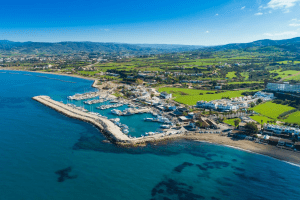
    Cyprus attracts thousands of foreign residents each year with its Mediterranean climate, safety, and reasonable living costs. The island offers three major cities that appeal to different lifestyles and budgets. Shutterstock-com Choosing between Nicosia, Limassol, and Paphos depends on whether business opportunities, beaches, or affordability take priority. Each city provides distinct advantages that match specific needs and preferences. Limassol Where Business Meets the Beach Limassol operates as Cyprus's economic powerhouse and financial center. The city draws professionals, entrepreneurs, and digital nomads with its modern marina, international businesses, and vibrant nightlife. Seafront promenades, coworking spaces, international schools, and cultural festivals create a cosmopolitan atmosphere unmatched elsewhere on the island. Shutterstock-com Monthly living expenses total €1,800 to €2,200 for single residents including rent, rising to €2,500 to €3,000 for couples. Families of four should budget €4,000 to €4,500 monthly. The cost matches cities like Lisbon or Berlin, though favorable tax treatment at 12.5% for businesses and freelancers helps offset higher daily expenses for long-term residents. The city commands the highest prices in Cyprus across all categories. One-bedroom apartments in the city center rent for €1,200 to €1,600 monthly, while larger two-bedroom units reach €1,600 to €2,400. High-end rental prices hit record levels in 2025, with asking rents ranging from €1,651 for one-bedroom apartments to €7,750 for four and five-bedroom units. Large six-bedroom…

    Read more

    Cyprus Secret Endemic Spurges

    Cyprus Secret Endemic Spurges

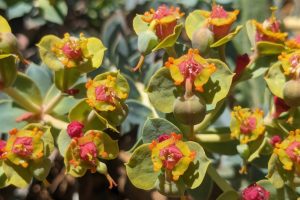
    Tucked away in the rugged hills and mountains of Cyprus, two special plants — Euphorbia veneris and Euphorbia lemesiana — bring subtle beauty to rocky spots. These endemic spurges, found nowhere else, whisper stories of ancient gods and recent discoveries. But what makes them thrive in such harsh places, and why are they like hidden treasures waiting to be found? www.inaturalist.org What Are These Tough Little Island Natives? Euphorbia veneris and Euphorbia lemesiana are both small, wild plants from the spurge family, a group known for their milky sap and simple flowers. They're perennials that come back each year, perfectly adapted to Cyprus's dry, sunny landscapes, adding quiet charm to the island's wild corners. How Did These Plants Spring from Cyprus's Mythical and Fiery Past? The Euphorbia genus gets its name from Euphorbus, an ancient Greek doctor around 12 BC, whose name meant "well-fed" — a funny twist since these plants are toxic. Euphorbia veneris honors Venus (Aphrodite), the goddess born from Cyprus's seas, linking it to the island's mythical roots. Described in 1963, it's a nod to Cyprus's geological history from ancient ocean floors pushed up by tectonic forces. Euphorbia lemesiana, named after Limassol (Lemesos), was discovered more recently in 2015 as part of the Eastern Mediterranean spurge group, evolving in isolation amid the island's volcanic past. www.inaturalist.org Picture…

    Read more
    A Fiery Crown in the Cypriot Summer

    A Fiery Crown in the Cypriot Summer

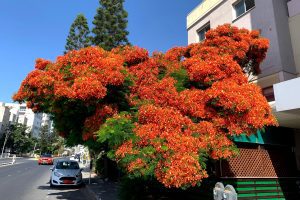
    Picture a quiet street in Ayia Napa or Limassol in early June, when the heat has already settled in. Suddenly the whole canopy ignites in a blaze of scarlet and orange, as if someone has draped living flames across the branches. This is the royal poinciana of Cyprus – a tree so spectacular that locals and visitors alike stop to stare every summer. The Royal Flame in the Legume Family Delonix regia belongs to the vast Fabaceae (legume) family, specifically the Caesalpinioideae subfamily – the same group that includes carob, senna and many beautiful tropical trees. The genus Delonix is small, with just a handful of species, nearly all native to Madagascar and nearby islands. Locally it is known as Φλαμπουγιάν (Flambouyian) or Βασιλική Ποιντσιάνα (Vasiliki Pointsiána), names that echo its French nickname “flamboyant” (showy or flaming) and its older scientific synonym Poinciana regia. The genus name itself comes from ancient Greek: delos (visible or conspicuous) + onyx (claw), perfectly describing the long, claw-like petals that make each flower look like a tiny exotic bird. From Madagascar to Cypriot Shores Native to the dry deciduous forests of Madagascar, the royal poinciana was unknown to science in the wild until the 1930s, though it had already been carried around the tropics by traders and gardeners for centuries. It reached the Mediterranean…

    Read more