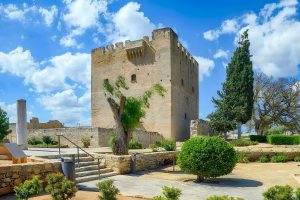
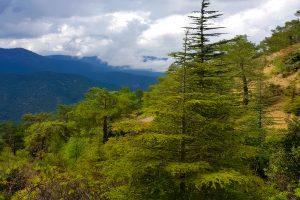
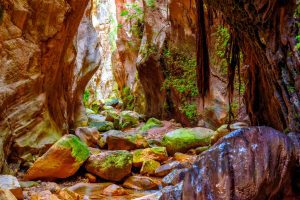
The Cavo Greco sunrise viewpoint sits at the southeastern edge of Cyprus, positioned at 95 meters above sea level on a small limestone mountain within Cape Greco National Forest Park.
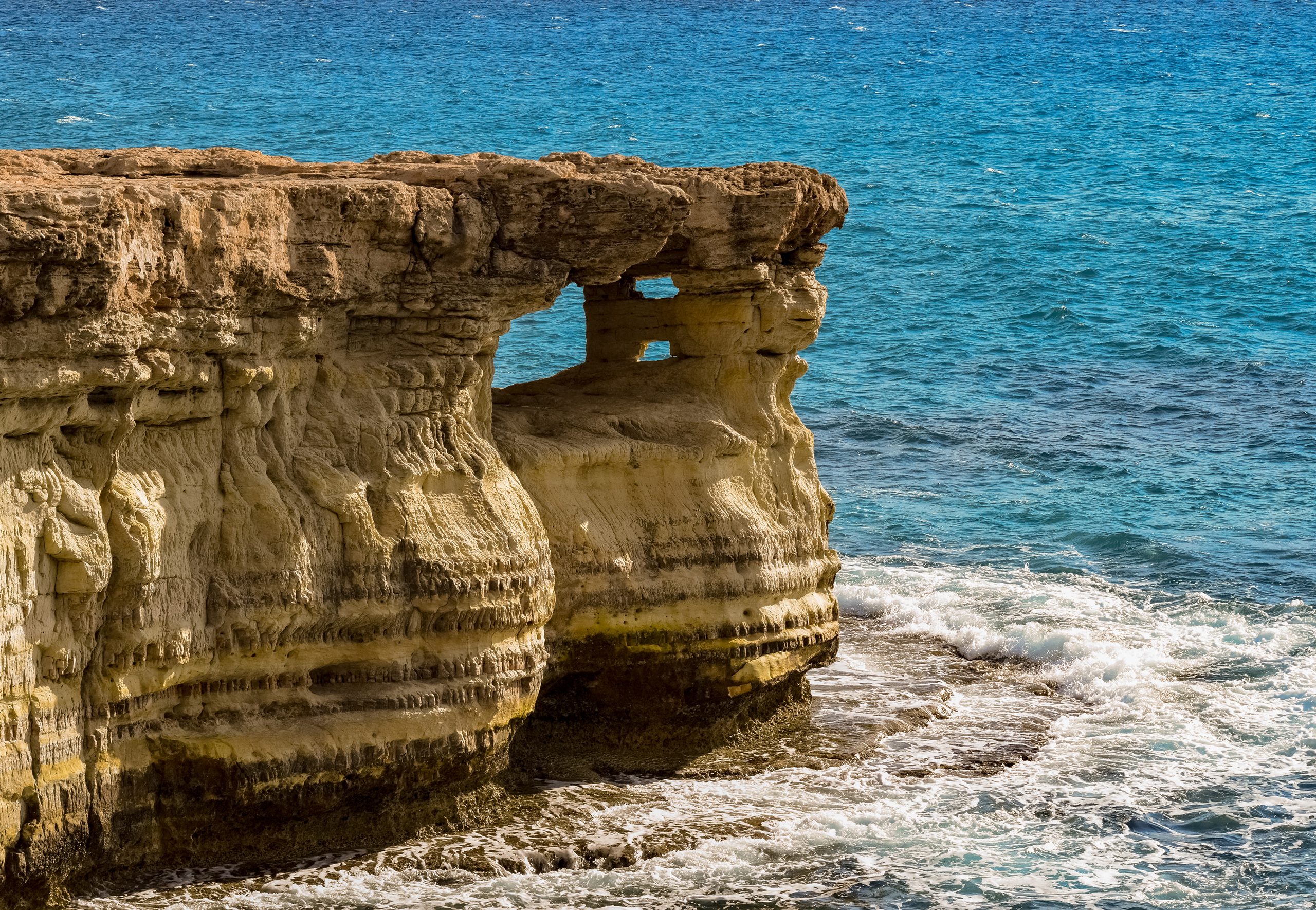
This protected area spans 385 hectares between the resort towns of Ayia Napa and Protaras. The viewpoint marks the easternmost point of both the Republic of Cyprus and the European Union, offering unobstructed panoramas of the Mediterranean Sea, Famagusta Bay, and the surrounding coastline.
Visitors come here primarily for the spectacular sunrise displays that occur daily, with the sun rising directly from the sea in vibrant colors that illuminate the limestone cliffs and turquoise waters below.
Historical Background
The limestone cliffs and formations seen today were created through a combination of tectonic activity and the erosive forces of the sea and wind over millions of years. The karst topography has produced numerous caves and natural arches throughout the area. The cape was known as Cape Pedalion in antiquity, and according to Strabo the trapezoidal hill lying above it was sacred to Aphrodite. Archaeological evidence shows the area has been inhabited since Neolithic times, with one of the oldest settlements in Cyprus discovered here in 1992.
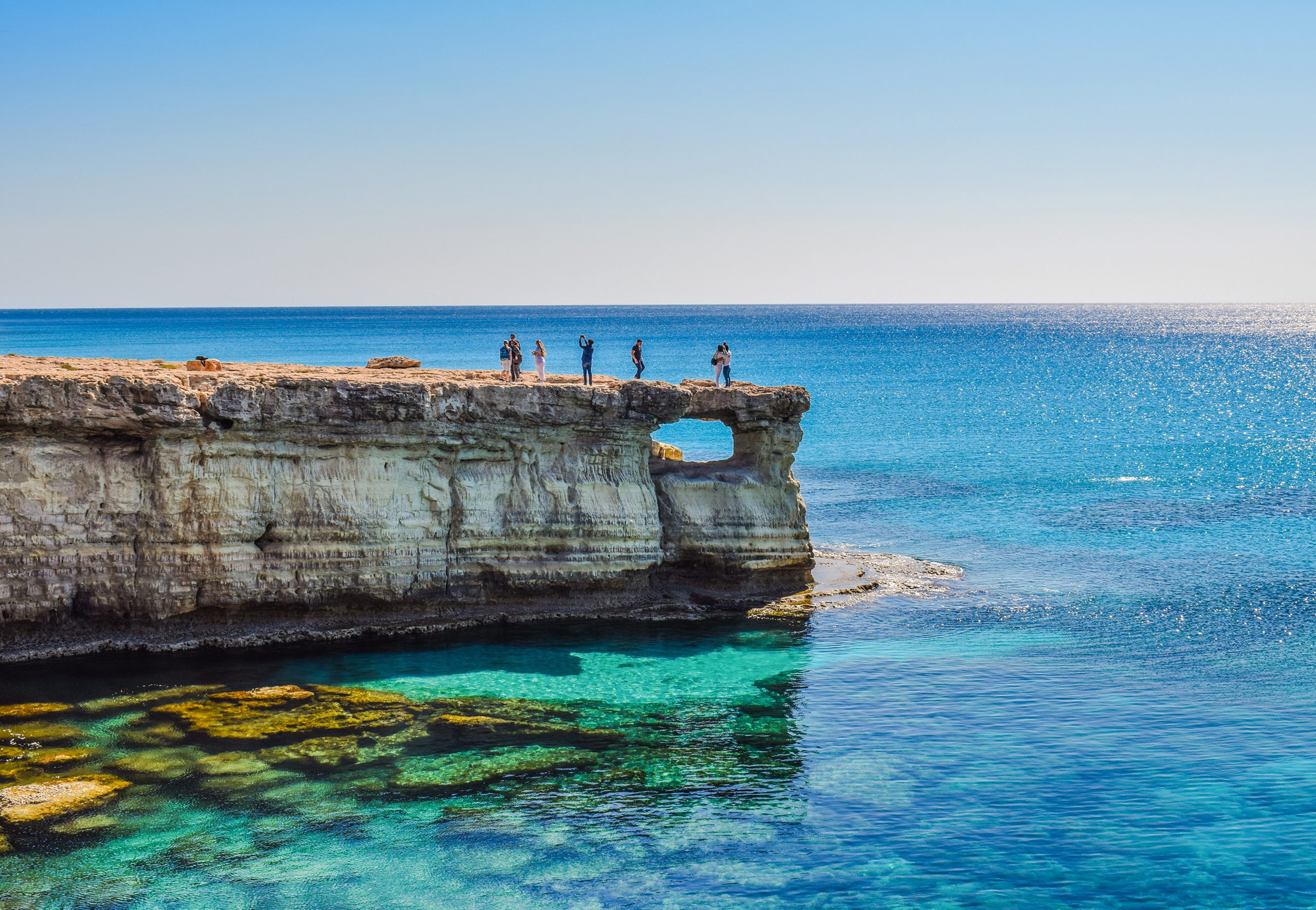
Cape Greco was designated as a National Forest Park in 1993 to preserve its unique ecosystems and prevent further degradation. Between 1910 and 1920, the area lost most of its dense juniper forest when trees were rapidly cut down and burned to power steam flour mills in the Paralimni region. The slow-growing juniper has never fully recovered, though varieties of pine, juniper, and 14 endemic plant species now populate the landscape. The name “Cavo Greco” comes from Italian words meaning “Greek Cape,” referring to Greek monks who found refuge on the island during the 13th century.
The Sunrise Experience from the Viewpoint
The viewpoint provides 360-degree views from its elevated position. To the west, visitors can see Ayia Napa and Konnos Bay, while the east reveals Protaras and the rugged coastline stretching toward the horizon. Below the viewpoint, the Blue Lagoon displays its turquoise waters, and sea caves carved into the cliffs create dramatic shadows as the morning light intensifies. The viewing platform includes benches and a gazebo that provides shade during hotter months.
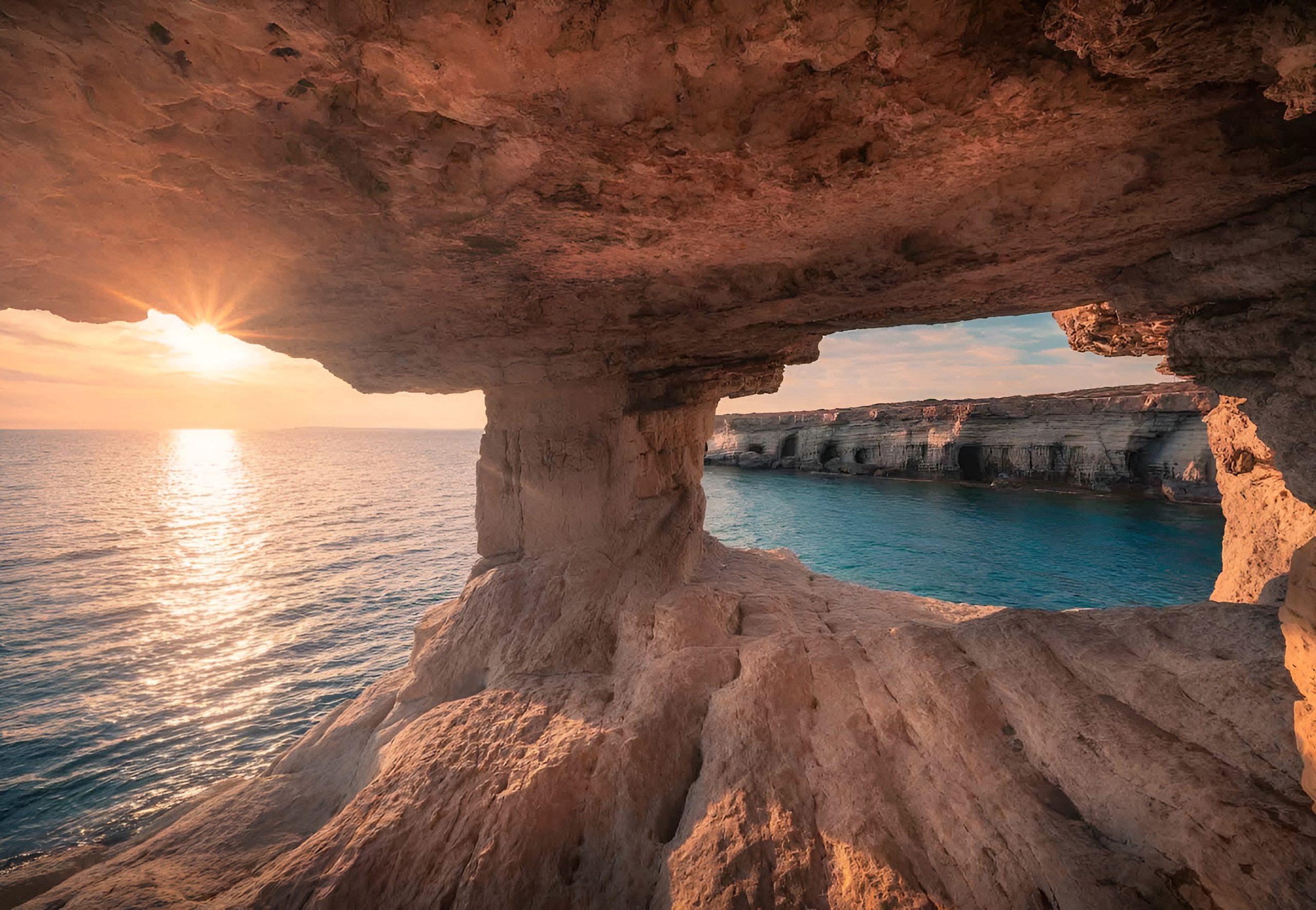
The sunrise at Cavo Greco occurs earliest in Europe due to the location’s geographic position. During summer months, the sun rises as early as 5:30 AM, while winter sunrises happen around 6:45 AM. The optimal viewing period begins approximately 45 minutes before the actual sunrise, when the sky transforms through shades of deep blue, pink, orange, and gold. The light changes constantly during this period, creating different photographic opportunities every few minutes.
Clear days produce brilliant golden light that spreads across the water and illuminates the limestone formations. When clouds are present, the sunrise becomes more dramatic, with rays of light breaking through gaps and creating what photographers call “god rays” or crepuscular rays. October through March typically offers the best conditions, as autumn and winter often bring more cloud formations that enhance the sunrise colors.
Interesting Facts About the Location
Cape Greco serves as a critical migration site for birds. The area has been designated an Important Bird Area by BirdLife International because it is a key migration site for large numbers of raptors and other birds, including red-footed falcons, pallid harriers, honey buzzards and common kestrels. Over 80 species of birds have been spotted here.
The area hosts more than 400 plant species, many endemic to Cyprus. During spring, the landscape explodes with colorful blooms including cyclamen and various orchid species. Wildlife includes foxes, hares, hedgehogs, and numerous lizard species. The surrounding waters are home to dolphins, sea turtles, and octopuses, with water visibility reaching up to 40 meters and temperatures ranging from 16°C to 28°C throughout the year.
According to local legend, the waters around Cape Greco are home to the mythical Ayia Napa sea monster, adding an element of folklore to the natural beauty. Near the viewpoint stands a British-built lighthouse constructed in 1892, the second lighthouse ever built in Cyprus after the one at Paphos Castle. The foundations of an ancient temple devoted to Aphrodite can still be found at the headland.
The Surrounding Natural Features
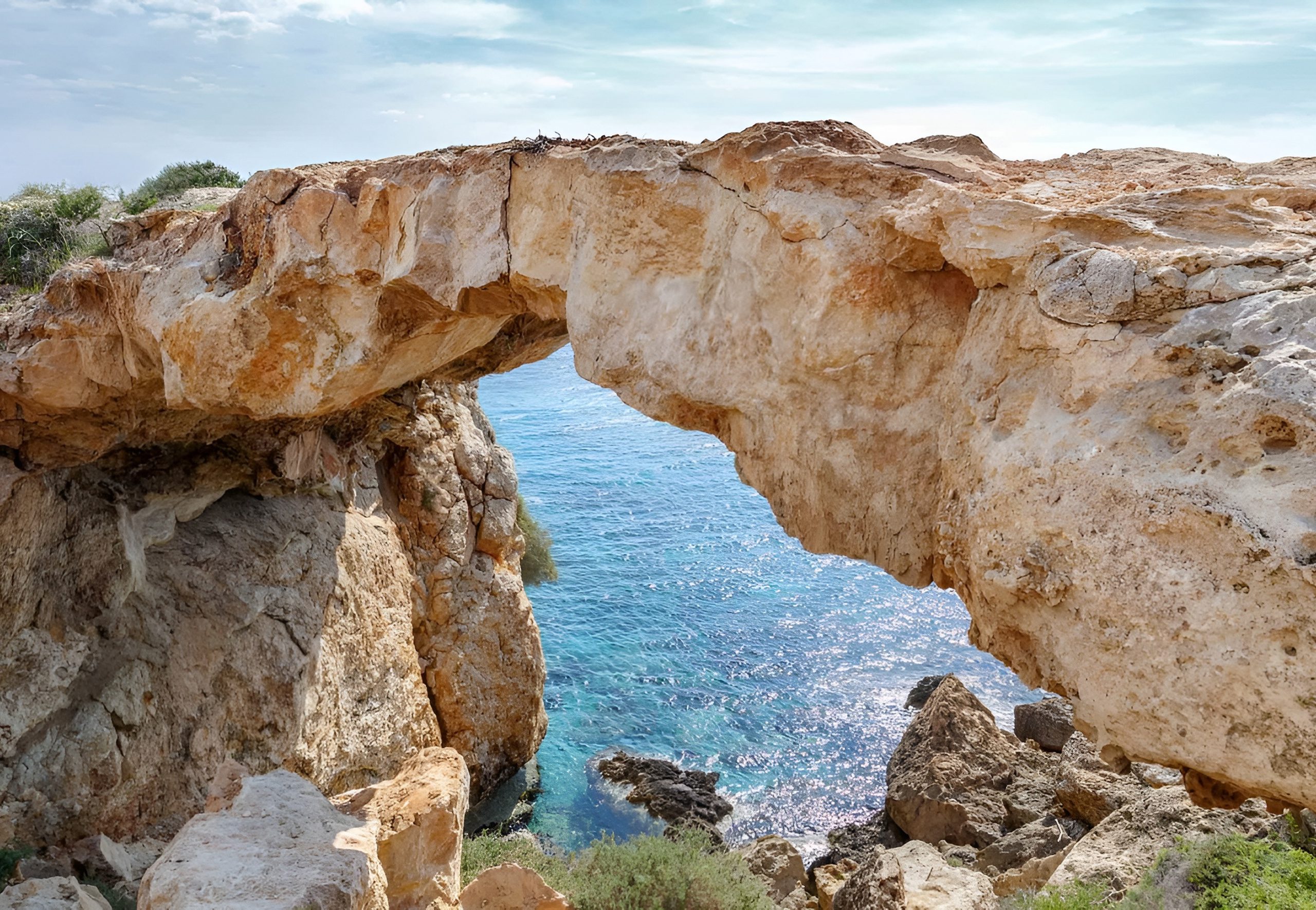
The viewpoint serves as an excellent starting point for exploring the wider Cape Greco area. The Kamara tou Koraka, also known as the Arch of Korakas or Love Bridge, stands as one of Cyprus’s most impressive natural bridges. This formation spans 50 feet in height and measures 23 feet wide, though it has shown signs of gradual erosion in recent years. Local legend states that couples who cross the bridge together will have eternal love.
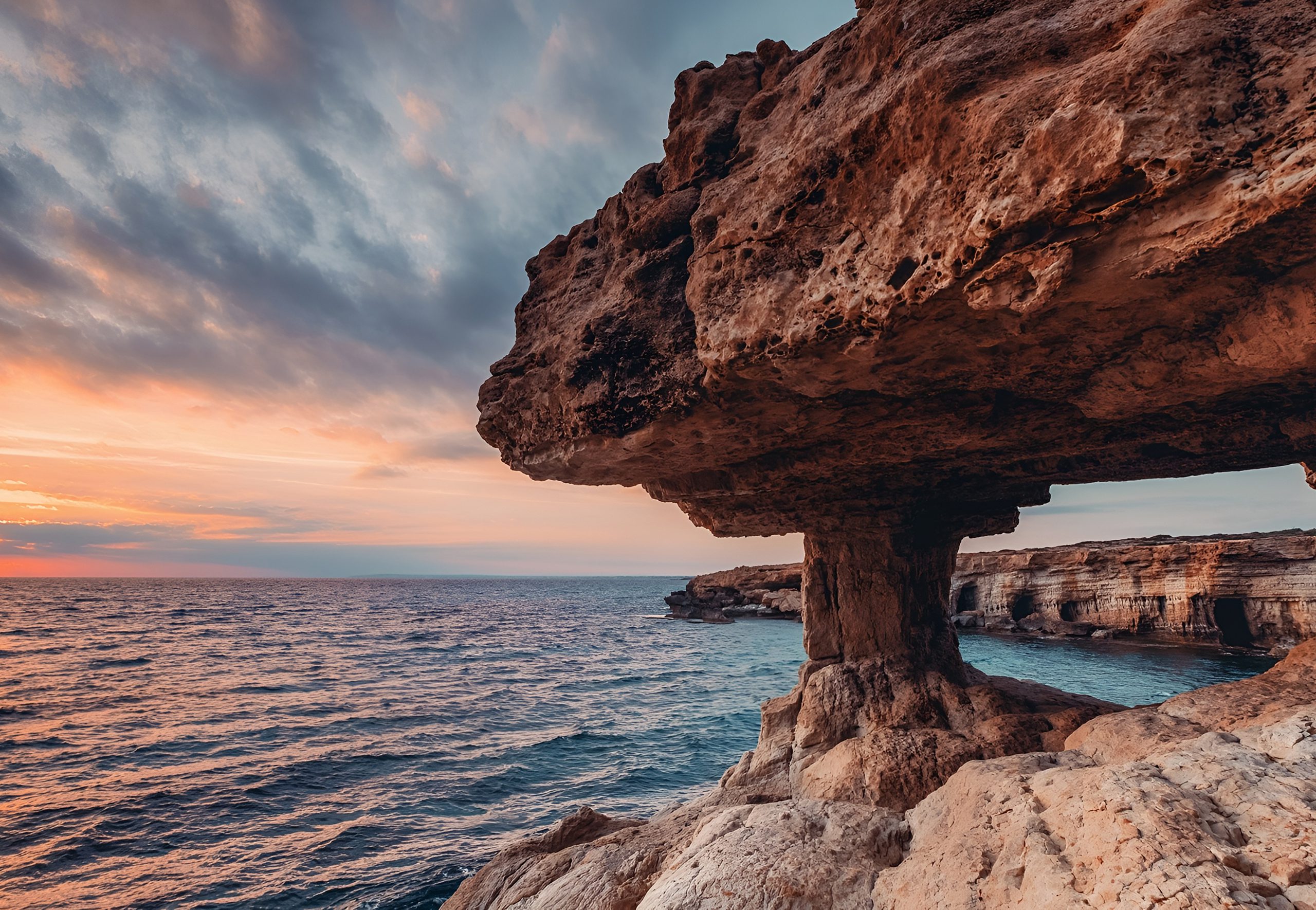
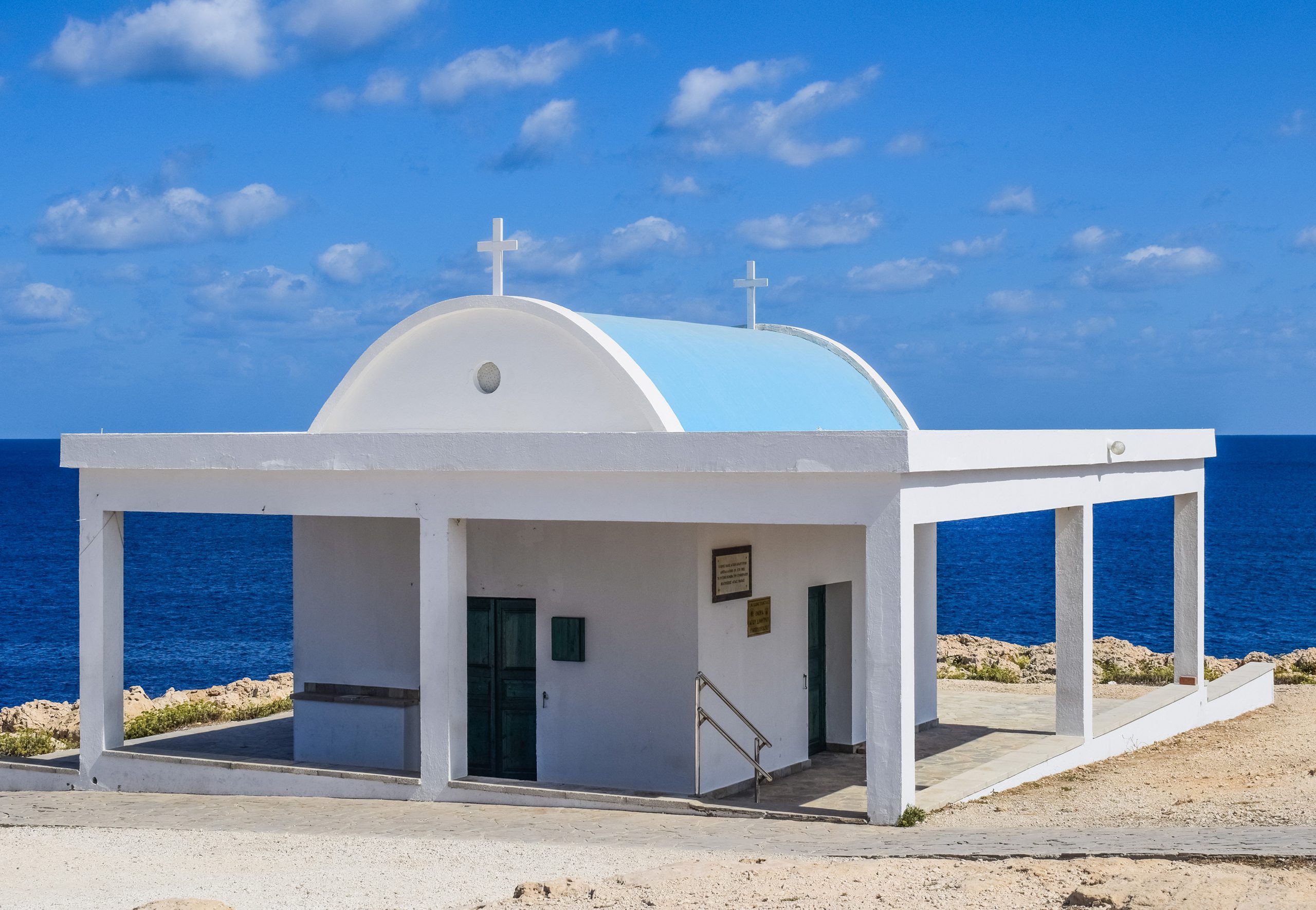
The sea caves below the cliffs extend as deep as 80 meters into the rock. During calm seas and low tide, visitors can swim or walk into many of them. The Palace Caves and Smugglers’ Caves are particularly notable, accessible only from the sea by boat or kayak. The whitewashed Ayioi Anargyroi Chapel perches on a cliff edge nearby, dedicated to Saints Cosmas and Damian, twin brothers who were doctors and healed people without accepting payment. Below the chapel lies a hermit’s cave mentioned in several local legends.
Several nature trails wind through the park. The Aphrodite Nature Trail stretches 2 kilometers along the northeast coast and forms part of the European Long Distance Trail E4, which runs from Cyprus to Gibraltar. The trails pass through Mediterranean maquis shrubland, with endemic flora adapted to the arid, rocky coastal environment and strong winds.
Current Role in Cypriot Life and Tourism
Cape Greco National Forest Park attracts thousands of visitors annually, with the sunrise viewpoint being one of the most photographed locations in Cyprus. The area appeals to nature enthusiasts, hikers, photographers, and couples seeking wedding photo locations. The park remains relatively quiet compared to the busy resorts of Ayia Napa and Protaras just minutes away, offering a peaceful escape for those who want to experience Cyprus’s natural environment.
Conservation remains a priority, with BirdLife Cyprus conducting regular anti-trapping patrols to combat illegal bird poaching during migration seasons. Reforestation initiatives have planted over 400 native saplings and shrubs in degraded areas. The Cape Greco Visitor Centre, established on the site of a former French radio transmitter, provides educational exhibits about the area’s ecology, endemic flora, and migratory bird populations.
The viewpoint has become particularly popular with photography enthusiasts who arrive before dawn to capture the sunrise. Many visitors combine their sunrise experience with other activities such as hiking, snorkeling in the Blue Lagoon, or exploring the sea caves. The area is equally popular at sunset, when the light turns golden, and the sun sets over Ayia Napa to the west.
Visiting Cavo Greco Sunrise Viewpoint
Access to the viewpoint is free and available 24 hours a day. A large parking area sits at the base of the small mountain, accommodating cars, motorcycles, and quad bikes. From the parking area, a gentle sloping path leads to the viewing platform, making the walk accessible for most fitness levels. The walk takes approximately 10 minutes.
By car, the viewpoint is only 5 to 10 minutes from Ayia Napa. Visitors should head east toward Protaras, then take the first turn toward the Grecian Park Hotel and Cape Greco. Public bus routes 101 and 102 run through the park from both Ayia Napa and Protaras, with a fare of €2 per person each way. The bus stops near the park entrance, requiring a short walk to reach the viewpoint.
For sunrise viewing, photographers recommend arriving at least 30 to 45 minutes before the scheduled sunrise time to secure a good position and witness the pre-dawn color changes. The area has minimal facilities, so visitors should bring water, snacks, and sun protection. A headlamp or flashlight is essential for navigating in the dark. Comfortable walking shoes are recommended, as the terrain consists of limestone rock and dirt paths.
Why This Viewpoint Deserves Attention
The Cavo Greco sunrise viewpoint represents Cyprus at its most natural and unspoiled. While the island is known for its beaches and resorts, this location showcases the dramatic geology, diverse ecosystems, and raw Mediterranean beauty that define the region’s character. The viewpoint connects visitors to the island’s ancient history, from the temple ruins dedicated to Aphrodite to the migratory routes birds have followed for millennia.
Standing here as the sun rises from the Mediterranean offers a moment of tranquility that contrasts with modern life’s constant motion. The ccrhanging light, the sound of waves below, and the vast horizon create an experience that reminds visitors why people have gathered at special places to witness natural phenomena for thousands of years. For anyone visiting Cyprus, particularly the Ayia Napa and Protaras regions, this viewpoint provides an essential encounter with the natural forces and timeless beauty that shaped this island.