Explore Cyprus with Our Interactive Map

Explore our top stories and discover ideas worth your time.

Wild Caper Plant

Wild Caper Plant

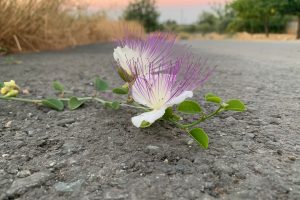
Imagine wandering along Cyprus' sun-baked cliffs, where a humble shrub clings to life amid rocks and sea spray, offering buds that burst with bitter and tangy flavor. This is the wild caper plant, a resilient survivor of the Mediterranean wilds, cherished for centuries in Cypriot kitchens and folklore. Join me as we explore its secrets, and discover why this thorny delight might just prick your curiosity. Konstantin-Solovev Getting to Know the Caper: Nature's Tangy Survivor The wild caper is a low-growing shrub that thrives in harsh, dry environments, producing edible flower buds and berries that add a zesty punch to meals. Known scientifically as Capparis spinosa, it's not a tree or herb but a hardy perennial, perfectly adapted to Cyprus' rugged landscapes. Think of it as nature's way of turning adversity into abundance, providing food and medicine from seemingly barren spots. What many foragers notice, though, is the constant company of ants marching across it. These insects aren’t pests – they’re part of an ancient partnership that helps the plant survive in harsh, rocky places. Ants are drawn in two main ways. First, the flowers produce plenty of accessible nectar that ants sip directly (they sneak in without pollinating, earning the label “nectar thieves”). Second – and this is where the crowds really gather – the ripe, red berries split…

Read more
Education and Academic Institutions in Cyprus

Education and Academic Institutions in Cyprus

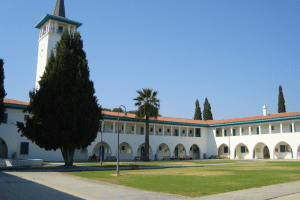
Education in Cyprus is overseen by the Ministry of Education, Sports and Youth. The education system is divided into pre-primary education for ages 3 to 6, primary education for ages 6 to 12, secondary education for ages 12 to 18, and higher education for ages 18 and above. Full-time education is compulsory for all children aged between 5 and 15. Shutterstock-com State-provided schooling including higher education is paid for by taxes, making public education free at all levels for eligible students. The Cypriot education system follows the Bologna framework, meaning degrees from Cyprus are recognized across Europe and globally, offering students internationally accepted qualifications. The Three Levels of Schooling Pre-primary education begins at age 3 and continues until age 6, though it is not mandatory. Public kindergartens operate under the Ministry of Education and follow a structured curriculum preparing children for primary school. Private kindergartens also exist, often offering bilingual or English-language programs. Shutterstock-com Primary education lasts six years from ages 6 to 12. The curriculum includes Greek language, mathematics, natural sciences, history, geography, religious education, physical education, music, and art. English language instruction typically begins in the third grade. Primary schools operate as single-shift schools, with classes from morning through early afternoon. Secondary education divides into two cycles. Lower secondary education, called Gymnasio, covers three years from ages 12…

Read more

Cyprus Folk Art Museum, Nicosia – Cultural Heritage

Cyprus Folk Art Museum, Nicosia – Cultural Heritage

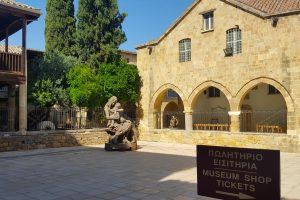
The Cyprus Folk Art Museum preserves the island's traditional crafts in a building that once housed archbishops and witnessed moments that changed Cypriot history. The museum occupies the Old Archbishopric building on Archbishop Kyprianos Square in central Nicosia. This location places it beside St. John's Cathedral, the Byzantine Museum, the National Struggle Museum, and the current Archbishop's Palace. wikipedia-com The building itself dates to the 15th century and features Gothic architecture with later additions. In the 13th century, the area was controlled by French rulers and served as a monastery for the Benedictine order. Later, the Order of St. John erected a church dedicated to their patron saint on the grounds. In 1218, Hugo I was buried in this church. When the Ottoman period ended in 1878, the Greek Orthodox Church took over the premises. Historical Background The Society of Cypriot Studies founded the museum in 1937. A group of pioneering scholars led by Constantinos Spyridakis established the society in 1936 with the goal of collecting and preserving Cypriot folk art. Adamantios Diamantis, a painter and art teacher who had studied at the Royal College of Art in London alongside Henry Moore and Barbara Hepworth, became the first director when the museum opened. Tripadvisor-com The Society approached Archbishop Makarios III in the early 1960s after the seat of the Archbishop…

Read more