Uncategorised

Articles: Uncategorised

Stories in this category and its subcategories.

Sweet Whispers from the Cypriot Countryside

Sweet Whispers from the Cypriot Countryside

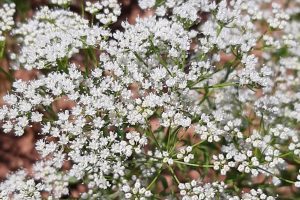
On warm spring mornings across Cyprus, a subtle licorice-like fragrance drifts through sunlit fields and village gardens. This comes from a graceful little herb known as Anise, or Pimpinella anisum. Though modest in size, it has woven itself into the island’s traditions for flavour, comfort, and quiet beauty inviting us to look closer at one of the Mediterranean’s most aromatic treasures. commons.wikimedia.org Discovering the Gentle Anise Herb Anise is a charming annual plant belonging to the Apiaceae family the vast “umbellifer” clan that also includes carrots, parsley, fennel, and dill. In broader terms, these plants are famous for their umbrella-shaped flower clusters and distinctive scents. Here in Cyprus, our species stands out as a delicate member of this group, offering…

Read more
Spikes and Towers in the Cypriot Sun

Spikes and Towers in the Cypriot Sun

Stand on a rocky hillside in southern Cyprus at the end of a long, dry summer and you may suddenly notice a giant green starburst on the slope. Then, one day, a towering stalk shoots skyward like a living flagpole, topped with a candelabra of creamy-yellow flowers. This is the agave of Cyprus a dramatic New-World succulent that has quietly become one of the island’s most eye-catching landscape characters. www.inaturalist.org Meet the Agaves Agaves belong to the asparagus family (Asparagaceae), in the subfamily Agavoideae. These are tough, rosette-forming succulents perfectly built for arid life. The genus Agave contains around 200 species, nearly all native to the deserts and dry hills of Mexico, the southern United States and Central America. In…

Read more
Sky-High Sentinels of the Cypriot Streets

Sky-High Sentinels of the Cypriot Streets

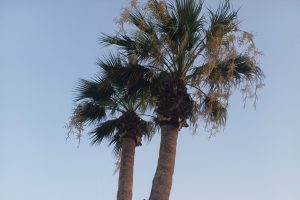
Wander along a bustling coastal promenade in Limassol or through a quiet park in Nicosia, and you might spot these towering fan-shaped trees swaying gently in the breeze. These are the Washingtonia palms of Cyprus – elegant imports from distant deserts that have become familiar landmarks across the island. But how did these American natives find a home in our Mediterranean paradise? www.inaturalist.org A Palm for Dry Lands Washingtonia belongs to the vast palm family, Arecaceae, which includes over 2,500 species worldwide, from the date palms we know so well to the coconut trees of tropical shores. In simple terms, it's a type of fan palm, known for its wide, spreading leaves that look like giant hands fanning the air.…

Read more
The Peeling Cinnamon Guardians of Cyprus Slopes

The Peeling Cinnamon Guardians of Cyprus Slopes

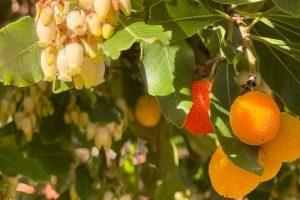
High on rocky, sun-scorched hillsides where pine meets maquis, a graceful evergreen catches the eye with branches glowing like polished copper. Each summer its smooth bark peels away in thin, papery sheets, revealing fresh layers of vivid orange-red and pistachio-green beneath – a living canvas of renewal. This is the Cyprus strawberry tree, one of the island’s most elegant natives and a quiet sentinel of the Mediterranean wildlands. www.inaturalist.org A Graceful Member of the Heath Family Known scientifically as Arbutus andrachne, this evergreen shrub or small tree belongs to the genus Arbutus within the Ericaceae family (the heath or heather family) in the order Ericales, part of the asterid group of flowering plants. In Cyprus it grows alongside its close…

Read more
A Fiery Crown in the Cypriot Summer

A Fiery Crown in the Cypriot Summer

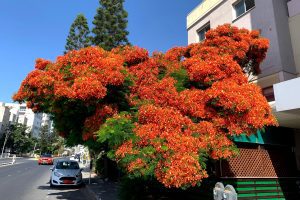
Picture a quiet street in Ayia Napa or Limassol in early June, when the heat has already settled in. Suddenly the whole canopy ignites in a blaze of scarlet and orange, as if someone has draped living flames across the branches. This is the royal poinciana of Cyprus – a tree so spectacular that locals and visitors alike stop to stare every summer. The Royal Flame in the Legume Family Delonix regia belongs to the vast Fabaceae (legume) family, specifically the Caesalpinioideae subfamily – the same group that includes carob, senna and many beautiful tropical trees. The genus Delonix is small, with just a handful of species, nearly all native to Madagascar and nearby islands. Locally it is known as…

Read more
Purple Trumpets in the Cypriot Spring

Purple Trumpets in the Cypriot Spring

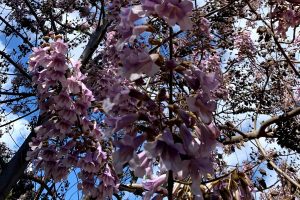
Imagine driving through the gentle hills near Paphos or Limassol in early April, when the air is still cool and the light turns golden. Suddenly, tall, bare-branched trees burst into clouds of soft lavender-purple bells that look like giant foxgloves hanging in the breeze. These are the Paulownia trees of Cyprus – fast-growing newcomers from the Far East that bring a touch of royal elegance to the island’s modern landscape. The Empress Tree Family Paulownia belongs to its own small family, Paulowniaceae, closely related to the foxgloves and snapdragons you might see in a cottage garden. These are deciduous trees that grow with astonishing speed. The main species planted in Cyprus are Paulownia tomentosa (the classic princess or empress tree)…

Read more
The Mottled Giants by Cypriot Streams

The Mottled Giants by Cypriot Streams

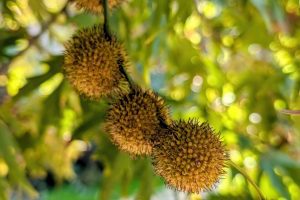
Beside a sparkling mountain stream in the Troodos foothills, tall trees with beautiful patchwork trunks cast deep, cool shade over the water. Their large, hand-shaped leaves rustle gently, while round, spiky fruit-balls dangle like tiny planets through the winter. This is the Oriental Plane, Platanus orientalis – Cyprus’s own river guardian and one of the island’s most majestic native trees. www.inaturalist.org A Member of an Ancient Family Known scientifically as Platanus orientalis, the Oriental Plane belongs to the small but noble Platanaceae family within the order Proteales. The Tree of Hippocrates, under which Hippocrates—the "Father of Medicine"—taught at Kos, is reputed to have been an oriental plane. In Cyprus it is the only native plane tree, perfectly adapted to life…

Read more
Citrus Groves That Shaped Cyprus Coast

Citrus Groves That Shaped Cyprus Coast

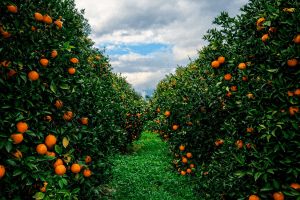
Citrus trees have never been a background crop in Cyprus. They reshaped coastal plains, sustained export economies, scented villages with orange blossom, and anchored everyday cooking. Oranges, lemons, grapefruits, and local hybrids thrive where mild winters meet long sunlight hours, making citrus one of the island's most recognisable and enduring farming traditions. Even as Cyprus modernises, citrus remains a quiet constant, rooted in land, memory, and daily life. Why Citrus Took Hold in Cyprus Citrus farming in Cyprus is defined by geography. The island’s coastal plains provide exactly what citrus trees require: frost-free winters, fertile soils, and long growing seasons. Unlike vineyards that climb into the mountains, citrus orchards stay close to the sea, shaping lowland landscapes around Morphou, Limassol,…

Read more
Larnaka (Larnaca) Medieval Museum

Larnaka (Larnaca) Medieval Museum

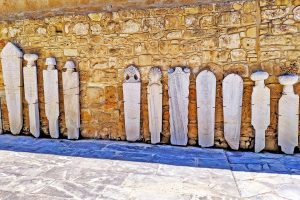
The Larnaka Medieval Museum offers visitors a compact yet fascinating journey through 15 centuries of Cypriot history. Located on the second floor of the Medieval Fort at the end of Foinikoudes promenade, this small museum houses a carefully selected collection that spans from the Early Christian period to Ottoman rule. shutterstock-com The museum occupies three rooms within the fort's upper level, a structure that itself tells a story of Cyprus's layered past. The building sits directly on Larnaca's waterfront, where the Mediterranean laps against stone walls that have witnessed centuries of change. The location proves as significant as the exhibits themselves. The fort began as a small Byzantine fortification in the late 12th century, positioned to guard the harbour. Between…

Read more