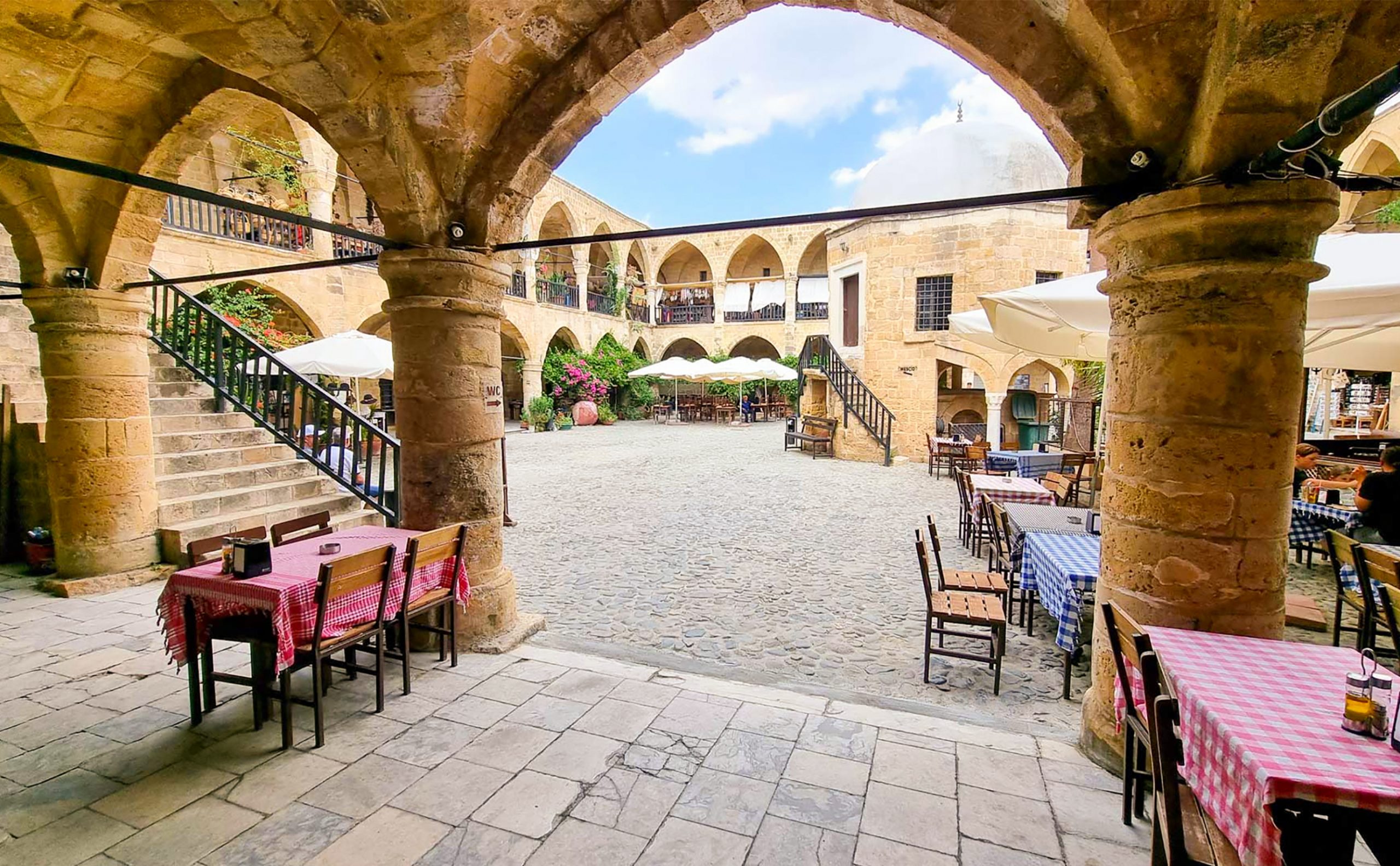
In the center of the Turkish-occupied part of Nicosia’s Old City stands a building that has had many lives. It has been a merchant’s inn, a prison, a home for displaced families, and today it is a lively cultural center. Built in 1572, just two years after the Ottomans took over Cyprus, Büyük Han is the largest and best example of caravanserai architecture on the island.
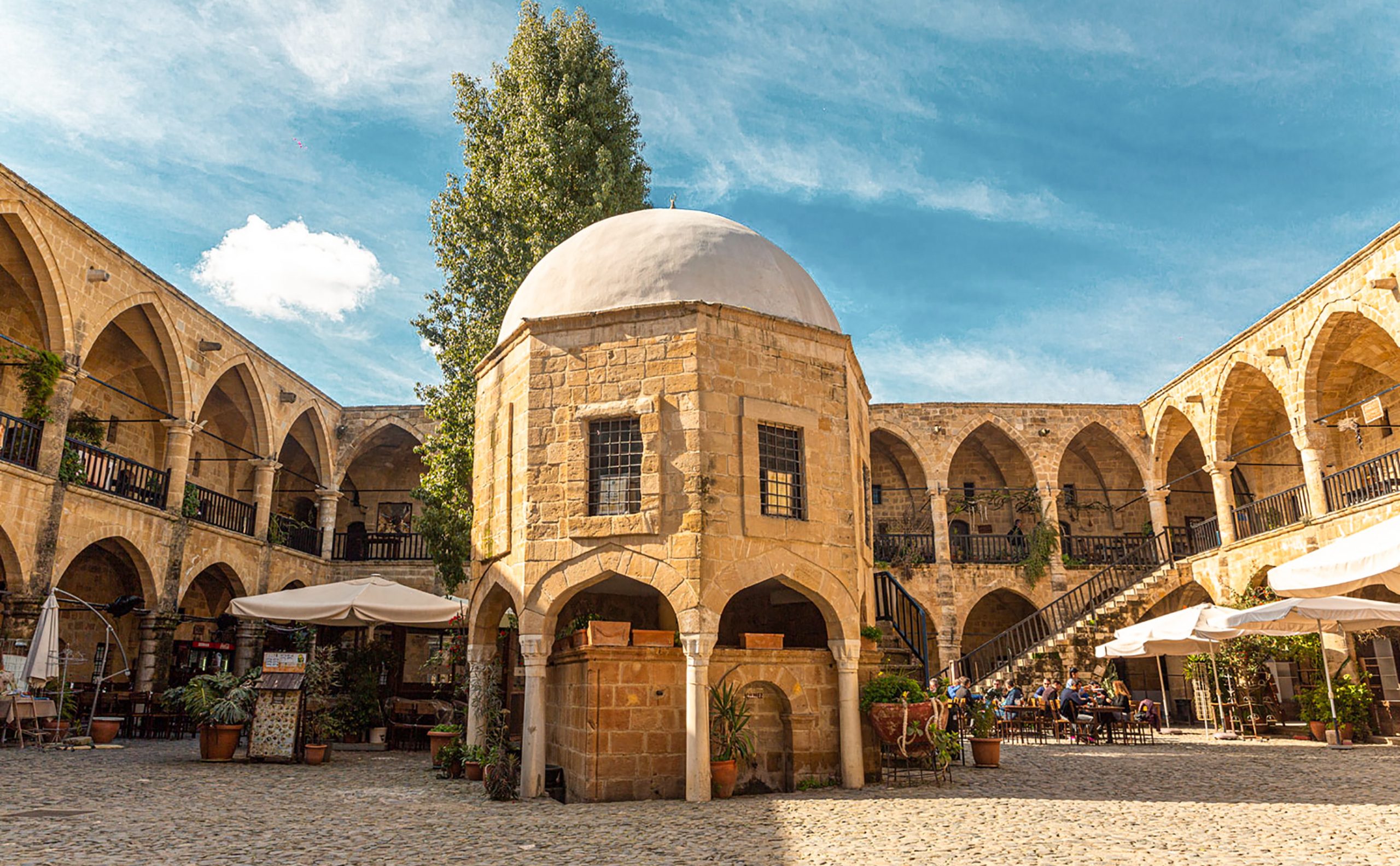
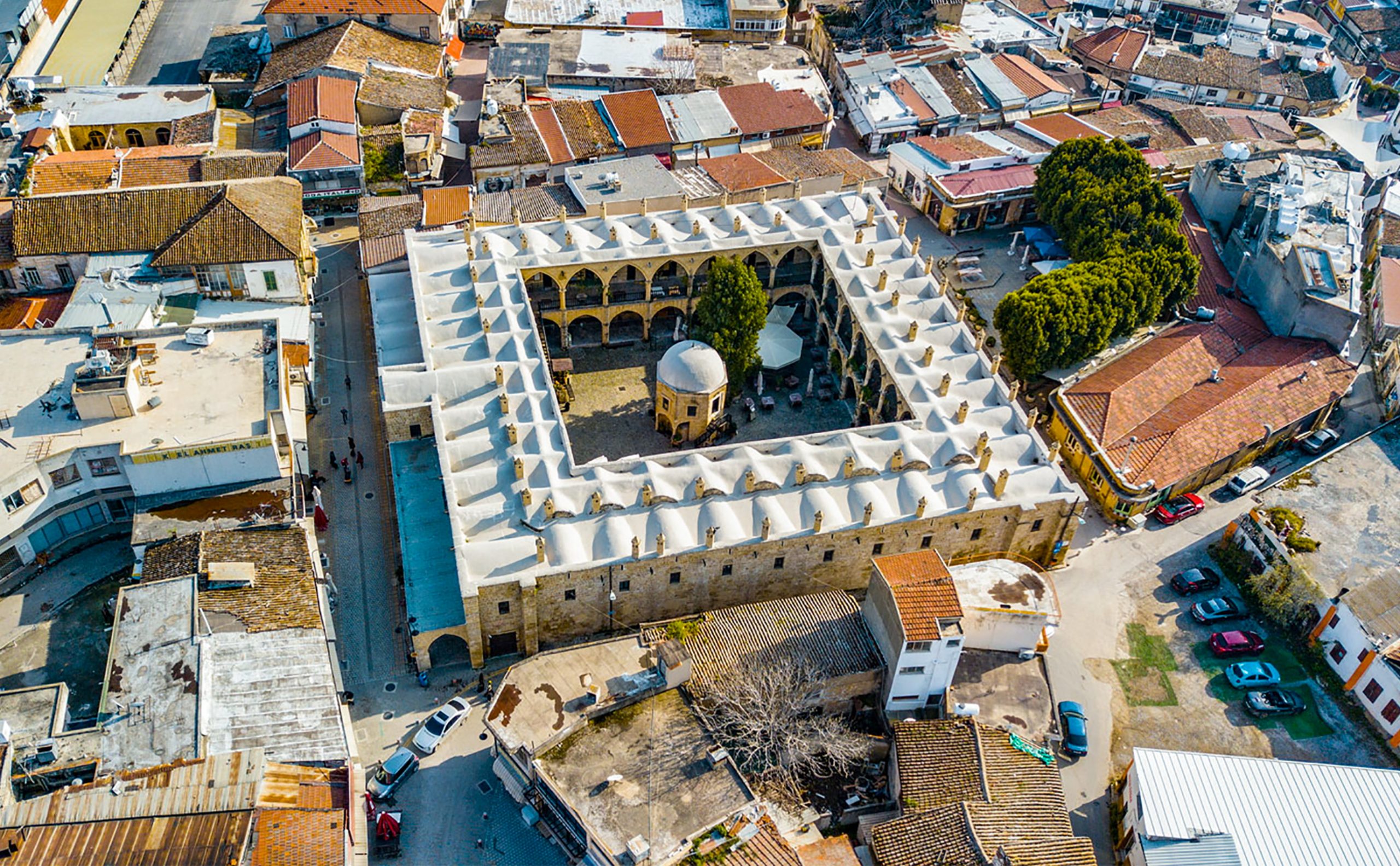
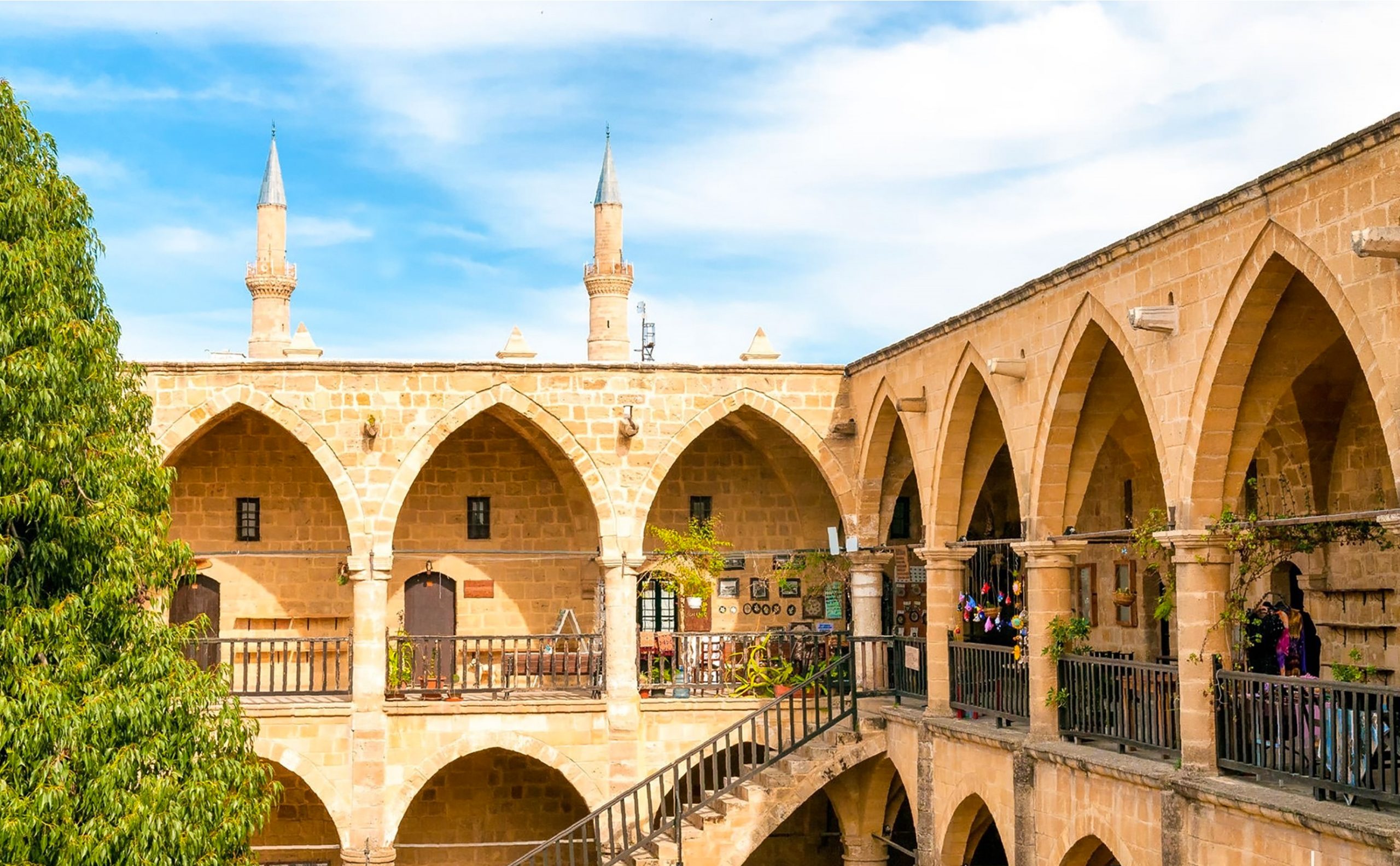
The building is almost square, measuring 50.67 by 45.25 meters, and has 68 rooms on two floors arranged around a central courtyard. It was originally built for traveling merchants and traders who connected Cyprus with Anatolia, the Levant, and beyond. Büyük Han is considered one of the best surviving examples of Ottoman architecture in Cyprus and has been a protected monument since its restoration in the 1990s.
The History Behind the Great Inn
Büyük Han was built in 1572 under Muzaffer Pasha, the first Ottoman governor of Cyprus. Some sources say it might have been completed by his successor, Sinan Pasha, because Muzaffer Pasha was reassigned shortly after the island was taken.
Muzaffer Pasha brought an architect from Constantinople named Bostan, who may have designed Büyük Han. The design was based on the Koza Han in Bursa, Turkey, a famous Ottoman caravanserai. It has a central courtyard and fortified elements, with open arcades to help air flow in Cyprus’s warm climate.
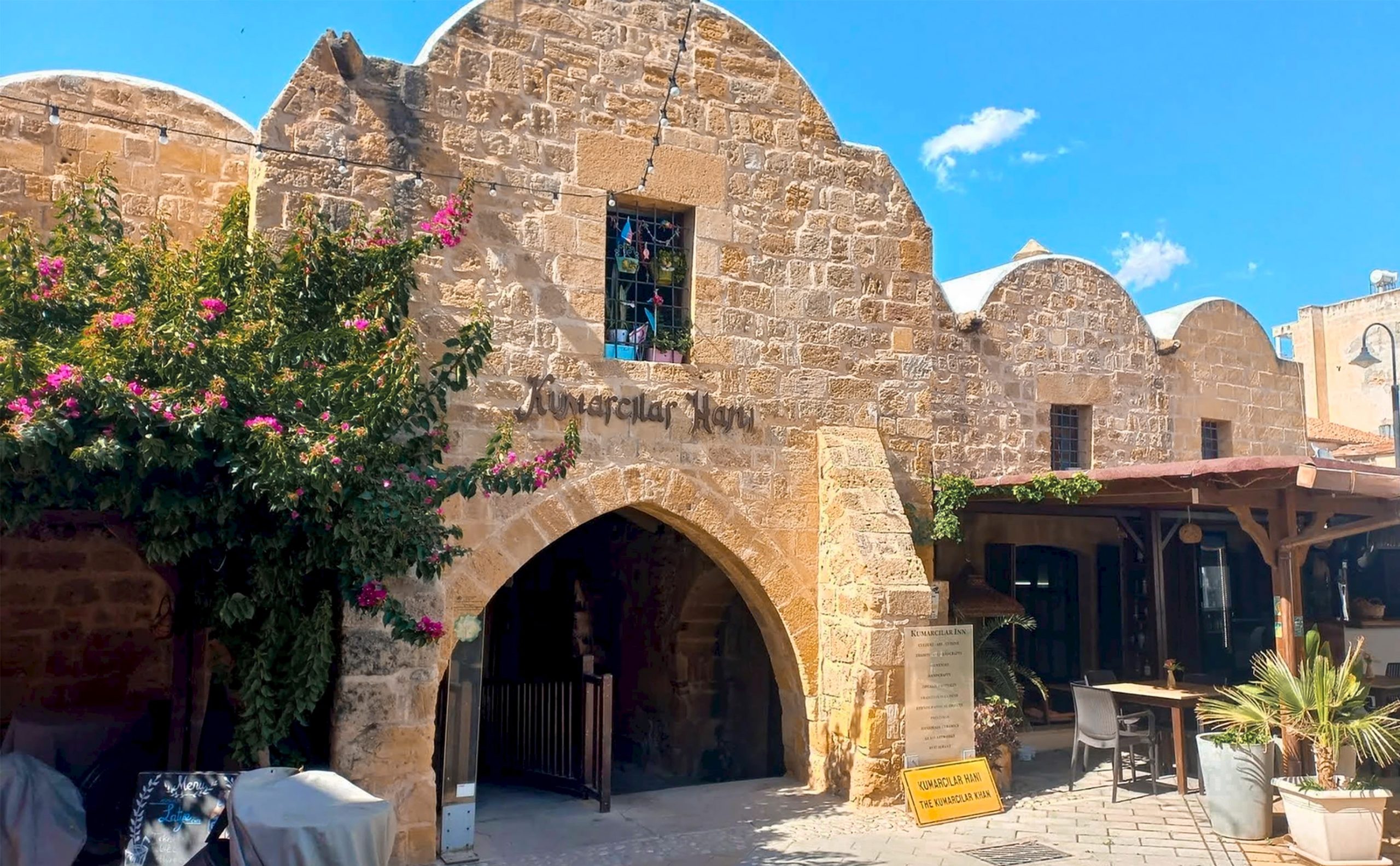
Originally, it was called Yeni Han, meaning “New Inn,” and was also known as Alanyalılar Hanı, or “Inn of those from Alanya,” because merchants from that Turkish city stayed there. The name Büyük Han, meaning “Great Inn,” appeared in the 17th century to distinguish it from a smaller nearby inn called Kumarcilar Han.
A letter from Sultan Selim II shows that some shops were demolished to build the caravanserai. He ordered that if the inn did not make enough money, it could be replaced by new shops. This never happened, and the building served merchants for centuries.
The Structure and Design
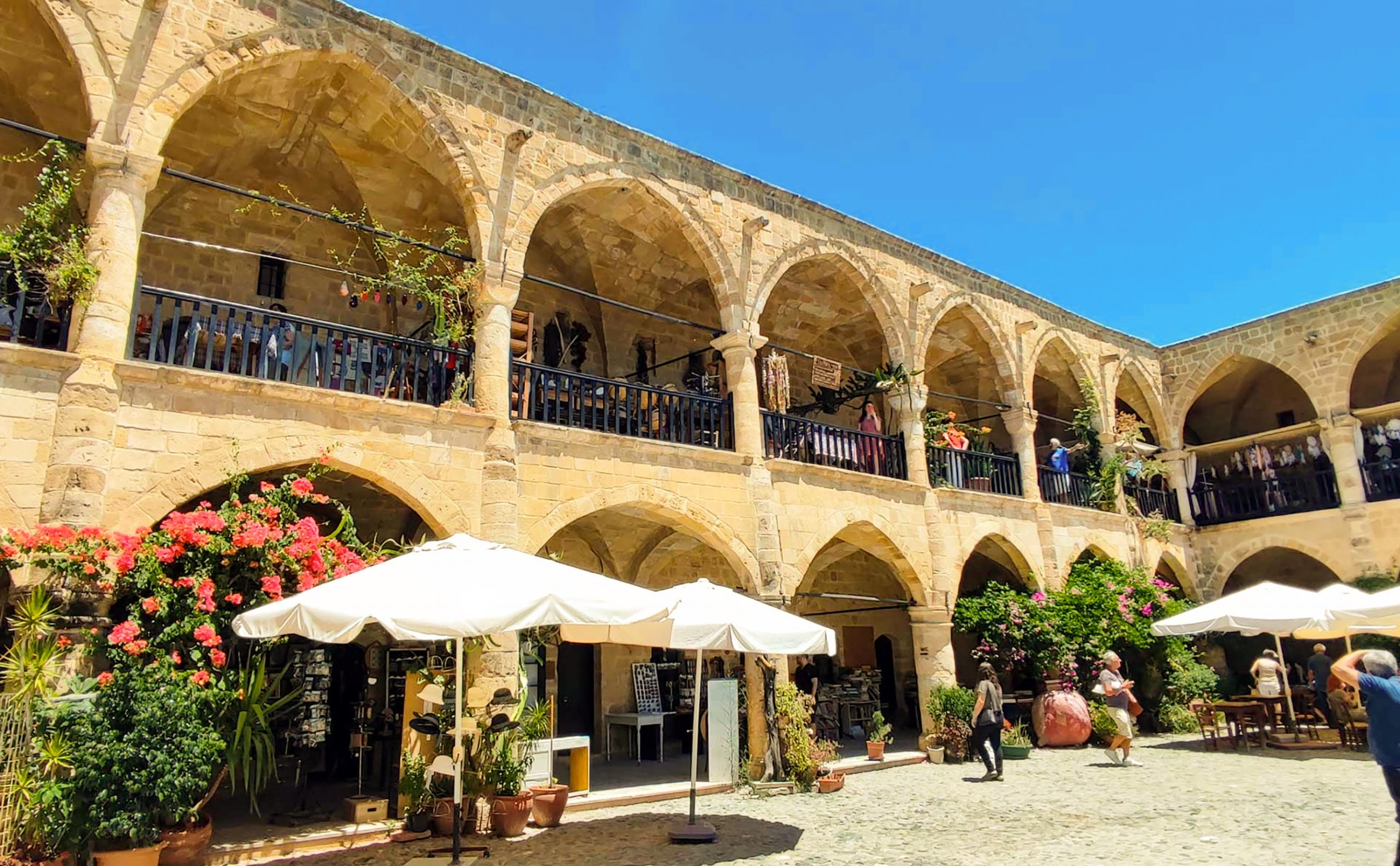
The 68 rooms are arranged around a large open courtyard. The ground-floor rooms were used for shops and storage, where merchants could keep their goods. The upper floor provided rooms for travelers to stay.
Each ground-floor room has a low arched door, an arched window, and a fireplace with a stone chimney. These chimneys may have been taken from older buildings that once stood there.
In the middle of the courtyard is a small mosque, called a mescit, on a hexagonal base above a fountain used for washing before prayer. The stones used for the mosque likely came from older buildings. Near the mosque, there is a grave said to belong to a person of high status who died while worshipping.
Büyük Han has two entrance gates, on the east and west sides. This is not common in all Ottoman caravanserais and adds to the building’s interest.
A Building with Many Lives
The building’s history shows Cyprus’s many changes. When the British took over in 1878, the inn was used as a prison. Its strong walls and secure courtyard made it suitable for this new use.
Between 1892 and 1903, it was the Central Prison of Nicosia. The British added interior cells, although records of prisoners are limited. In 1903, when the prison moved, the building became an inn again, offering affordable rooms for travelers. Shops on the ground floor continued to operate, connecting the inn to the city’s market area.
From 1947 to 1962, it became a home for poor families who could rent rooms cheaply. This shows how the building adapted to meet the needs of the community over time.
The 1990s Restoration
By the 1960s, Büyük Han was in poor condition. Early restoration in 1963 caused problems, including the demolition of the south colonnade. Work stopped after 1963 and the 1974 Turkish invasion of Cyprus.
In the 1990s, restoration restarted through a bi-communal effort involving the Turkish Cypriot Evkaf Administration, UNDP, and international partners. The project took about ten years and reopened in 2002. Büyük Han became a cultural and social center while keeping its historic look. This restoration is seen as one of the most successful heritage projects in Cyprus.
Why Büyük Han Matters Today
Büyük Han is a rare example of preserved heritage in a divided city. The restoration showed that communities on both sides of the Green Line could work together to protect history.
Today, it is an important place for tourism and culture in the Turkish-occupied part of Nicosia’s Old City. Its success encourages preservation of other historic buildings nearby and the revival of traditional neighborhoods.
The caravanserai also shows the trade connections Cyprus had during the Ottoman period. Merchants from Turkey, Syria, Egypt, and beyond stayed at Büyük Han, bringing goods and ideas that enriched Cypriot life. The building represents Cyprus as a crossroads of trade and culture.
Visiting Büyük Han
Büyük Han is in the center of the Turkish-occupied part of Nicosia’s Old City and is easy to reach on foot from the Ledra Street crossing. Visitors from Nicosia can cross with a passport or EU ID card. The inn is about a 10-minute walk from the checkpoint.
Admission is free. Visitors can explore the courtyard, shop from local artisans, and enjoy the architecture. The site is open daily, though individual shop hours may vary.
A Monument to Continuity and Change
Büyük Han has survived nearly 450 years, serving merchants, prisoners, refugees, and now artists and visitors. Each stage of its history left marks on the building, making it a layered monument to Cyprus’s complex past.
The building shows that historic structures can change purpose while keeping their importance. Büyük Han successfully evolved from an inn to social housing to a cultural center. Its ongoing use proves that preservation works best when heritage is connected to modern life rather than treated as a static museum.