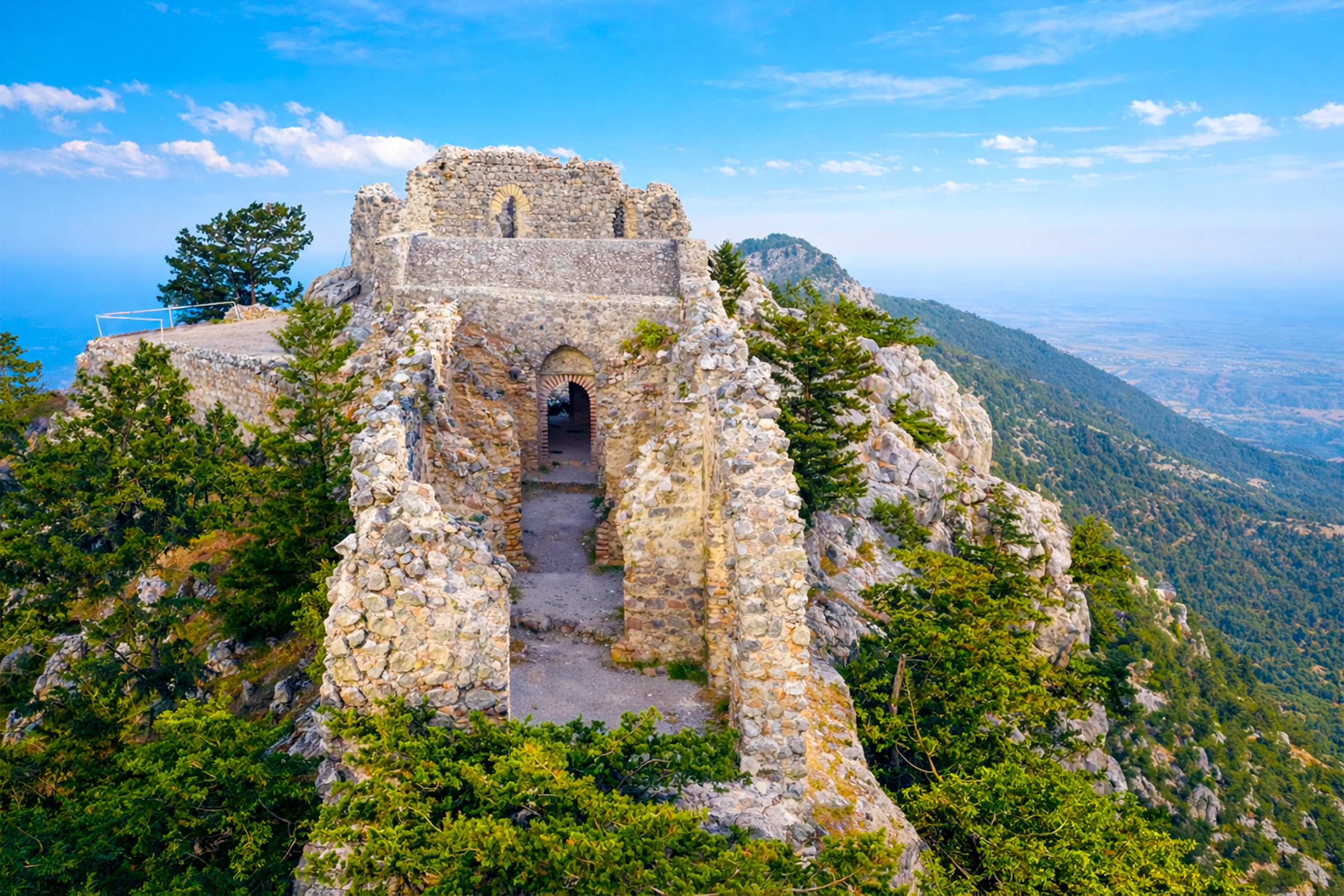
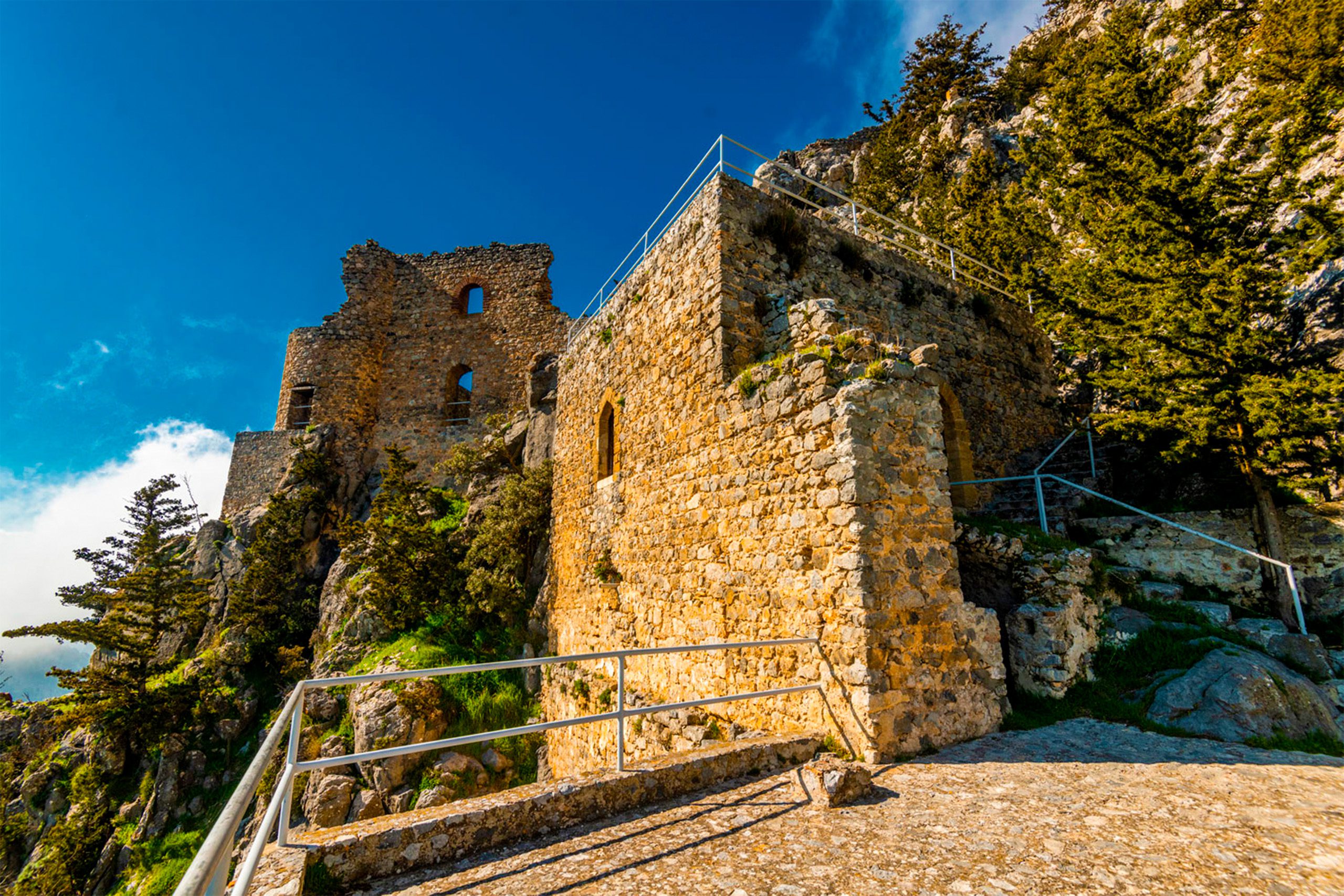
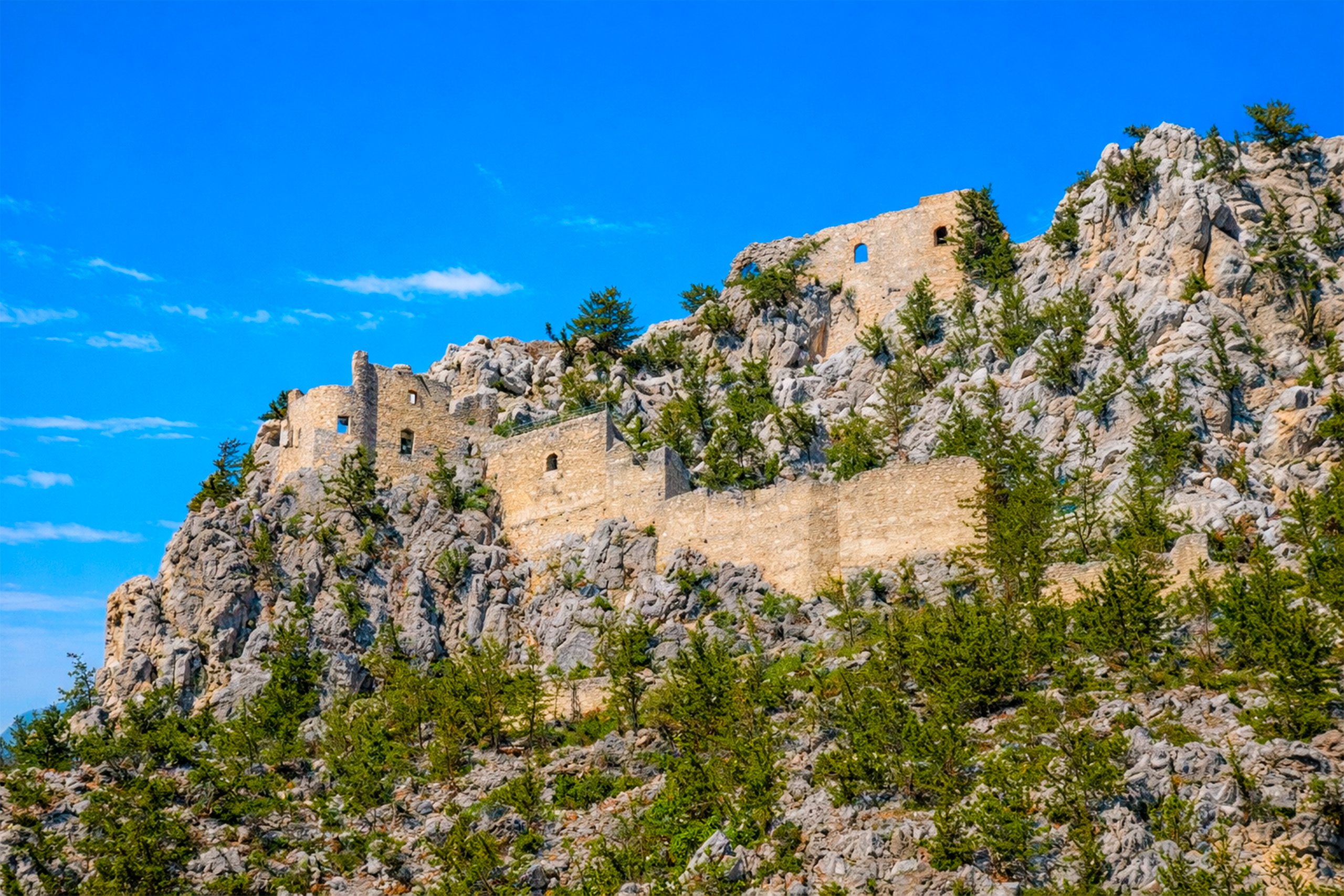
Buffavento Castle stands at 960 meters above sea level in the Kyrenia mountain range of Cyprus. This medieval fortress is the highest and least preserved of three Byzantine strongholds built along the mountains. The name comes from Italian and means “Defier of the Winds,” a fitting description for a castle constantly exposed to mountain winds at this elevation.
The castle sits between St. Hilarion Castle to the west and Kantara Castle to the east, forming a defensive line across the Kyrenia Mountains. All three castles are visible from each other, allowing them to pass signals and warnings. Buffavento guarded the mountain passage from Kythrea to the north coast, controlling movement between the coastal plain and the interior.
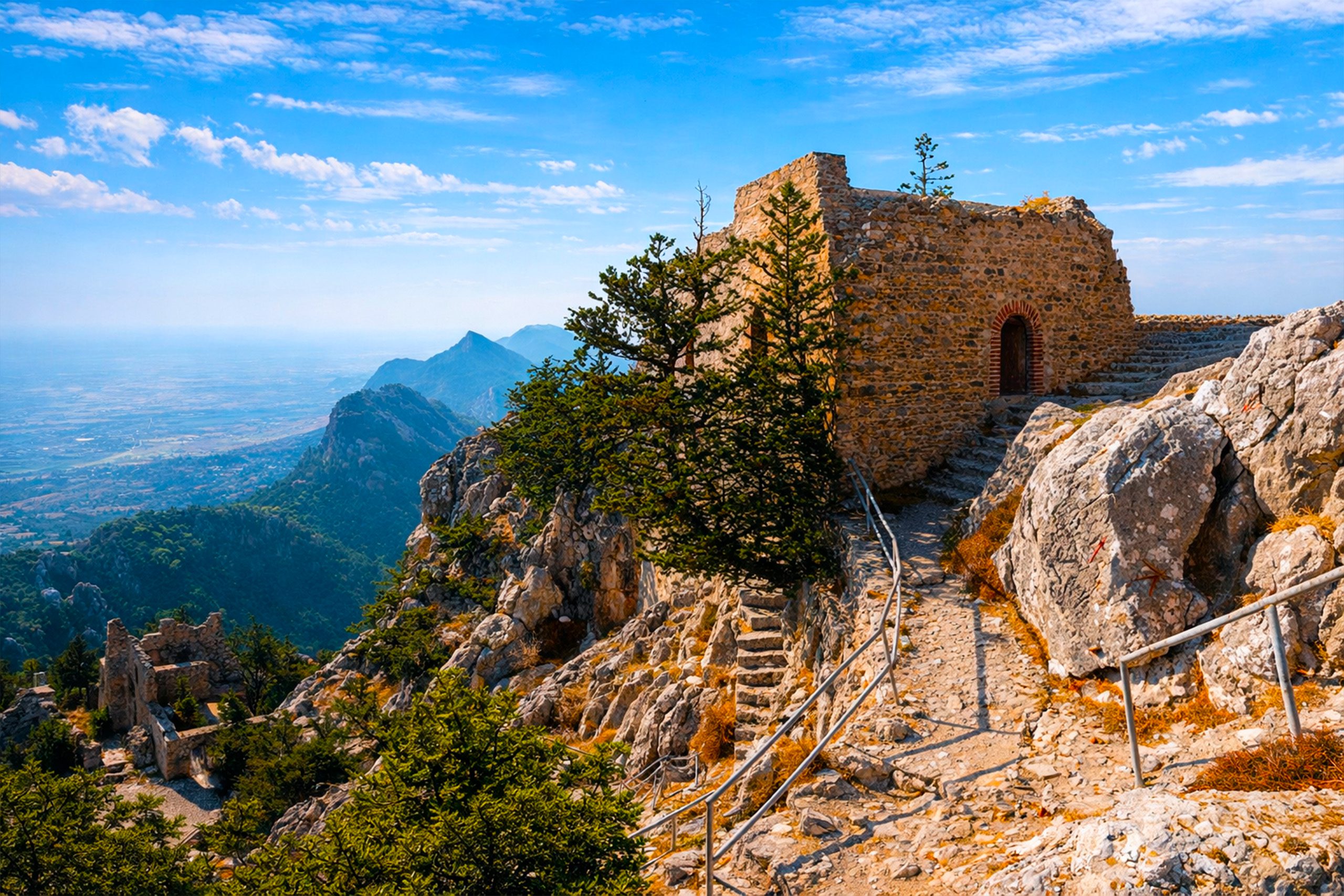
The location provides views in every direction. Looking north across the Mediterranean Sea, visitors can see the Turkish coast approximately 65 kilometers away on clear days. To the south, the Mesaoria Plain stretches toward Nicosia. On exceptionally clear days, Famagusta to the east and the Troodos Mountains to the south are visible. The castle overlooks nearly half the island from its rocky peak.
The steep cliffs surrounding the fortress made it naturally defensible. The north, east, and west sides are protected by sheer drops, with only the southern approach allowing access.
Historical Background
The exact construction date remains unknown, though most historians believe the castle was built during the 11th or 12th century Byzantine period. The original structure was likely a watchtower designed to guard against Arab raids that threatened Cyprus from the 7th through 10th centuries. The strategic position allowed guards to spot approaching ships and send warnings to the interior.
Several theories explain the castle’s construction. Some historians suggest it was built in 965 after the Arabs were expelled from Cyprus. Others propose it dates to 1091 during the revolt of Rhapsomates, or during the rule of Eumathios Philokales from 1091 to 1094. A third theory places construction in the early 12th century as defense against the expanding Crusader states. The presence of middle Byzantine architectural features supports a late 11th or early 12th century date.
The castle’s role in the signal network with St. Hilarion and Kantara suggests all three were built as part of a coordinated defense program. This would have occurred after the Seljuk Turks began threatening Byzantine territories in Asia Minor during the late 11th century, making Cyprus more strategically important.
Richard the Lionheart
Buffavento first appears in historical records in 1191 when Richard the Lionheart captured Cyprus from Byzantine ruler Isaac Comnenus. According to accounts, Isaac Comnenus fled to Buffavento when Richard’s forces landed. The castle’s strong defenses made it difficult to capture, but the defenders surrendered after the fall of Kantara and St. Hilarion. Isaac’s daughter was held at the castle briefly before Isaac continued his escape to Kantara, where he was eventually captured.
Richard had arrived in Cyprus by accident while traveling to the Third Crusade. When his ship anchored off Limassol, Isaac Comnenus plundered English vessels and mistreated Richard’s companions. In response, Richard conquered the island. He later sold Cyprus to the Knights Templar, who faced a major revolt in Nicosia and quickly resold it to Guy de Lusignan in 1192.
Medieval Names
During medieval times, the castle was known by several names. Chronicles refer to it as the “Castle of the Lion” or “Chateau du Lion.” One legend claims the castle was built by a Cypriot noblewoman seeking shelter from the Knights Templar in 1191, leading to the names “Leonne” or “Queen’s Castle.”
Another name was “The One Hundred and One Houses,” connected to a legend about the castle having 101 rooms. According to the story, 100 rooms were easy to find but the 101st remained hidden. This mysterious room supposedly opened to an enchanted garden containing treasure belonging to a fairy queen. Anyone who found the room would discover riches but wake up years later with empty hands among bare rocks. The legend claimed the door opened once every 40 years on a special day when wishes would come true.
The Italian name Buffavento may have been borrowed from a monastery in the village of Koutzoventi nearby. The name perfectly describes the constant winds that blow across the exposed mountaintop.
Prison Stories
Several documented cases show the castle’s use as a prison. In 1308, a knight named Anseau of Brie was imprisoned at Buffavento when he learned of accusations against the Knights Templar during their trial. The harsh conditions and isolation made imprisonment here particularly severe.
The most tragic story involves John Visconti, a friend of King Peter I. When Peter I was away on crusade, Visconti warned him about Queen Eleanor of Aragon’s alleged infidelity. The king refused to believe the accusations and instead had Visconti arrested for slander. Visconti was first tortured and imprisoned at Kyrenia Castle, then transferred to Buffavento where he was locked in a cell without food and left to starve to death.
Another escape attempt involved Baron Pierre de Montalif in 1384. He used makeshift equipment to climb down the mountain through the trees. Although he successfully descended the dangerous route, he was captured by royal guards and later executed. The story of his bold escape became local legend.
Buffavento Castle Structure
Buffavento is divided into two main sections. The lower ward faces the Mesaoria Plain to the south and contains the entrance gatehouse, several irregularly shaped rooms, a large water cistern, and stables. The entrance gate remains mostly intact and provides the first shade on the climb. Red brick arches show Byzantine construction methods. Some rooms still have cisterns beneath their floors, and a few contain water.
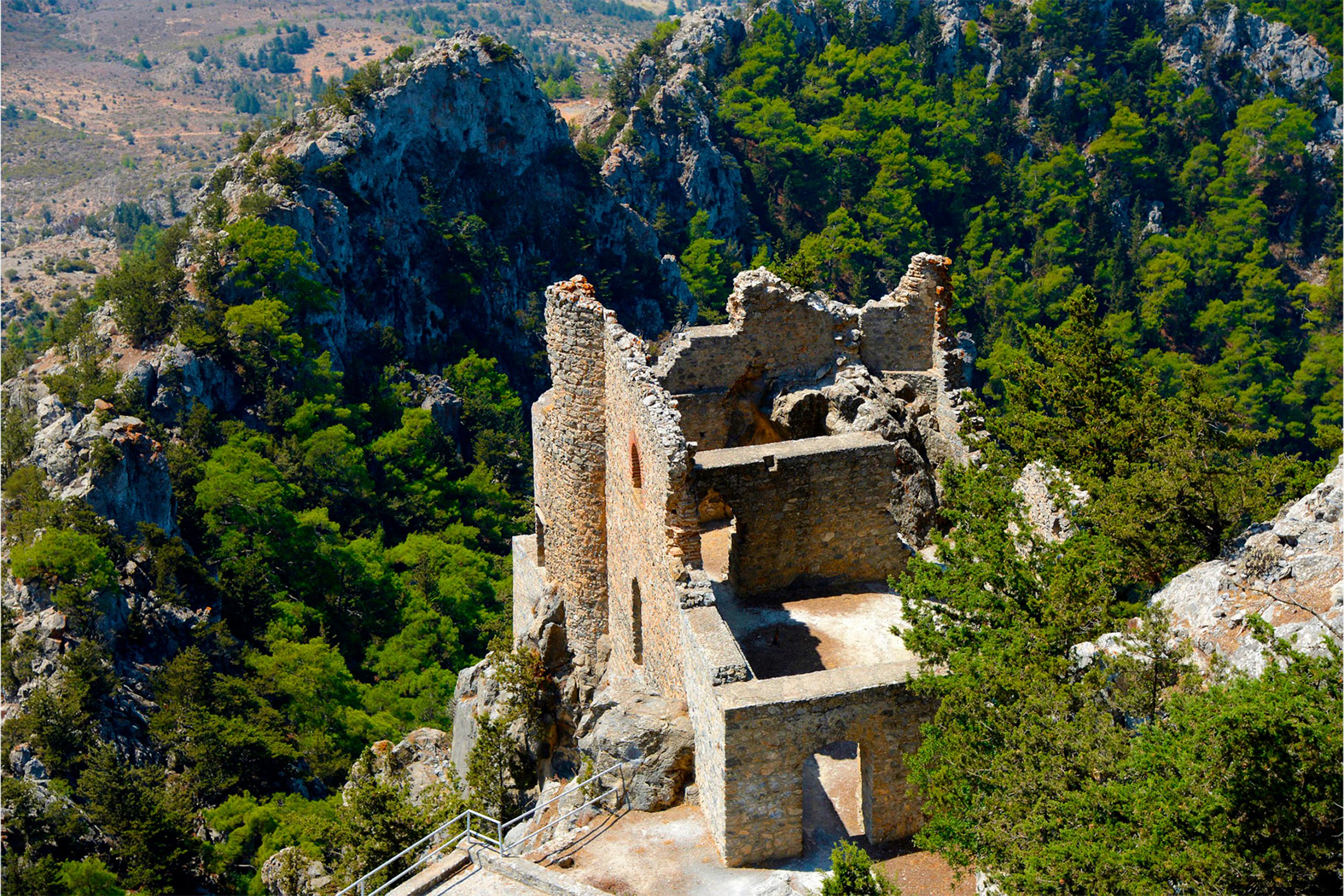
The upper ward faces the sea and occupies a smaller area on the rocky peak. This section included a chapel, though it is now difficult to identify which ruined building served this purpose. The rooms at the top level are mostly roofless, with only walls and foundations remaining.
The irregular shape of the buildings results from limited space on the mountaintop. Builders had to work with the natural rock formations, creating chambers that fit the available terrain. The main building materials were dressed limestone brought from the coast and stone quarried directly from the mountain. The architecture shows no decoration, reflecting the castle’s purely functional military purpose.
The castle’s outbuildings were limited to what was essential. A large cistern collected rainwater through pipes and channels carved into the rock. Stables housed horses for guards and messengers. The lack of proper kitchens or extensive food storage indicates the castle was not designed for long sieges or large permanent garrisons.
Access and Difficulty
Reaching Buffavento requires approximately 600 steps from the parking area to the summit. The climb takes 30 to 40 minutes depending on fitness level and stops for rest or photos. The pathway was improved in the 20th century when stone steps were rebuilt to replace those destroyed by the Venetians, but the route remains steep in places.
Concrete steps and graded paths lead to the main gate. From there, the climb becomes more challenging with uneven stone steps worn smooth by centuries of use. The exposed position means strong winds are common, particularly at higher elevations. Visitors should wear sturdy footwear and bring water, especially during summer months when the bare rock reflects heat.
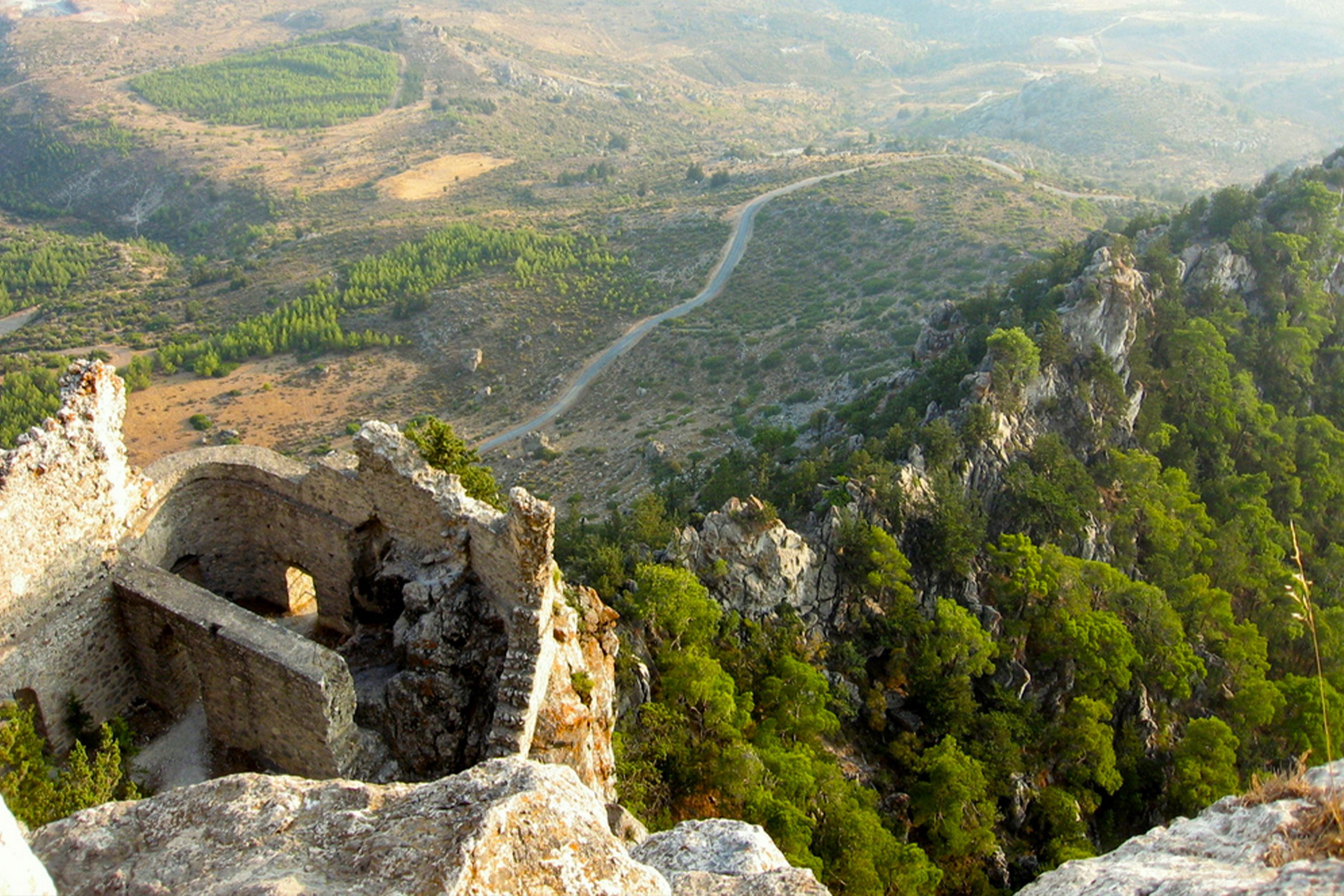
The castle can be seen from the road while still appearing tantalizingly distant. The winding approach road creates a sense of the fortress appearing and disappearing as it curves around rocky outcrops. From the parking area, the castle sits clearly visible on the mountain peak, though the initial view makes the climb look more difficult than it actually is.
Buffavento Castle Modern Access
The castle is reached via a turn-off from the main Kyrenia to Famagusta road at the Pentadaktilos Pass, just after the Buffavento Restaurant. A narrow single-track road with passing places runs 6.8 kilometers along the southern slopes of the mountains to the parking area. The first portion can be rough and requires careful driving. The road passes through a military area with warning signs instructing drivers not to deviate from the marked route.
An alternative approach exists through the village of Vouno, though this involves even rougher roads. The direct route from Nicosia through Koutsoventis and the Monastery of Ayios Ioannis Chrysostomos passes through a military camp and is closed to the public.
A memorial at the parking area marks the site of a 1988 Turkish Airlines aircraft crash. The plane, approaching the illegal Ercan Airport in misty conditions, failed to clear the ridge and crashed near the castle, killing all aboard. A marble plaque in multiple languages commemorates the victims. A solitary olive tree grows in a stone planter near the memorial.
Opening hours are limited and can change due to military restrictions. The castle typically opens weekdays from 8:00 AM to 3:30 PM but may close on weekends and holidays. There is no entrance fee. Visitors should verify current access conditions before traveling, particularly during periods of heightened security.
Buffavento Castle Views and Setting
The 360-degree panorama from the summit justifies the climb. The northern view encompasses the entire Kyrenia coastline and the Mediterranean Sea. The town of Kyrenia is clearly visible with its distinctive harbor. On clear days, the Taurus Mountains of Turkey appear as a blue line across the water.
To the south, the Mesaoria Plain extends to Nicosia, the capital city visible in the distance. The eastern view shows Famagusta and the Karpasia Peninsula stretching toward Syria. To the west, St. Hilarion Castle stands on its own mountaintop. In winter, snow sometimes covers the distant Troodos Mountains in the southwest.

The mountainside supports hardy vegetation adapted to the rocky terrain and high altitude. In spring, wildflowers grow in patches where moisture collects. Goats browse among the bushes on the lower slopes. Birds including buzz.