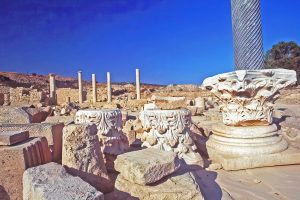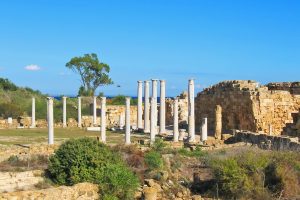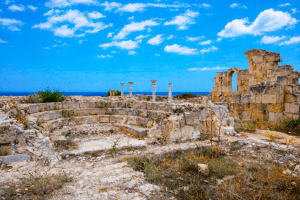
The Basilica of Kampanopetra is a large Early Christian church complex located at the archaeological site of ancient Salamis, near modern Famagusta in the Turkish-occupied part of Cyprus. Built during the late 5th or early 6th century CE, the basilica served the city of Constantia, the name given to Salamis after it was rebuilt following devastating earthquakes in 332 and 342 CE.
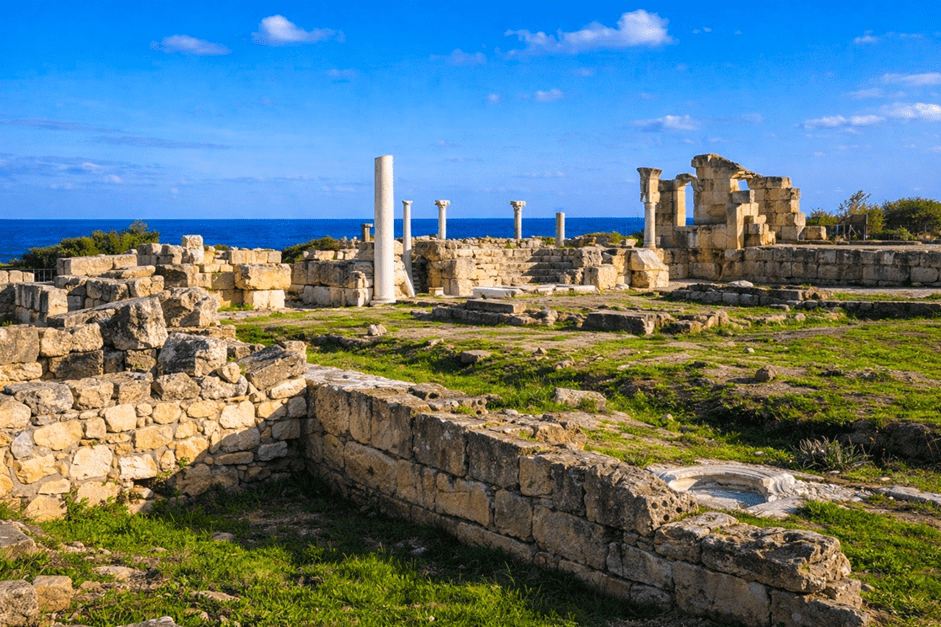
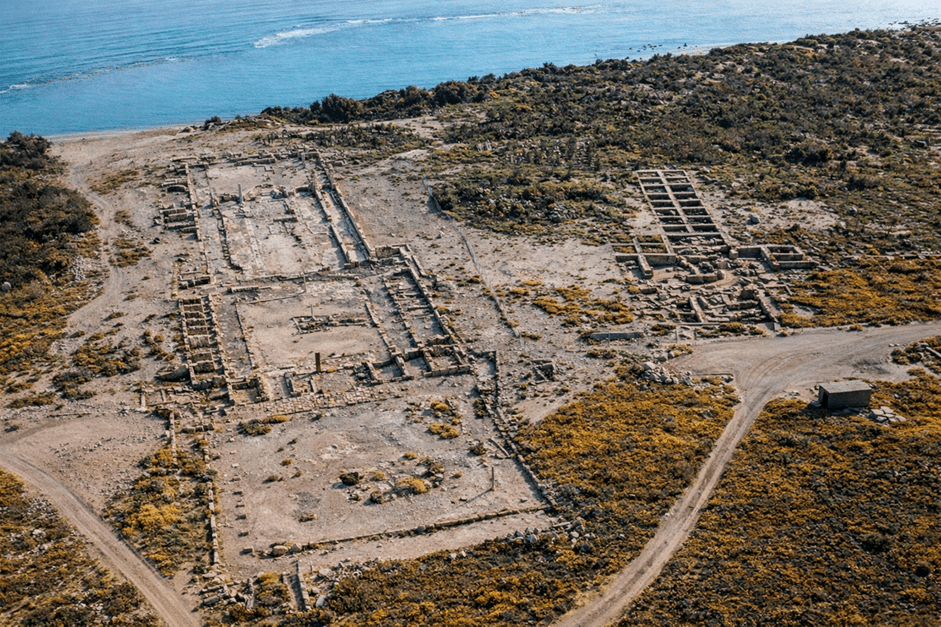
The complex consists of four major sections arranged in a linear sequence. From west to east, these include a large western courtyard, a second western atrium connected to a narthex (entrance hall), the main three-aisled basilica, and an eastern atrium. The entire structure measures approximately 152 meters in length and reaches nearly 38 meters at its widest point. This makes it one of the largest Early Christian basilicas in Cyprus.
The name “Kampanopetra” has been interpreted in different ways. Some sources translate it as “stone by the monks’ cells,” while others suggest it means “stone bell.” The name likely refers to features or traditions associated with the site during medieval times when a small monastic community continued to use portions of the ruined basilica.
Historical Background
Salamis was one of Cyprus’s most important cities throughout antiquity. According to legend, it was founded around the 11th century BCE by Teucer, a hero from the Trojan War who was exiled by his father, the king of the Greek island of Salamis. The city developed into a major trading center and by the 8th century BCE had become wealthy enough to mint its own coinage.
During the Roman period, Salamis remained the island’s largest and most prosperous city. However, in 332 and 342 CE, a series of devastating earthquakes destroyed much of the urban infrastructure. Roman Emperor Constantius II (337-361 CE) provided funds to rebuild the city on a smaller scale. It was renamed Constantia in his honor and became the capital of Cyprus.
Christianity had arrived in Cyprus early. According to the Acts of the Apostles, the Apostle Barnabas was a Cypriot Jew who became one of Christ’s followers. He traveled with Paul to Cyprus around 45 CE and challenged the teachings of a false prophet before Sergius Paulus, the Roman proconsul. Barnabas later returned to Cyprus with John Mark and, according to tradition, was martyred in Salamis.
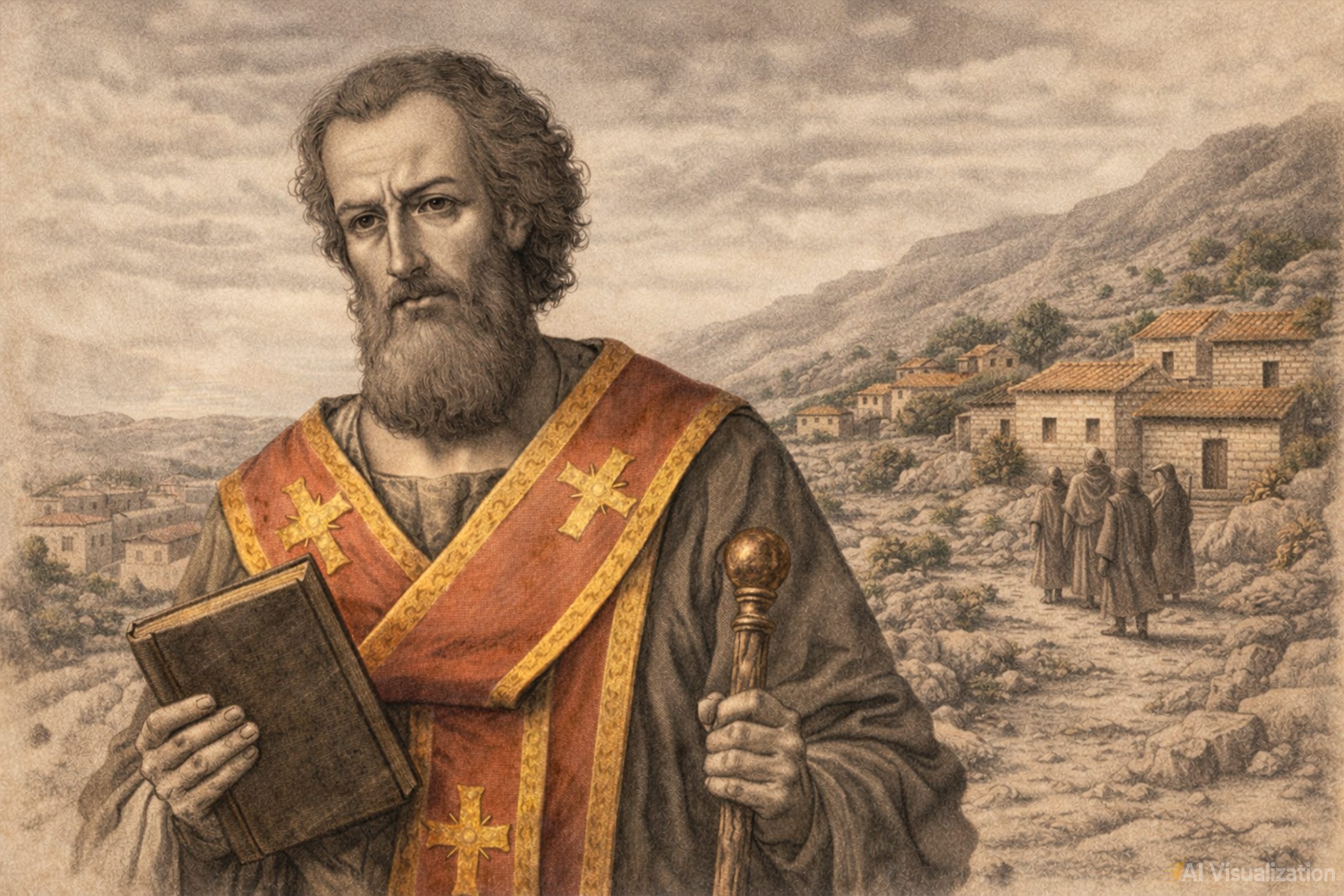
Saint Epiphanius served as bishop of Constantia from approximately 367 to 403 CE. He was an important Christian writer and theologian whose presence in the city helped establish it as a major center of Christian learning and pilgrimage. The Basilica of Agios Epiphanios, one of the earliest major basilicas on Cyprus, was built at the end of the 4th century and is situated near the ancient agora and the Temple of Zeus.
By the time the Kampanopetra Basilica was constructed in the late 5th or early 6th century, Constantia had become an important stop for pilgrims traveling to the Holy Land. Ships from Alexandria, Antioch, and other major cities would stop at Constantia’s harbor. The large scale of the Kampanopetra complex and its position near the waterfront suggest it was specifically designed to accommodate these pilgrims.
The Architecture and Layout of the Basilica
The Kampanopetra Basilica demonstrates sophisticated architectural planning and expensive construction methods typical of major imperial churches built during the reign of Emperor Justinian I (527-565 CE). The complex was designed to impress visitors and accommodate large crowds.
The western courtyard served as the main entrance to the complex. This large open space was surrounded by columns and provided areas where pilgrims could gather before entering the church proper. Rooms along the sides of this courtyard may have served various functions related to church administration or provided shelter for pilgrims.
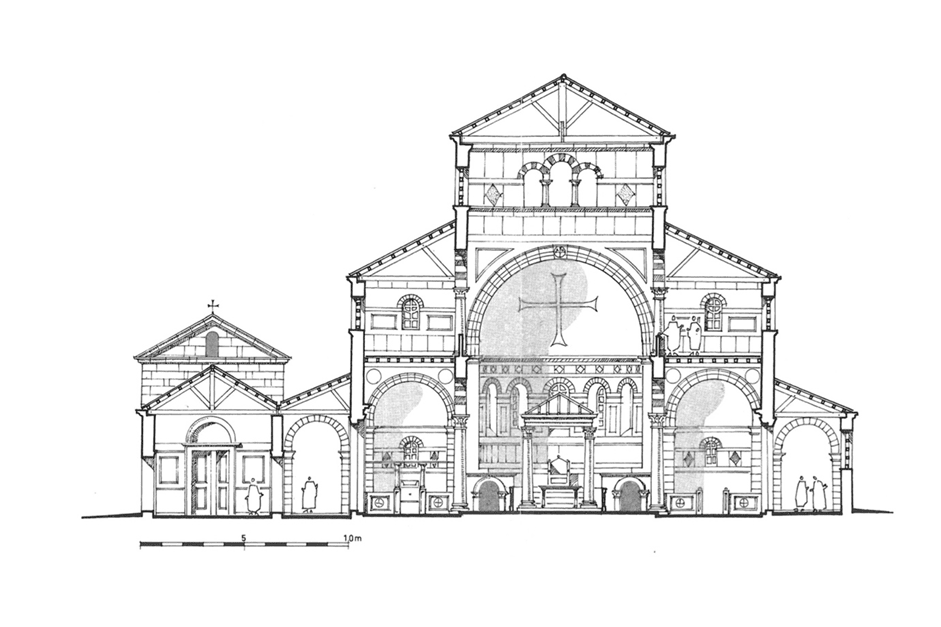
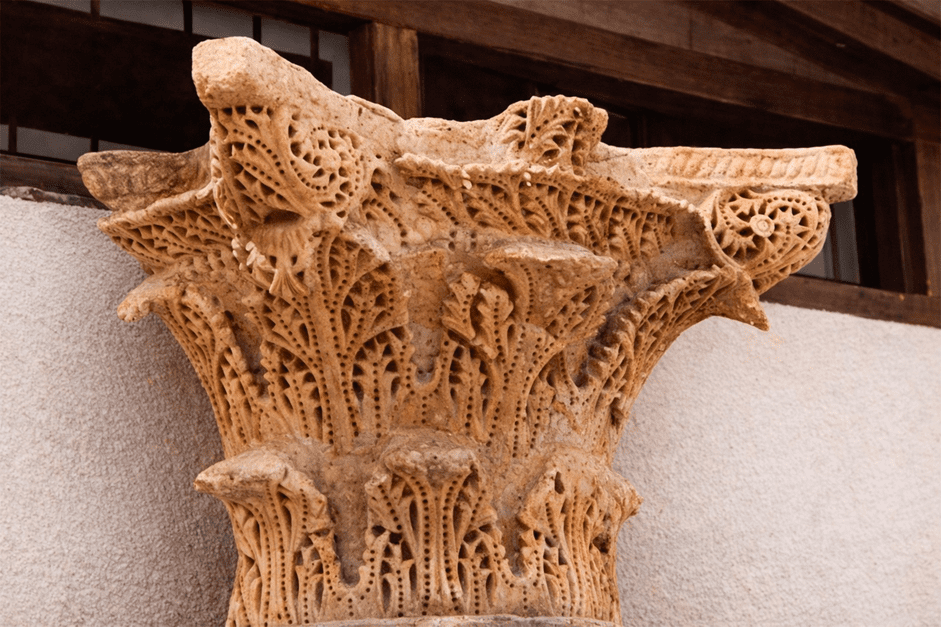
The second western atrium led to the narthex, the traditional entrance hall of a basilica. From here, visitors passed through doors into the main church. The basilica itself was divided into a wide central nave and two side aisles by two rows of eleven columns each, plus two half-columns at the ends. These columns supported the roof and created the characteristic basilica layout that had become standard for major Christian churches.
The three aisles terminate in projecting semicircular apses, a design feature that originated in northern Syria, particularly at the pilgrimage sanctuary of Qalat Seman (Saint Simeon). In Cyprus, this three-apse design became widespread and appears in many Early Christian basilicas across the island. The central apse, the largest of the three, was furnished with a synthronon, a semicircular bench where the bishop and clergy sat during services. This synthronon was added during the Justinianic period in the 6th century.
Archaeological Excavations and Important Discoveries
The Kampanopetra Basilica was systematically excavated between 1965 and 1974 by a French archaeological mission. Georges Roux published the comprehensive excavation report in 1998, providing detailed documentation of the architectural phases, decorative elements, and archaeological finds.
The excavations revealed that the basilica underwent at least two major phases of decoration and construction. The original building from the late 5th or early 6th century was later renovated and expanded. The addition of the synthronon in the central apse, new mosaic floors, and opus sectile (cut marble) flooring all date to the second phase during the Justinianic period.
Behind the central apse, excavators found remains of what appears to be a bathing facility, including a sweating room. The presence of baths connected to a religious complex is unusual and has generated scholarly discussion. These baths may have served practical purposes for the clergy or pilgrims, or they may have had ritual significance related to purification.
Medieval artifacts discovered during excavations indicate the site continued to be occupied after the basilica ceased functioning as an active church. These finds include medieval oil lamps, pottery, and a large oven approximately 2 meters in diameter. A small monastic community apparently maintained a presence at the site, using the baptistery as a chapel and serving the surrounding agricultural and craft communities.
Visiting the Kampanopetra Basilica Today
The Kampanopetra Basilica is part of the larger Salamis archaeological site, located approximately 6 kilometers north of Famagusta in the Turkish-occupied part of Cyprus. The archaeological site is extensive and includes the Roman gymnasium and baths, the theater, the Temple of Zeus, the Roman villa, the Byzantine cistern, and multiple basilicas.
Access to the site depends on the current political situation. Turkish authorities are administered separately from the Republic of Cyprus, and visitors should check current requirements for crossing points and entry regulations. Tourist infrastructure exists at Salamis, with parking, restroom facilities, and informational signage available.
Most visitors exploring Salamis spend one to two hours at the main excavations around the gymnasium, baths, and theater. Those with specific interest in Early Christian architecture will want to allocate additional time to reach the outlying ruins, including Kampanopetra. Walking paths connect different areas of the archaeological site, but the terrain is uneven and can be challenging in hot weather.
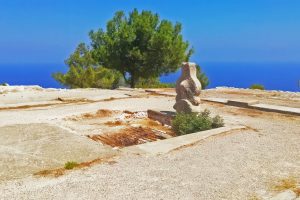
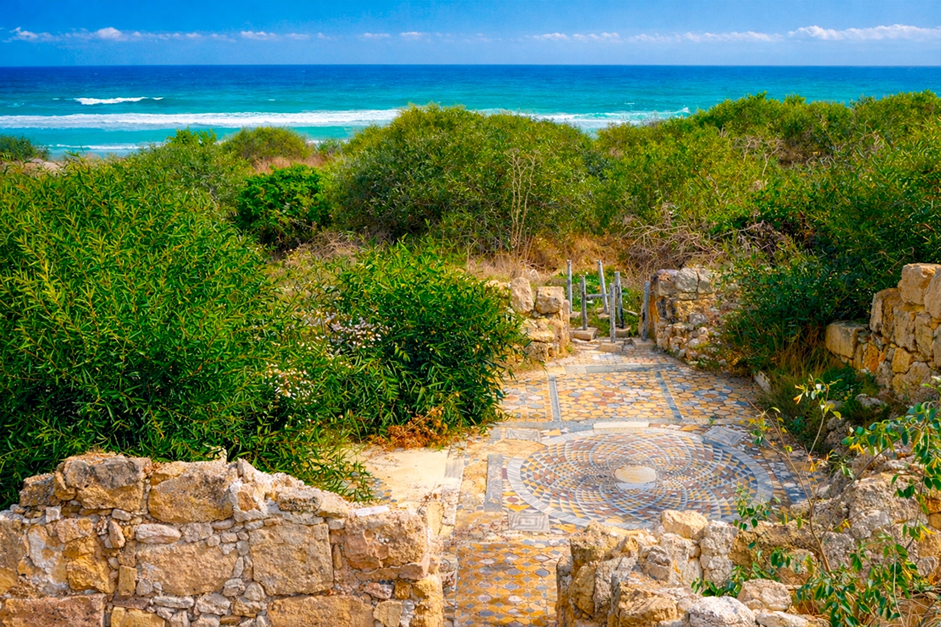
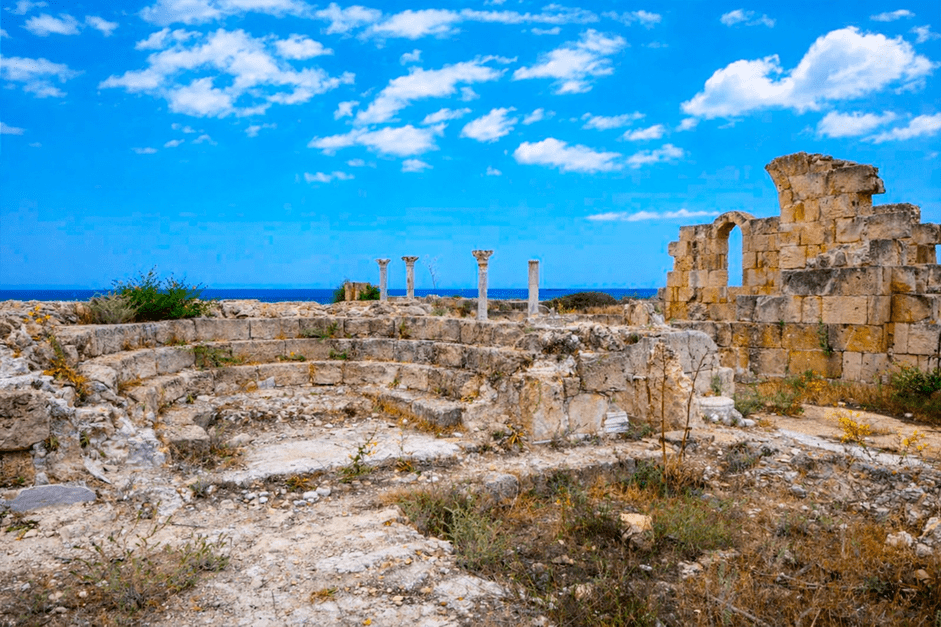
The basilica occupies a magnificent coastal position. Visitors can see how the structure would have appeared to ships approaching from the sea. The scale of the ruins, even in their damaged state, conveys the original grandeur of the complex. Foundation walls, column bases, and portions of the mosaic floors remain visible. Informational boards provide historical context in multiple languages.
The site offers minimal shade, so visitors should bring sun protection, water, and appropriate footwear. Spring and autumn provide the most comfortable weather for extended exploration. Summer temperatures can exceed 35 degrees Celsius, making prolonged outdoor activity challenging.
The Legacy of Kampanopetra
The Basilica of Kampanopetra stands as evidence of Cyprus’s importance in the Early Christian world. The resources invested in this complex demonstrate that Constantia was a major religious center with strong ties to Constantinople and the broader Byzantine Empire. The architectural sophistication, imported marbles, and elaborate decorations all indicate imperial patronage or at least wealthy local benefactors with access to Constantinople’s artistic resources.
The basilica contributes to understanding how pilgrimage functioned in the early Byzantine period. The layout with twin atriums, the possible relic shrine in the eastern courtyard, and the position near the harbor all suggest the building was designed to accommodate large numbers of pilgrims stopping at Cyprus on their way to the Holy Land. This places Salamis-Constantia within the network of pilgrimage sites that connected Constantinople, the Holy Land, Egypt, and other centers of early Christianity.
For modern Cyprus, the Early Christian basilicas represent a period when the island played a significant role in Mediterranean Christianity. The auto cephalous status of the Cypriot Church, granted in the 5th century, remains important to Greek Cypriot identity today. The archaeological remains of basilicas like Kampanopetra provide tangible connections to this heritage and demonstrate the island’s cultural significance during Late Antiquity.