Arabahmet Mosque is a 16th-century Ottoman mosque located in the Arab Ahmet Quarter of Nicosia. Built in the late 1500s shortly after the Ottoman conquest of Cyprus in 1571, the mosque was named after Arab Ahmet Pasha, one of the commanders who led the Ottoman army during the invasion. He also served as Governor General of Rhodes.
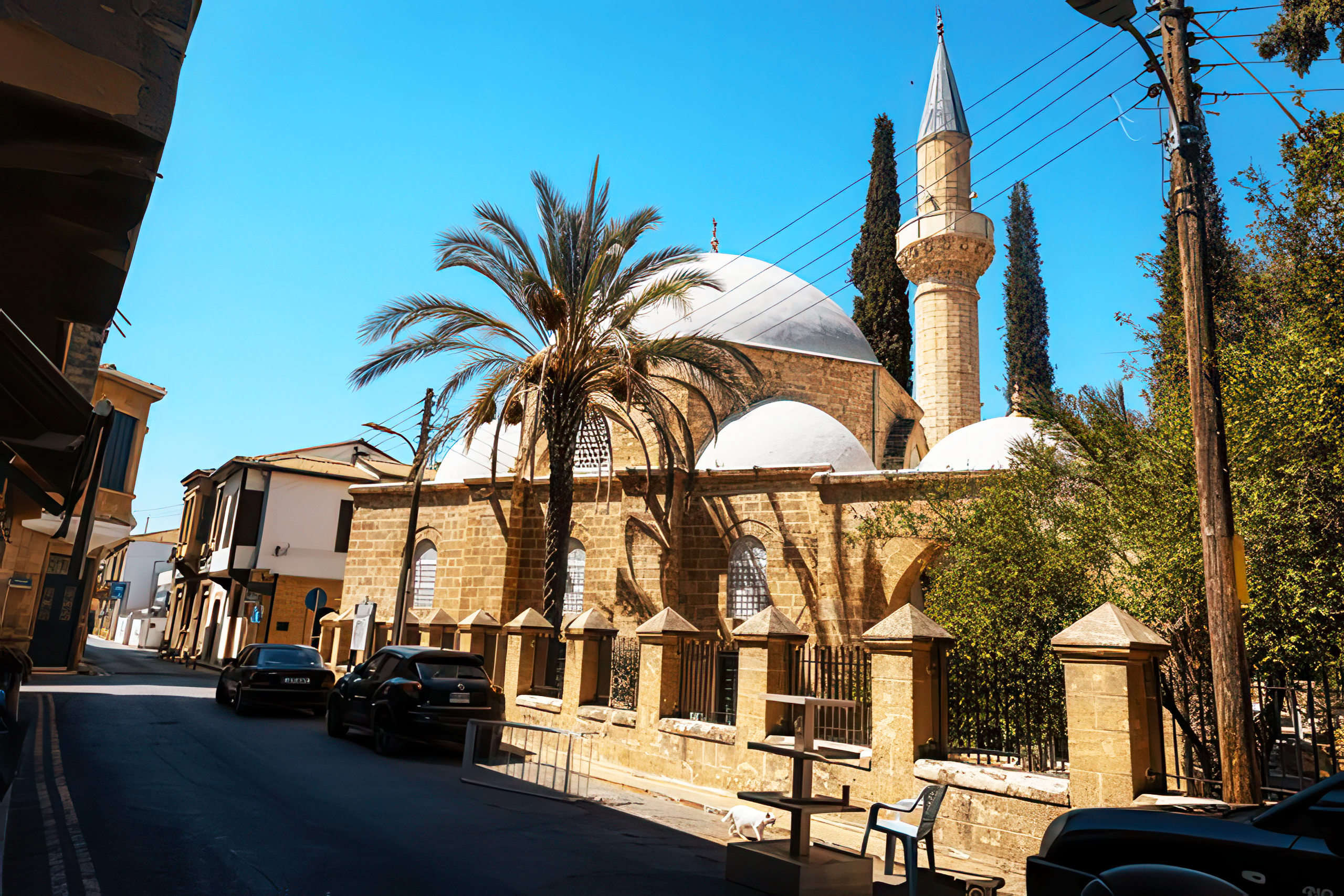
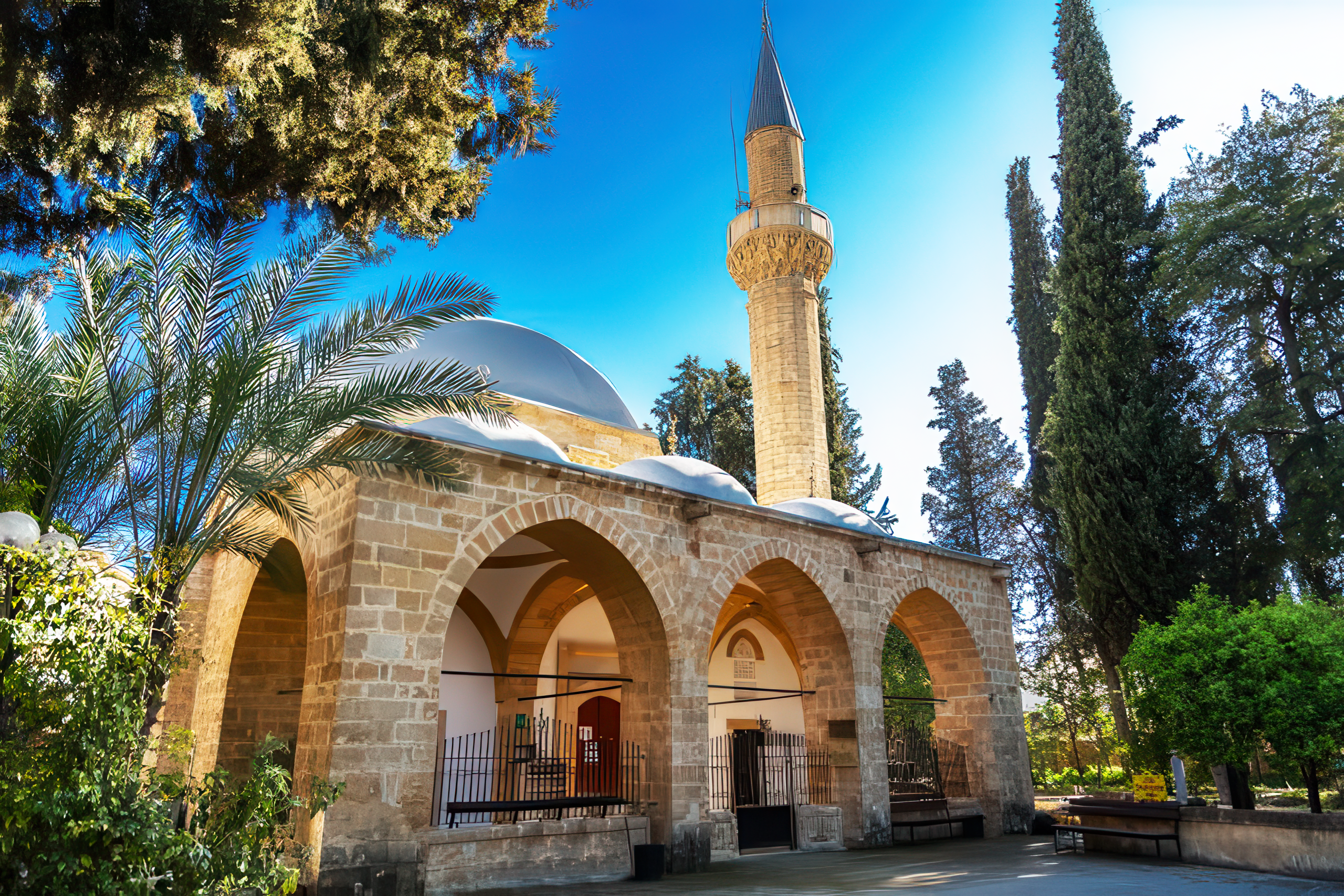
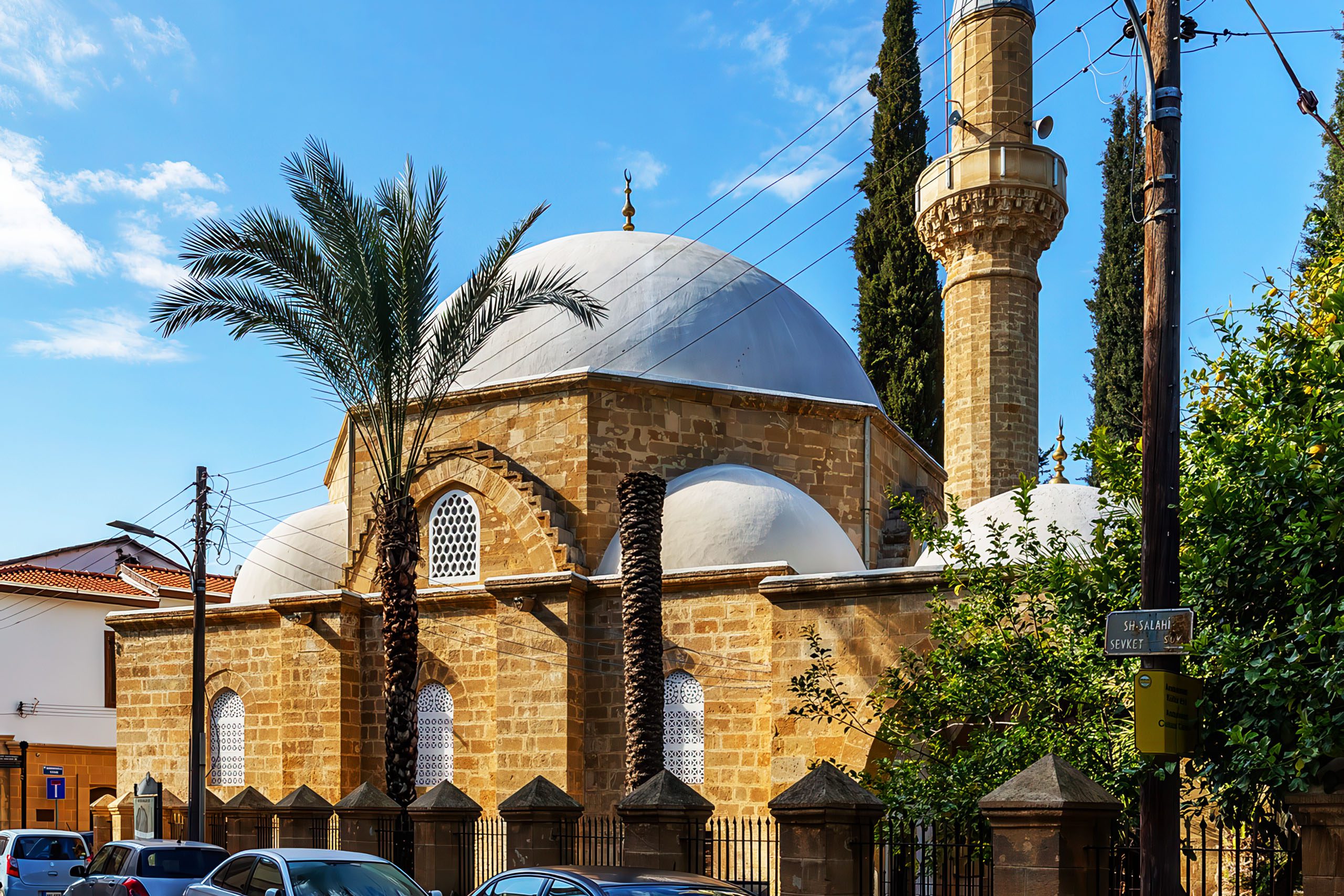
The mosque is the only one in Cyprus to feature typical Turkish-style domes. A large central dome about 6 meters across covers the main prayer hall, three smaller domes protect the entrance porch, and four more tiny domes sit at the building’s corners. This design follows the classical Anatolian style of placing a dome on a square building.
Historical Background
Arab Ahmet Pasha was a senior military officer in the Ottoman forces that conquered Cyprus. After the successful invasion, the neighborhood where his mosque stands became one of the most important residential areas in Ottoman Nicosia. High-ranking Turkish officials, judges (kadis), and governors (pashas) chose to live here for two practical reasons.
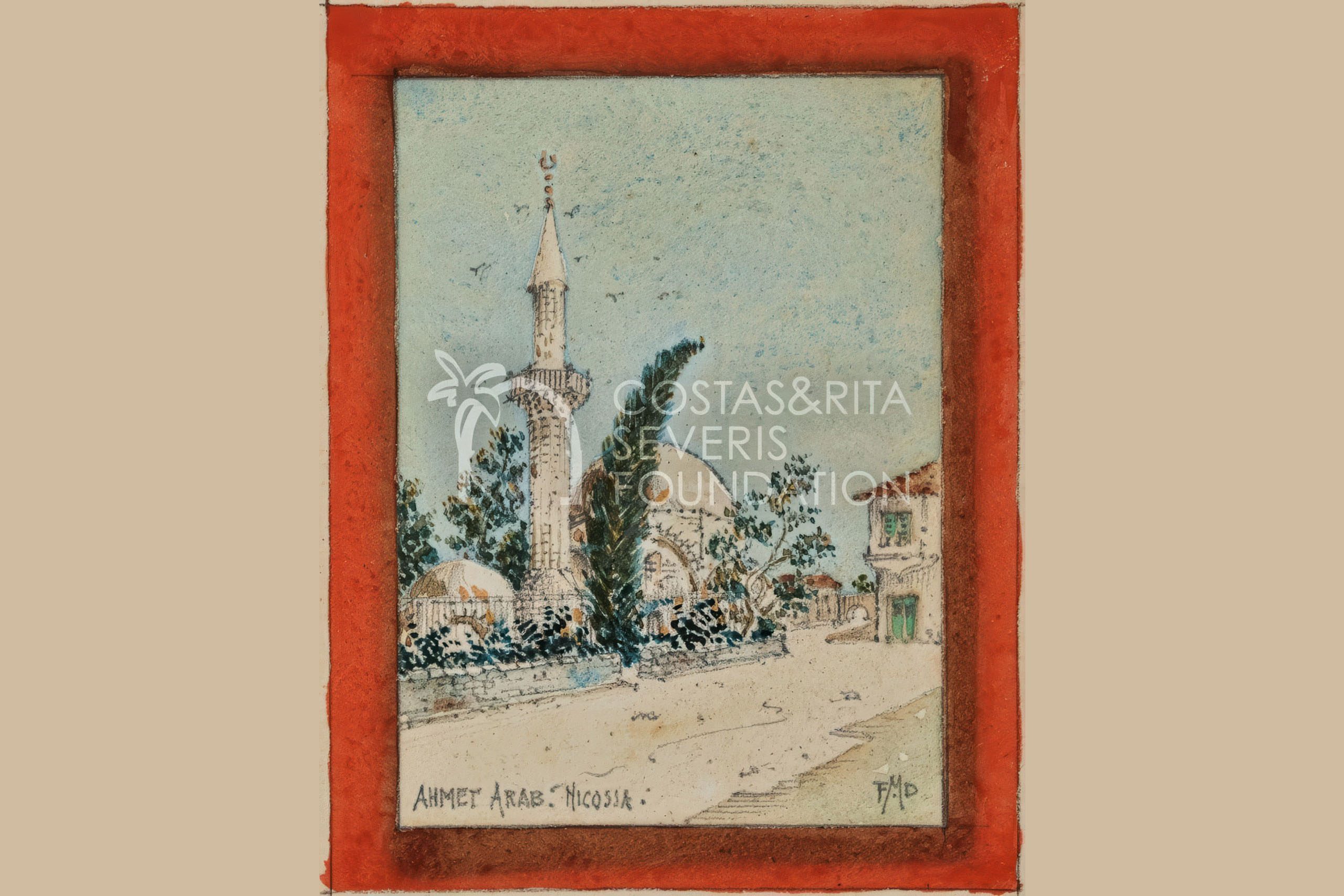
First, the area was close to the old Ottoman Saray, which had been the Lusignan Palace before the conquest. Officials could walk to work easily. Second, Arab Ahmet Quarter caught the evening breeze coming from Morphou Bay in the west, making the coolest part of the city during hot summer nights. In a time before air conditioning, this natural cooling made the neighborhood highly desirable.
The mosque became the center of this elite quarter. Important families built their homes nearby, and the area developed into a symbol of Ottoman authority and prestige in the capital.
Built on Christian Foundations
While Arabahmet Mosque was constructed as a mosque rather than converted from a church, it was built on the site of a demolished Latin church. The builders didn’t simply clear away all traces of the old structure. Instead, they reused materials from the church in a surprising way.
Underneath the carpets that cover the mosque floor today lie about 25 medieval tombstones. These stones originally marked the graves of French crusader knights and other European nobles who died in Cyprus during the Lusignan period (1192-1489). The inscriptions and drawings carved on these stones are still visible when the carpets are lifted.
The Architecture and Design
Arabahmet Mosque follows the Byzantine cruciform plan with pendentives supporting the central dome. This architectural technique allows a circular dome to sit on a square base by using curved triangular sections (pendentives) to bridge the transition. The style is characteristic of Ottoman sacred architecture developed in Anatolia and brought to Cyprus.
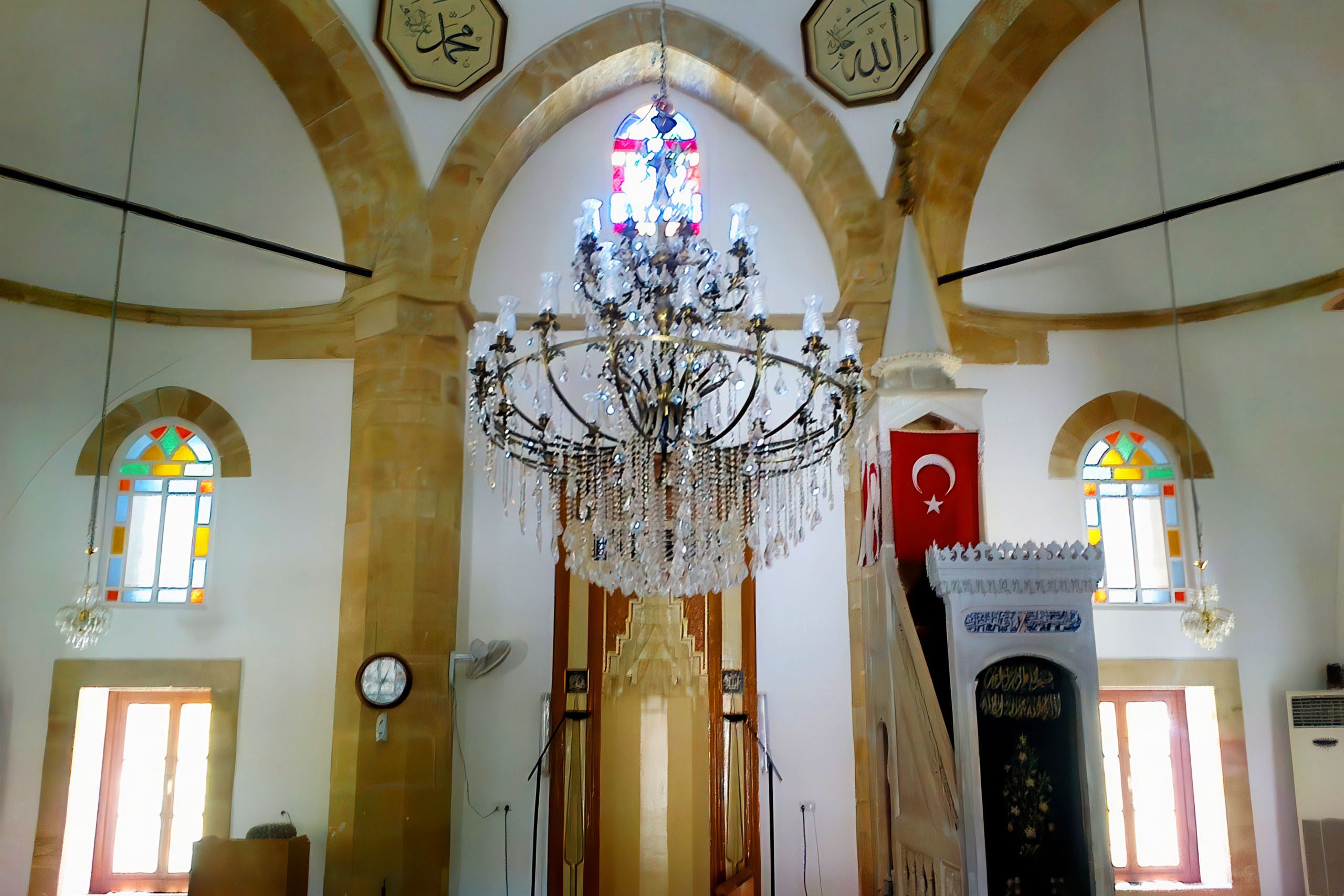
The building is remarkably simple in decoration. Unlike the ornate Gothic churches that the Ottomans converted into mosques, Arabahmet has no carved or molded details. The severe simplicity represents typical Turkish monumental architecture of the period, where clean lines and geometric forms create spiritual atmosphere without elaborate decoration.
A single tall minaret rises from one corner of the building. From here, the call to prayer (adhan) has been announced five times daily for over 400 years. The minaret’s height allows the muezzin’s voice to carry across the neighborhood, calling the faithful to prayer.
Inside, the mosque follows standard Islamic design. The floor is covered with carpets where worshippers kneel and prostrate themselves during prayers. A green minbar (pulpit) stands to one side, where the imam delivers Friday sermons. The mihrab, a niche in the wall, indicates the direction of Mecca toward which Muslims pray.
The Garden of Notable Graves
Unlike most mosques, Arabahmet has a cemetery in its garden. This is somewhat unusual in Islamic architecture, but the garden has become famous for the important people buried there. Cypress trees provide shade, and flowers bloom among the well-preserved gravestones.
The most important tomb belongs to Mehmet Kamil Pasha, born in Nicosia in 1833. He achieved something no other Cypriot has ever done: he became Grand Vizier of the Ottoman Empire, the highest administrative position after the Sultan. Kamil Pasha held this powerful office four times during the late 19th century.
Kamil Pasha died unexpectedly of syncope (sudden loss of consciousness due to heart problems) on November 14, 1913, in his hometown. He was buried in the mosque courtyard where he had worshipped as a young man.
Restorations Through the Centuries
The mosque needed its first major restoration in 1845, about 270 years after construction. Ottoman buildings in Cyprus often required significant repairs due to earthquakes, which are common in the region. The 1845 work rebuilt damaged sections and reinforced the structure.
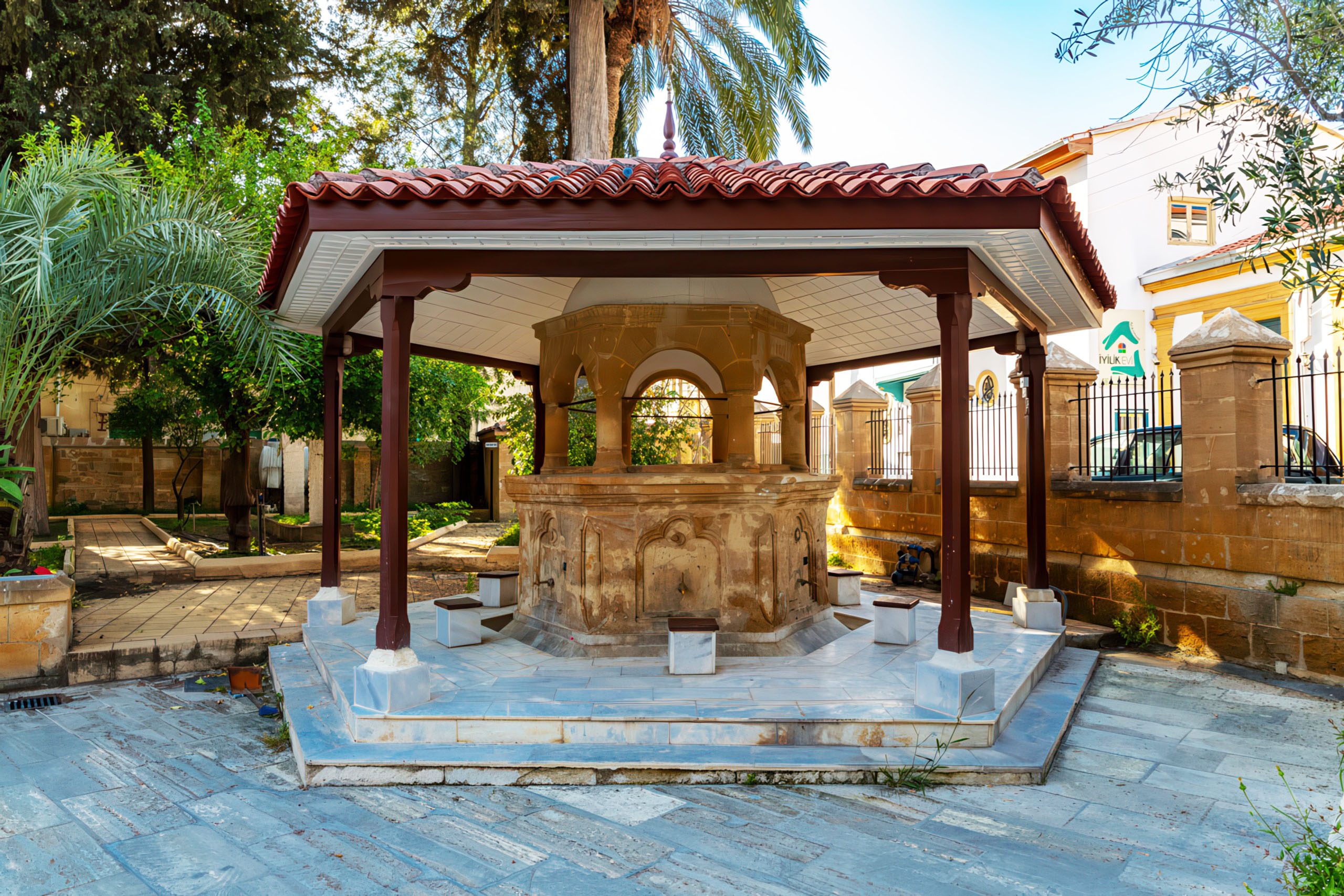
A second major restoration took place in the 1990s. This project was more comprehensive and aimed to preserve the mosque for future generations. Workers repaired the domes, cleaned the stonework, restored the minaret, and upgraded facilities while maintaining the building’s historical character. The garden was also renovated, with paths added and the graveyard properly maintained.
The Arabahmet Quarter Today
The neighborhood surrounding the mosque has changed considerably over the centuries. During Ottoman times, it was the most prestigious residential area. After 1878 when Britain took control of Cyprus, the area maintained its character but began to diversify. Armenian Cypriots who had lived there since the Ottoman conquest became more numerous. Many Armenians fleeing massacres in Anatolia settled in Arab Ahmet Quarter during the early 20th century.
The 1963 intercommunal troubles changed the neighborhood dramatically. Many residents, including most of the Armenian families, fled. After the 1974 Turkish invasion of Cyprus, the area came under Turkish control as part of Nicosia.
Today, the quarter is quieter than during its Ottoman heyday. The mosque continues to function as an active place of worship, serving the neighborhood’s Muslim residents. The peaceful garden provides a retreat from the busy streets of central Nicosia.
Why the Arabahmet Mosque Matters
The Arabahmet Mosque represents authentic Ottoman architecture in Cyprus. Unlike the converted cathedrals that dominate other parts of Nicosia, this building was designed and built as a mosque. It shows what Ottoman architects created when they started from scratch rather than adapting existing structures.
The mosque also demonstrates how conquerors dealt with the architectural heritage of previous rulers. The reuse of crusader tombstones in the floor shows pragmatic recycling of materials, but it also creates an unintentional dialogue between Christian and Islamic Cyprus. Every time someone prays in this mosque, they kneel on stones that once marked Christian graves.
The tomb of Kamil Pasha makes the mosque significant beyond its architectural value. It’s a reminder that Cyprus produced leaders who shaped events across the entire Ottoman Empire. Kamil Pasha’s four terms as Grand Vizier prove that Cypriots could rise to the highest positions of power and influence in the 19th century.
Visiting the Arabahmet Mosque
The mosque is located on Salahi Sevket Street (formerly Victoria Street) in the Arab Ahmet Quarter of Nicosia. It’s accessible from the Republic of Cyprus through crossing points at Ledra Street or Ledra Palace, requiring a passport or an EU identity card.
The mosque welcomes visitors outside of prayer times. As an active place of worship, it closes during the five daily prayers and Friday noon prayers, which are longer. The best times to visit are mid-morning or mid-afternoon on weekdays.
Visitors must follow Islamic etiquette. Shoes must be removed before entering. Women should cover their hair with a scarf, which can be borrowed at the entrance if needed. Modest clothing that covers shoulders and knees is required for both men and women. Photography is generally permitted but should be respectful and not include worshippers during prayers. There is no admission fee, though donations are welcome. The mosque depends partly on donations for maintenance and operation.
A Peaceful Corner of History
Arabahmet Mosque matters because it offers something rare in divided Nicosia: a quiet space for reflection. While political tensions can make visiting Nicosia feel complicated, this mosque remains simply a place of faith and beauty that has served its community for over 400 years.
The contrast between the peaceful garden and the hidden medieval tombstones underneath captures Cyprus’s complex history in a single location. Different faiths, different rulers, different eras all overlap here, creating layers of meaning that go beyond any single period or people.