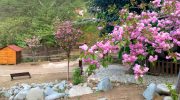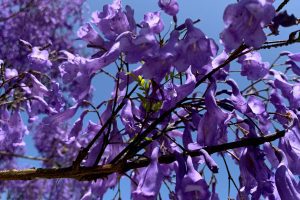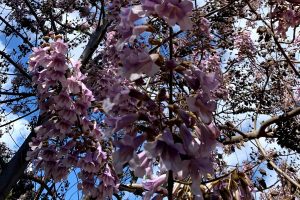
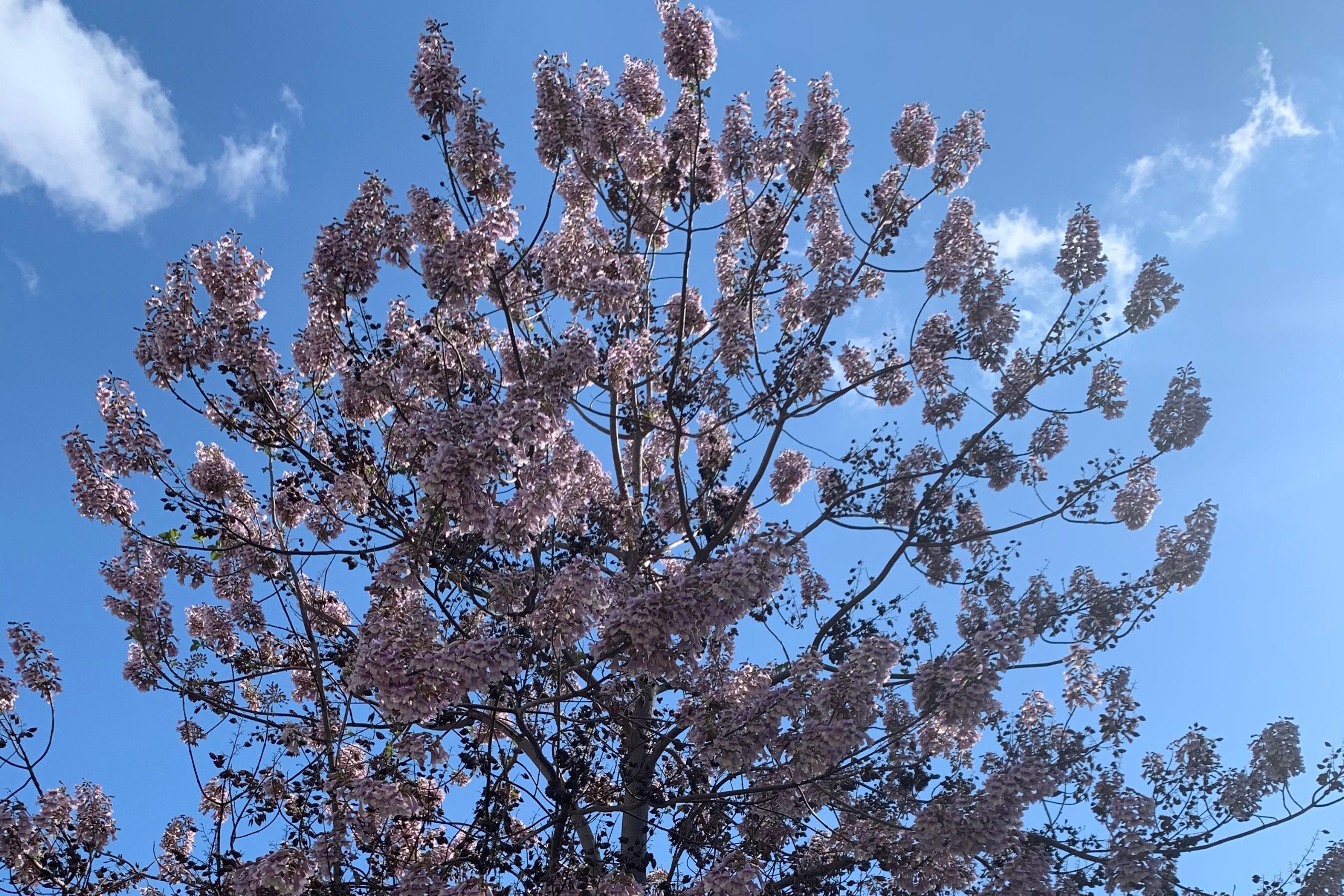
Imagine driving through the gentle hills near Paphos or Limassol in early April, when the air is still cool and the light turns golden. Suddenly, tall, bare-branched trees burst into clouds of soft lavender-purple bells that look like giant foxgloves hanging in the breeze. These are the Paulownia trees of Cyprus – fast-growing newcomers from the Far East that bring a touch of royal elegance to the island’s modern landscape.
The Empress Tree Family
Paulownia belongs to its own small family, Paulowniaceae, closely related to the foxgloves and snapdragons you might see in a cottage garden. These are deciduous trees that grow with astonishing speed. The main species planted in Cyprus are Paulownia tomentosa (the classic princess or empress tree) together with the even faster-growing P. elongata and P. fortunei. Locally they are known as Παυλώνια (Pavlónia), a direct transliteration of the scientific name. The genus honours Princess Anna Pavlovna of Russia (1795–1865), whose beauty and grace the flowers were said to resemble when the tree was first introduced to Europe.
From Asian Forests to Cypriot Plantations
Native to central and eastern China and parts of Korea, Paulownia has been treasured for centuries in its homeland for its lightweight, strong timber and beautiful timber used in everything from furniture to musical instruments. It reached Europe in the 19th century as an ornamental curiosity, but in Cyprus the real story begins in recent decades. With growing interest in sustainable forestry and climate-friendly crops, Cypriot farmers and investors began planting Paulownia in the 2010s and 2020s. Commercial centres such as Regreening Cyprus, located near the village of Alethriko, and local nurseries now supply seedlings across the island, especially on former agricultural land where quick returns are needed. Unlike the colonial-era introductions of eucalyptus or acacia, Paulownia arrived as a modern answer to the search for fast, renewable timber in a warming Mediterranean.
A Tree of Dramatic Beauty
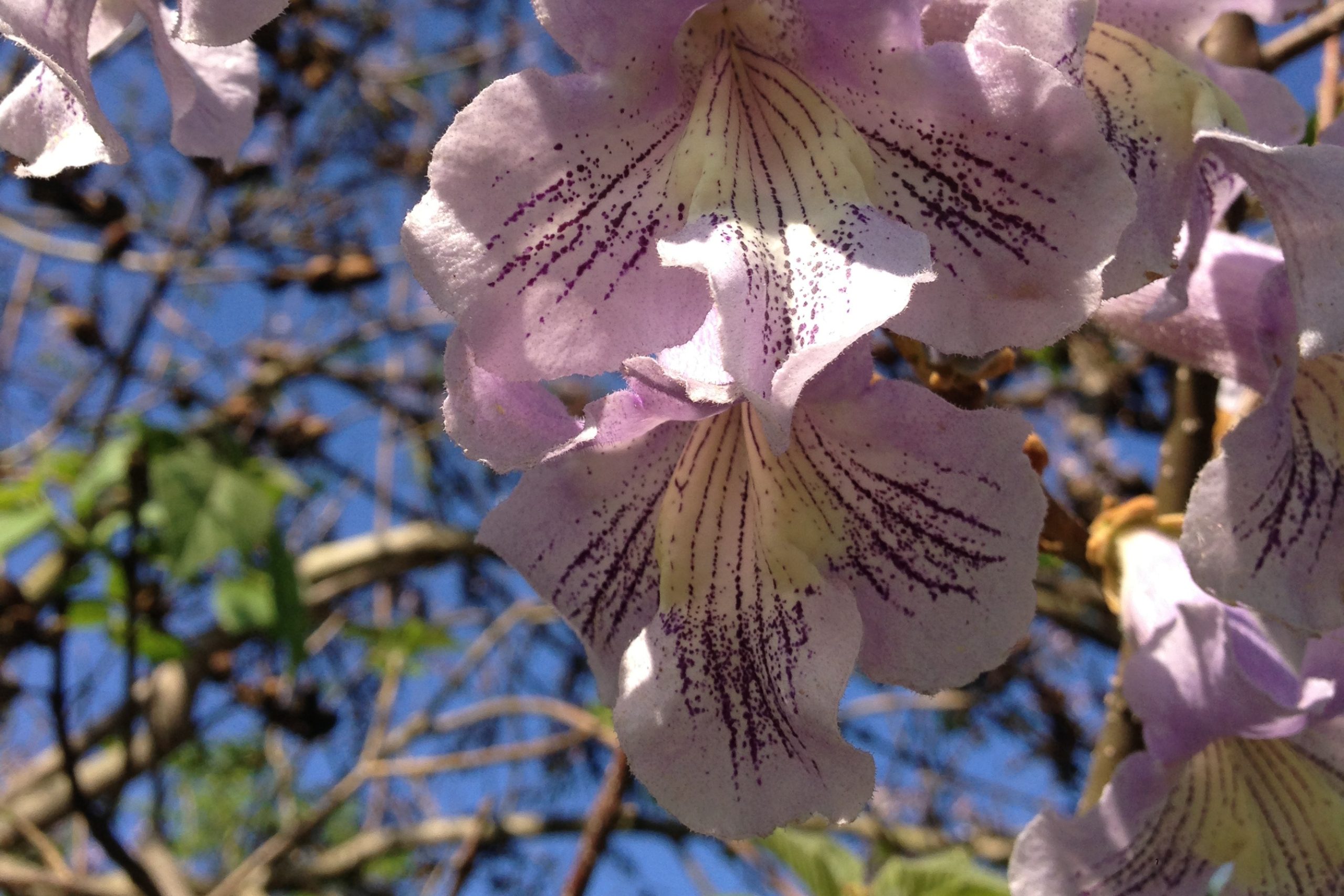
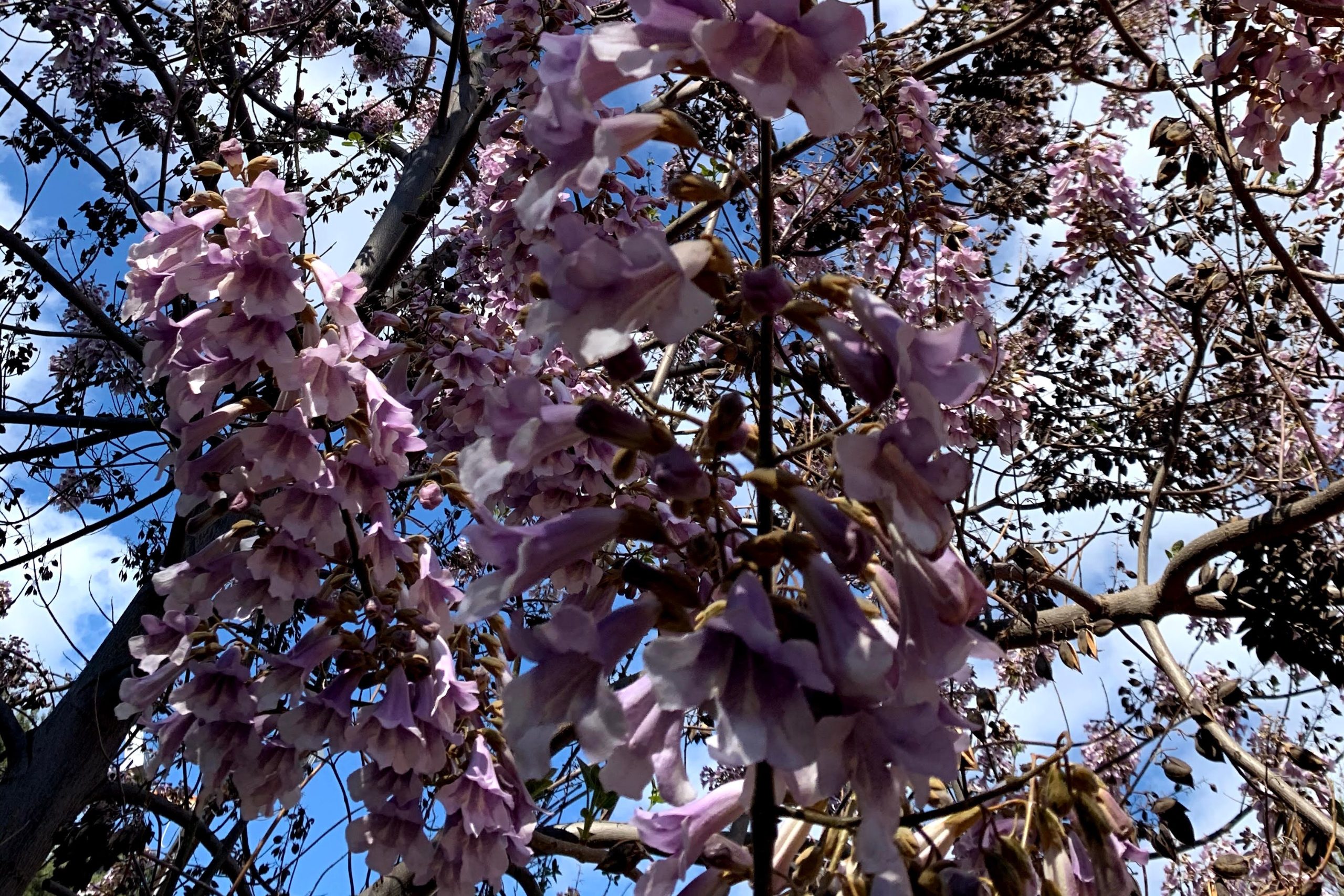
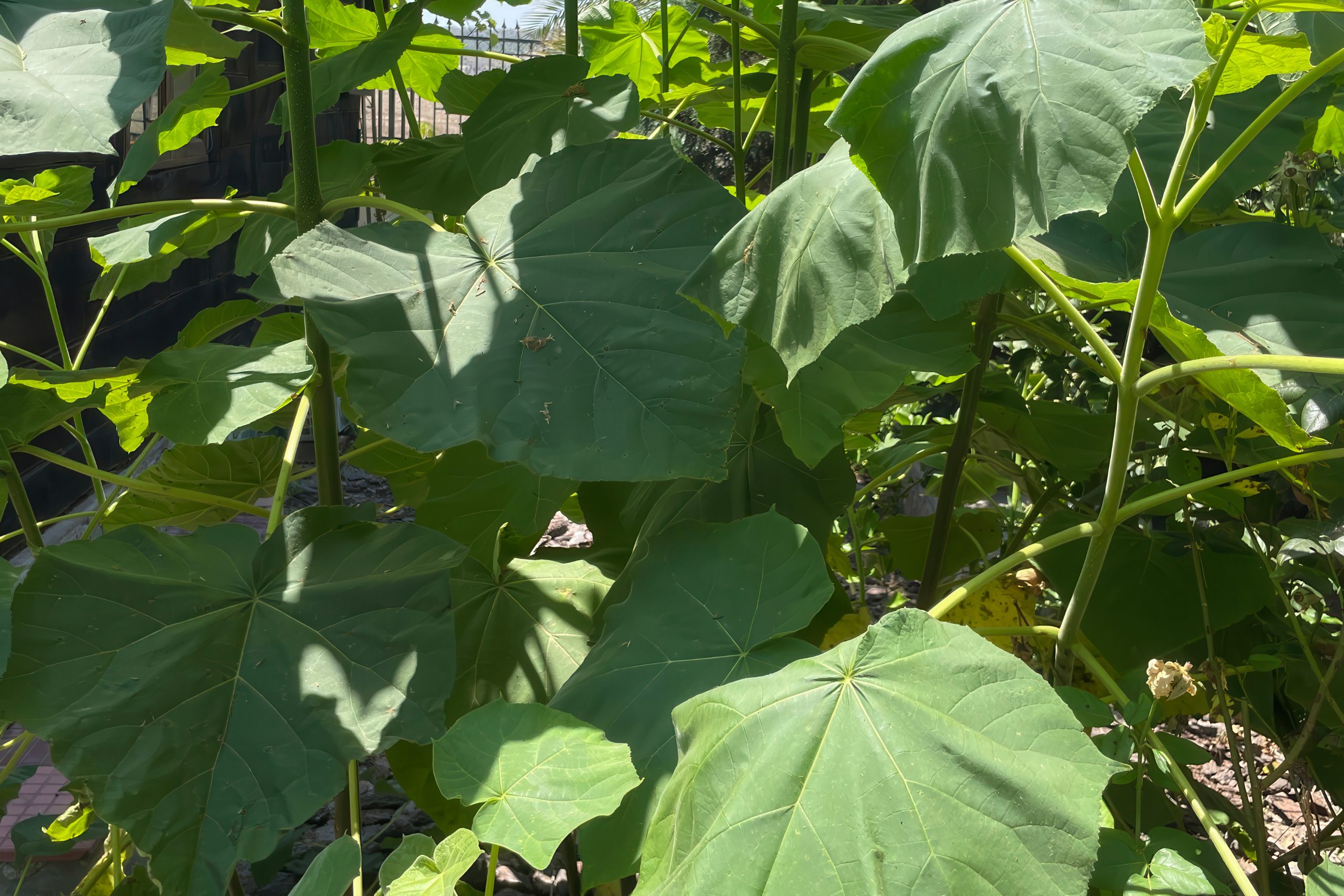
Paulownia grows into an open, umbrella-shaped tree reaching 10–20 metres in just a few years. The leaves are enormous – heart-shaped or broadly oval, up to 30–40 cm across, soft and velvety beneath. In spring, before the new leaves unfold, the branches are covered in upright panicles of fragrant, tubular flowers in shades of pale lavender to deep violet, each blossom marked inside with darker spots like a foxglove. Later come woody, egg-shaped seed capsules that persist through winter. The bark is smooth and grey when young, becoming lightly furrowed with age. In Cyprus the trees thrive on well-drained soils and tolerate the summer drought once established, though they appreciate a little extra water in the first two or three years.
Enchanting Discoveries
- Paulownia is one of the fastest-growing hardwood trees on Earth – it can reach 5–7 metres in its first year and be ready for harvest in 6–10 years.
- The wood is amazingly light (lighter than balsa in some varieties) yet strong, making it perfect for surfboards, aircraft models, musical instruments and even eco-friendly packaging.
- The flowers are a magnet for bees; Cypriot beekeepers prize Paulownia honey for its delicate flavour and light colour.
- The tree is fire-resistant and can resprout from the stump after cutting or burning – a useful trait in a fire-prone island.
- One mature tree can capture large amounts of CO₂, helping Cyprus meet climate goals through “carbon-farming” plantations.
Going Deeper
Several improved hybrids and clones (often combinations of P. elongata and P. fortunei) are preferred in Cyprus because they grow straighter trunks and resist wind better than the wild P. tomentosa. The flowers appear on last year’s wood, so pruning is timed carefully for timber production. Paulownia fixes nitrogen poorly but improves soil structure quickly with its deep roots and falling leaves. It is not listed as threatened on the IUCN Red List; in fact, it is cultivated worldwide for its environmental benefits. In Cyprus it remains largely in managed plantations and gardens rather than invading natural habitats.
Living with Paulownia Today
In an era of climate uncertainty and the push for regenerative agriculture, Paulownia fits perfectly into Cyprus’s vision of resilient land use. Projects promoting fast-growing trees for timber, honey, shade and carbon storage often include Paulownia alongside native species. Its rapid growth offers farmers an income in under a decade, while the beautiful spring bloom turns ordinary roadsides and farm edges into places of wonder. As Cyprus faces hotter, drier summers, this adaptable Asian guest shows how thoughtful plant choices can help build a greener, more productive future.
Finding and Experiencing Them
You can admire Paulownia almost anywhere young plantations or ornamental plantings exist – look along rural roads near Paphos, Limassol, or the Mesaoria plain, or visit private farms and demonstration sites run by local Paulownia centres. In spring the purple clouds are unmistakable; stop safely, walk beneath the branches and breathe in the light, vanilla-like scent of the flowers while bees hum overhead. Many plantations welcome visitors by appointment, and you can even see young trees shooting skyward in rows like green soldiers. Touch a leaf – it feels cool and velvety – and marvel at how much the tree has grown since last year.
A Tree for Tomorrow
Though Paulownia has only been part of the Cypriot landscape for a short time, it has already become a symbol of hope and innovation. Its towering form and lilac trumpets remind us that the island’s green story is still being written – blending ancient resilience with modern solutions. By growing these remarkable trees wisely alongside our precious native flora, Cyprus continues its long tradition of welcoming useful plants from afar and shaping a landscape that is both productive and beautiful for generations yet to come.