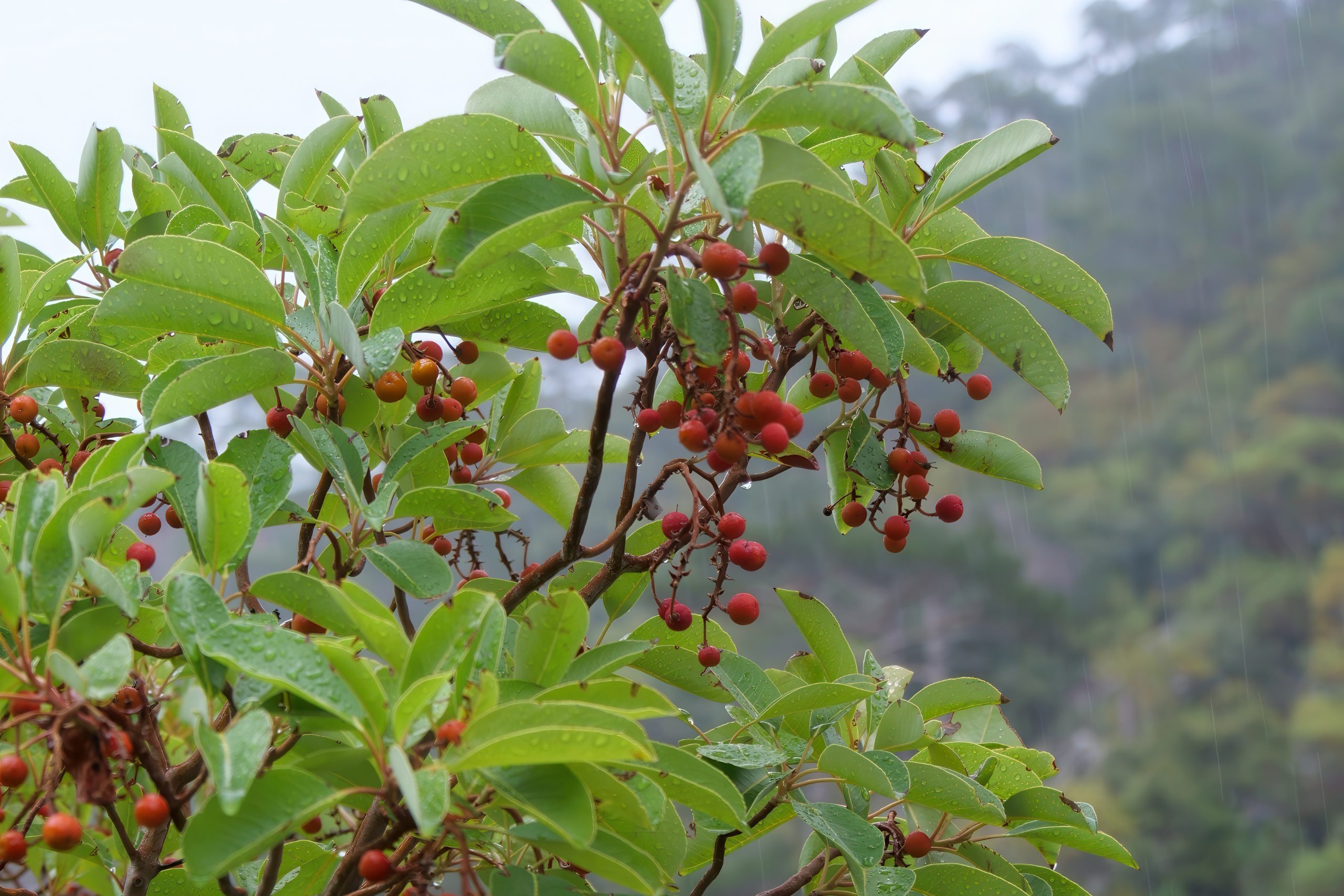
High on rocky, sun-scorched hillsides where pine meets maquis, a graceful evergreen catches the eye with branches glowing like polished copper. Each summer its smooth bark peels away in thin, papery sheets, revealing fresh layers of vivid orange-red and pistachio-green beneath – a living canvas of renewal. This is the Cyprus strawberry tree, one of the island’s most elegant natives and a quiet sentinel of the Mediterranean wildlands.
A Graceful Member of the Heath Family
Known scientifically as Arbutus andrachne, this evergreen shrub or small tree belongs to the genus Arbutus within the Ericaceae family (the heath or heather family) in the order Ericales, part of the asterid group of flowering plants. In Cyprus it grows alongside its close relative Arbutus unedo (the common strawberry tree) and is a classic component of maquis shrublands and pine-forest understories.
Roots Deep in Ancient Mediterranean Landscapes
Arbutus andrachne has been part of Cyprus since prehistoric times, forming an integral element of the original maquis vegetation. The ancient Greek botanist Theophrastus (4th–3rd century BC) described it as “Andrachni” in his History of Plants. It was noted by 19th-century explorers and in the 2007 Cyprus “Tree of the Year” campaign by the Department of Forests. Today it remains widespread and secure, listed as Least Concern on the IUCN Red List thanks to its broad eastern-Mediterranean range.
Distinctive Features That Define It
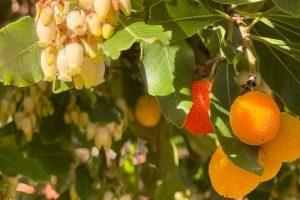
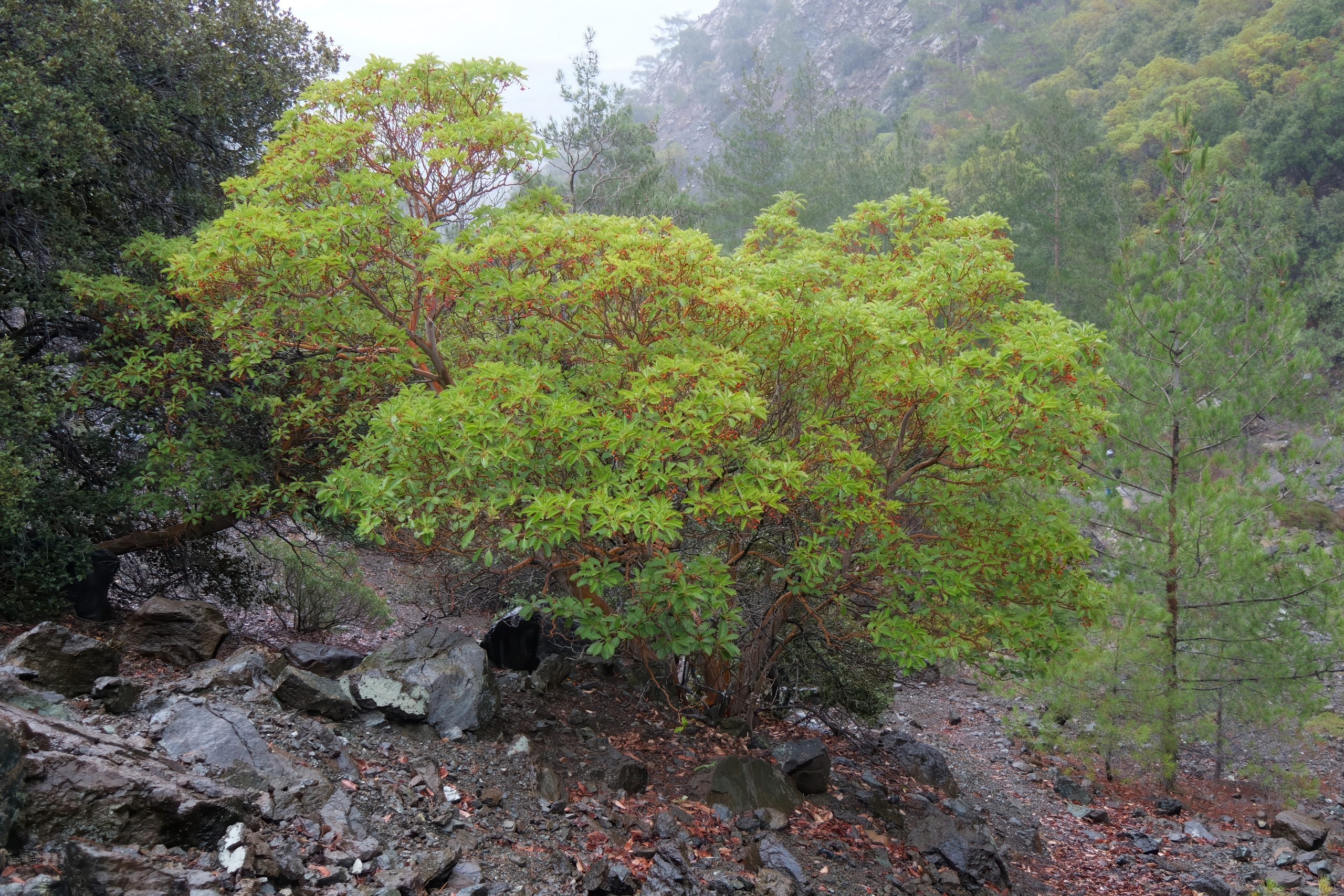
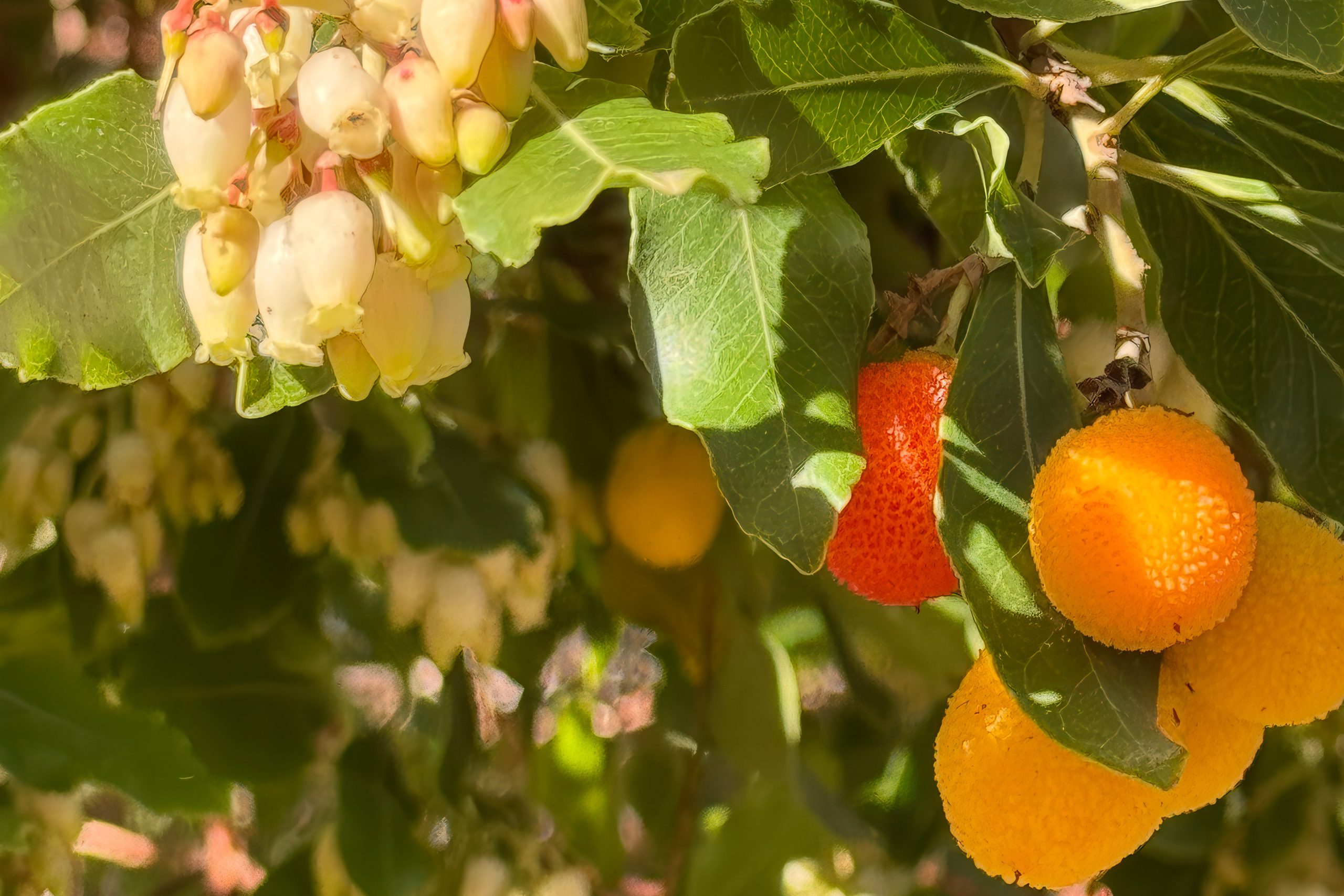
Reaching 3–5 m (occasionally up to 12 m) with a broad, irregular crown, the tree has simple, leathery, glossy leaves 4–10 cm long, dark shining green above and glaucous beneath. Its most striking feature is the smooth, reddish bark that exfoliates each early summer in papery strips, exposing pale greyish or greenish new layers. From March to May it bears clusters of small white or pale-green bell-shaped flowers in terminal panicles. By late autumn these develop into reddish to orange-red globose fruits 10–15 mm across – fleshy, edible, and covered with tiny rounded outgrowths that give them a strawberry-like appearance.
Five Delightful Tidbits
• Locals affectionately call it Αντρουκλιά (Antrouklia) in Cypriot Greek – a direct echo of the ancient name “andrachne” meaning wild strawberry tree.
• The bark peels so dramatically that villagers sometimes say the tree “changes its clothes” every summer.
• The fruits are edible for humans and birds; a special liqueur is traditionally made from their juice.
• It is one of only two native Arbutus species in Cyprus (the other is A. unedo).
• After fire or cutting it coppices vigorously from the root, making it a true survivor in fire-prone maquis.
Deeper Botanical and Ecological Layers
As a member of Ericaceae, Arbutus andrachne forms beneficial mycorrhizal associations that help it thrive on poor, rocky, calcareous or igneous soils where many trees struggle. It plays a key role in stabilising thin soils on steep slopes and is an important component of several Natura 2000 habitat types, including Mediterranean pine forests with endemic species, maquis with Quercus alnifolia, and woodlands with Cupressus or Juniperus. Its fruits and dense evergreen crown provide food and shelter for wildlife, while the wood has long been valued for charcoal, fuel, and small carved items.
Still Thriving in Modern Cyprus
Today the Cyprus strawberry tree continues to enrich the island’s biodiversity, prevent erosion, and delight hikers and nature lovers. Fully protected under forest law and included in the Natura 2000 network, it symbolises the resilience of native Cypriot vegetation in the face of climate change and remains a favourite for ornamental planting in gardens and restoration projects.
Finding and Experiencing the Strawberry Tree
The tree is common from 100 m to 1,525 m elevation, especially in the Akamas Peninsula, Troodos mountains, Limassol forest district, and Pentadaktylos range. Excellent places to see it include the nature trails of Akamas (look for glowing red bark on rocky outcrops among pines), the lower slopes around Platres and Machairas, and coastal maquis near Paphos and Limassol. Summer reveals the dramatic bark peeling; autumn brings the bright red fruits. Walk quietly along signposted paths, admire without disturbing, and join a guided forestry walk for the best stories. The Department of Forests even celebrated it as Tree of the Year 2007, so look for interpretive panels in popular areas.
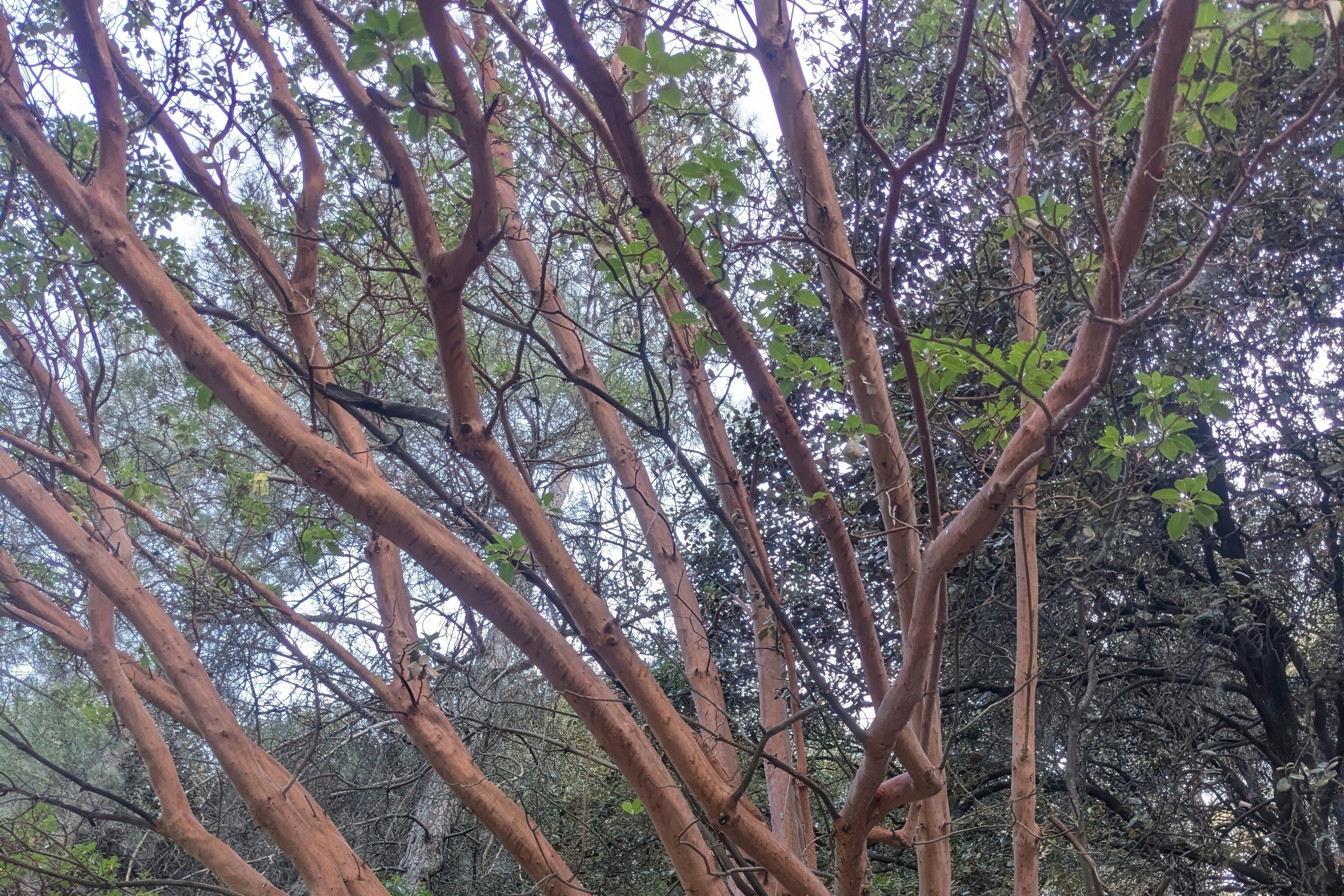
In the rugged beauty of Cyprus, the strawberry tree stands as a living poem of endurance and renewal. Its cinnamon bark, strawberry-like fruits, and evergreen crown connect us to the ancient maquis described by Theophrastus, to generations of islanders who walked these slopes, and to a future where native species continue to thrive. Next time you pause on a sunlit Cypriot hillside and catch sight of that glowing red trunk or taste a sweet-tart fruit, remember – you are standing beside one of the Mediterranean’s most elegant and resilient treasures, right here on our beautiful island home.