Explore Cyprus with Our Interactive Map

Explore our top stories and discover ideas worth your time.

Saint Barnabas Early Christian Missionary Cyprus

Saint Barnabas Early Christian Missionary Cyprus

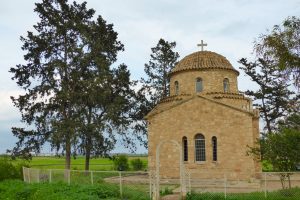
Near the ruins of ancient Salamis, a monastery complex marks the spot where one of Christianity's first apostles was buried in secret after being martyred for his faith. Saint Barnabas was a native of Cyprus who joined Paul on missionary journeys that brought Christianity to the island and converted its Roman governor. His discovery in a tomb 400 years after his death would change the course of Cypriot church history and establish the Orthodox Church of Cyprus as an independent institution. shutterstock-com Barnabas holds a unique position in Christian history as the apostle who validated Paul's conversion and introduced him to the Christian community in Jerusalem. According to the Acts of the Apostles, Barnabas sold his property near Jerusalem and donated the proceeds to the early church, demonstrating his complete dedication to the new faith. He is considered the patron saint of Cyprus and is commemorated on June 11th in the Orthodox calendar. Historical Background Barnabas traveled to Jerusalem to study law under Rabbi Gamaliel, the same teacher who instructed Paul. While studying in Jerusalem, Barnabas witnessed miracles performed by Jesus and became one of His followers. When Paul (then called Saul) returned to Jerusalem after his dramatic conversion on the road to Damascus, the Christian community was understandably suspicious of the former persecutor of Christians. Barnabas played a crucial…

Read more
Lara Beach, Cyprus – Turtle Nesting & Wild Coast

Lara Beach, Cyprus – Turtle Nesting & Wild Coast

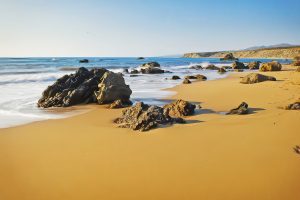
Lara Beach sits on the Akamas Peninsula in western Cyprus, roughly 27 kilometers northwest of Paphos. This stretch of golden sand is one of the Mediterranean's most important nesting sites for two endangered sea turtle species. Unlike the developed beaches that line most of Cyprus's coast, Lara remains untouched by commercial tourism. There are no sunbeds, no restaurants, and no permanent structures beyond a small conservation hut. The beach exists primarily for the turtles, with human visitors welcomed as guests rather than customers. tripadvisor-co Cyprus's First Turtle Conservation Station The protection of Lara Beach began in 1971 when the area was officially designated as a protected zone. In 1978, the Cyprus Fisheries Department launched a formal conservation project that included establishing a seasonal station and hatchery at Lara. This became the first turtle conservation project in the entire Mediterranean region. tripadvisor-co The initiative received support from the World Wildlife Fund between 1980 and 1983, followed by European Union assistance through the MedSPA Project in 1990. Today, government-funded conservationists maintain year-round monitoring of the nesting areas, though their presence intensifies during the breeding season. Green turtles and loggerhead turtles have nested on this beach for centuries. Both species are classified as endangered in the Mediterranean Sea by international conservation authorities. The green turtle population in the Mediterranean is critically endangered, making…

Read more
Pinus Brutia

Pinus Brutia

Imagine stepping onto sun-drenched slopes where tall evergreens sway in the breeze, their long needles catching golden light and filling the air with a fresh, resinous scent. This is the world of Pinus brutia, Cyprus’s most iconic pine and the backbone of the island’s woodlands. Together with its mountain cousin, it reveals a story of ancient resilience that still thrives across the Mediterranean landscape today. www.inaturalist.org A Pine Built for the Island Pinus brutia, commonly known as the Calabrian pine, is a hardy evergreen conifer perfectly suited to the warm, dry conditions of the eastern Mediterranean. In the broad pine family (Pinaceae), it stands out for its fire-adapted seeds and drought tolerance. On Cyprus it reigns supreme, forming the vast majority of the island’s forests from sea level right up to the cooler heights where its relative, the black pine (Pinus nigra ssp. pallasiana), takes over. The Aleppo pine (Pinus halepensis) also appears, sometimes as a planted companion or in transitional zones. Echoes of Ancient Forests In 1881, French forester P.G. Madon climbed Mount Troodos and described a Cyprus once cloaked in “vast forests… pines of different species in dense profusion” mingling with cedar, oak and cypress down to the plains. For millennia these trees supplied timber for Phoenician mines, Ptolemaic fleets, Lusignan palaces and Venetian ships. Yet centuries of…

Read more