Picture yourself walking along a sandy Cypriot beach on a breezy afternoon, where tall, slender trees sway like green fountains, their needle-like branches rustling softly like the sea itself. These are the coastal she-oaks, or Casuarina trees, quiet guardians of our shores that have a story as intriguing as the waves they overlook. But how did these Australian natives find their way to our island paradise?
Getting to Know the She-Oaks
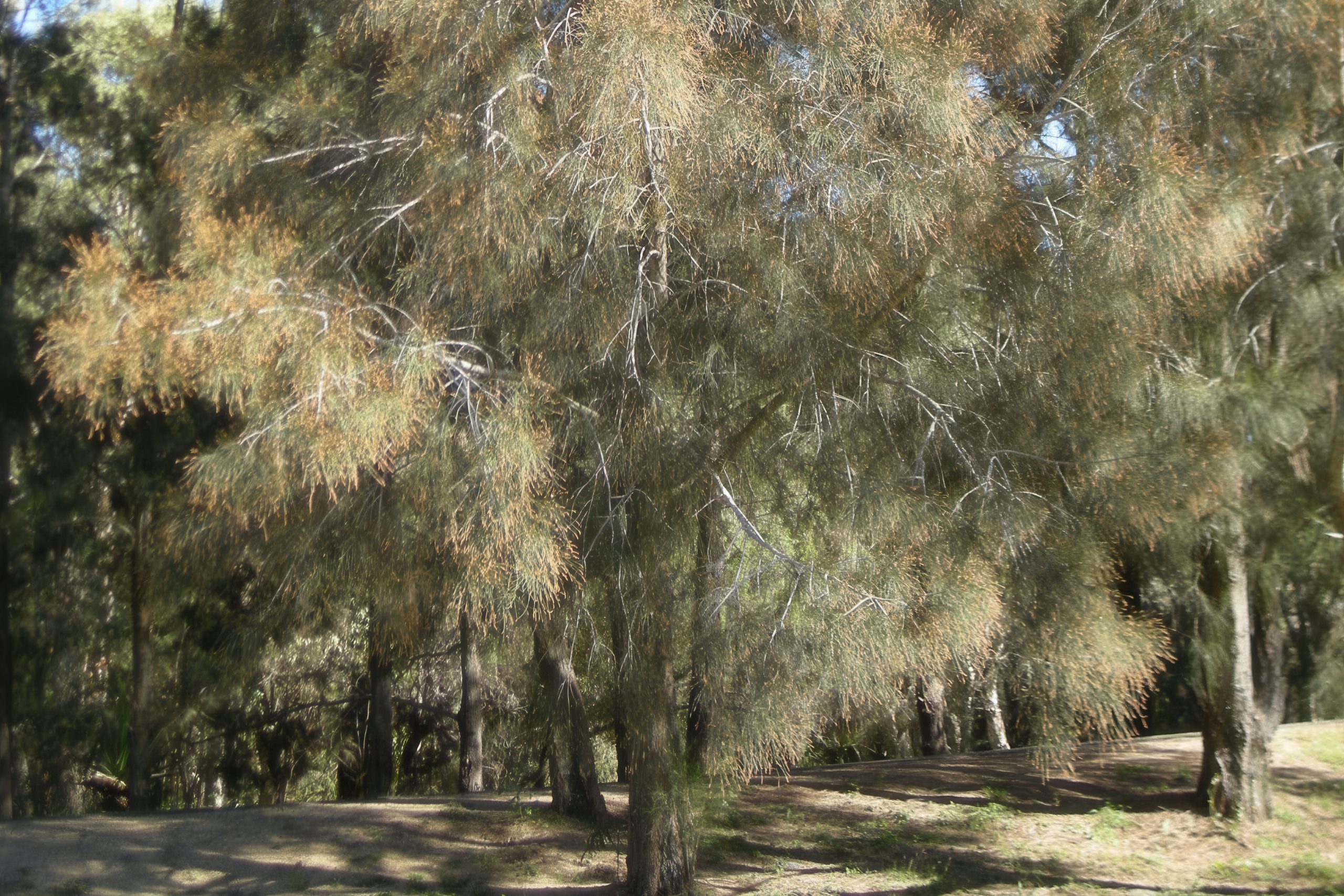
Coastal she-oaks belong to the Casuarinaceae family, a group of trees and shrubs mostly from the southern hemisphere that look a bit like pines but are actually flowering plants. In Cyprus, the main species you’ll encounter is Casuarina equisetifolia, often just called she-oak or Australian pine, along with a few others like C. cunninghamiana and C. glauca. Locally, they’re known as Καζουαρίνα (Kazouarina), a name borrowed from the Malay word for cassowary, because their drooping branches resemble the feathers of that big, flightless bird.
A Journey Across Oceans
These trees first grew in the sandy coasts and woodlands of Australia, Southeast Asia, and the Pacific islands, where they’ve been part of the landscape for millions of years. They arrived in Cyprus during the British colonial era in the late 19th and early 20th centuries, much like eucalyptus and acacia, brought in to help stabilize dunes, provide quick shade, and act as windbreaks against the salty sea breezes. Foresters saw their toughness in dry, poor soils and planted them along beaches and in parks, turning barren spots into green havens.
Their Unique Silhouette
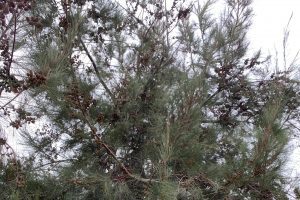
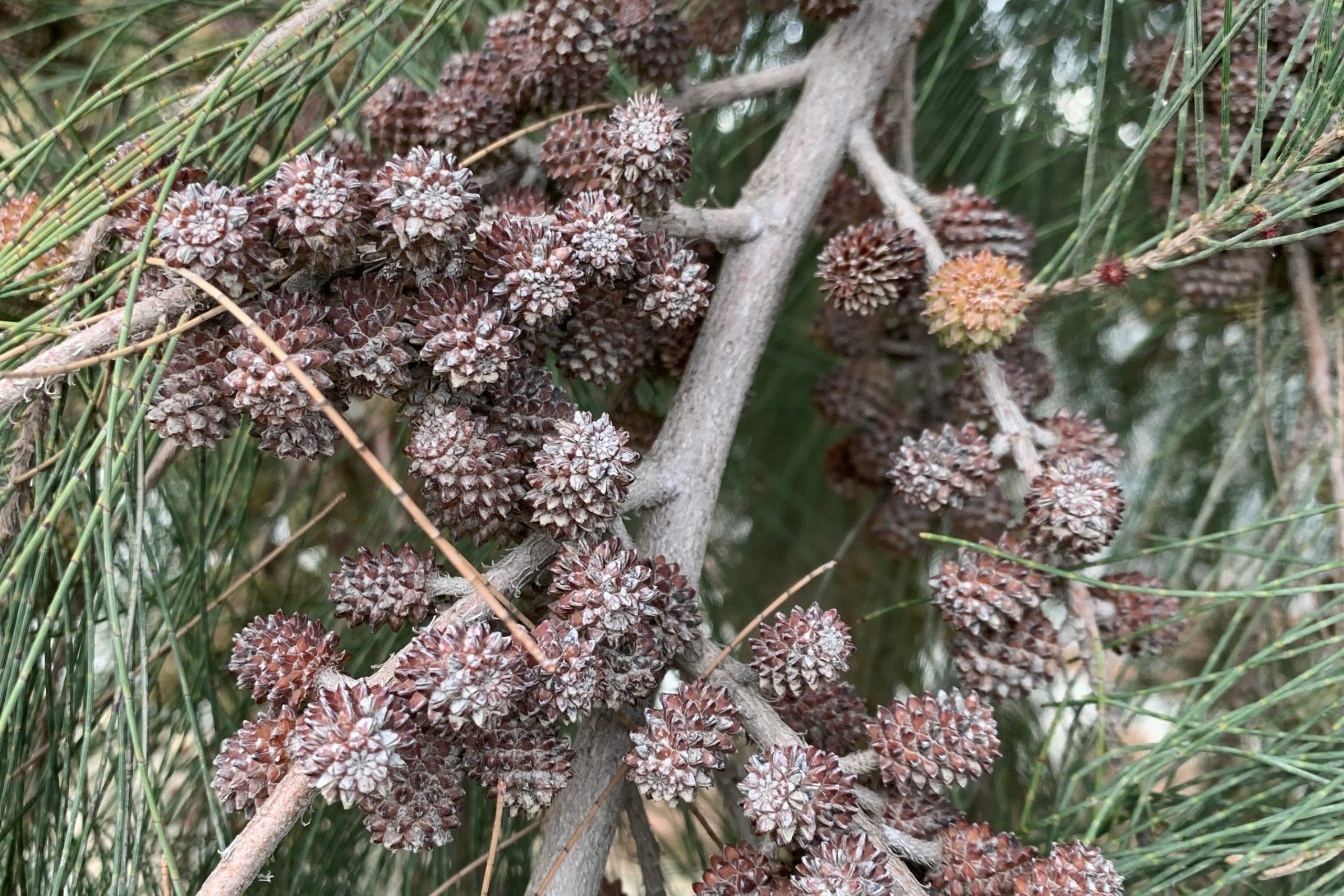
What makes she-oaks stand out is their wispy, pine-like appearance without being true conifers. Casuarina equisetifolia grows into a tall, evergreen tree up to 35 meters high, with a straight trunk covered in rough, greyish bark. Instead of leaves, it has long, slender green branchlets that hang down like horse tails – that’s why one common name is horsetail casuarina. In spring, tiny pinkish flowers appear, followed by small, woody cones that look like little pinecones, releasing winged seeds that twirl in the wind. The whole tree has a feathery, graceful look that softens the harsh coastal light.
Curious Tidbits
- The name “she-oak” comes from early European settlers in Australia who thought the wood resembled oak but was lighter and easier to work with – perfect for tools and fences.
- These trees are nature’s soil doctors: their roots team up with bacteria to pull nitrogen from the air and enrich the ground, helping other plants grow in sandy spots.
- In some places, she-oaks whisper in the wind so loudly they’re called “whistling trees” – listen closely on a gusty day!
- Birds and insects love them: the seeds feed finches, and the branches provide nesting spots for coastal birds.
- One mature tree can drop thousands of seeds, but in Cyprus, they spread slowly compared to their invasive ways in warmer, wetter lands like Florida.
Deeper Roots
Botanically, she-oaks are ancient survivors from the time when continents were drifting apart, related distantly to birches and alders in the broader order of flowering trees. In Cyprus, Casuarina equisetifolia is naturalized but not considered endangered it’s listed as Least Concern by the IUCN, though some relatives like C. cunninghamiana can become invasive in wetlands, crowding out reeds. Their wood is strong yet light, once used by indigenous Australians for boomerangs, and the resin has mild medicinal properties in traditional remedies.
Standing Strong Today
In modern Cyprus, she-oaks still play a role in fighting erosion along our beaches, especially as climate change brings stronger winds and rising seas. You’ll spot them in coastal parks and gardens, where they provide shade without needing much water, fitting into reforestation efforts to restore degraded lands. However, conservationists watch them closely to prevent them from overtaking native spots, reminding us to balance introduced beauty with local ecology.
Spotting Them in Person
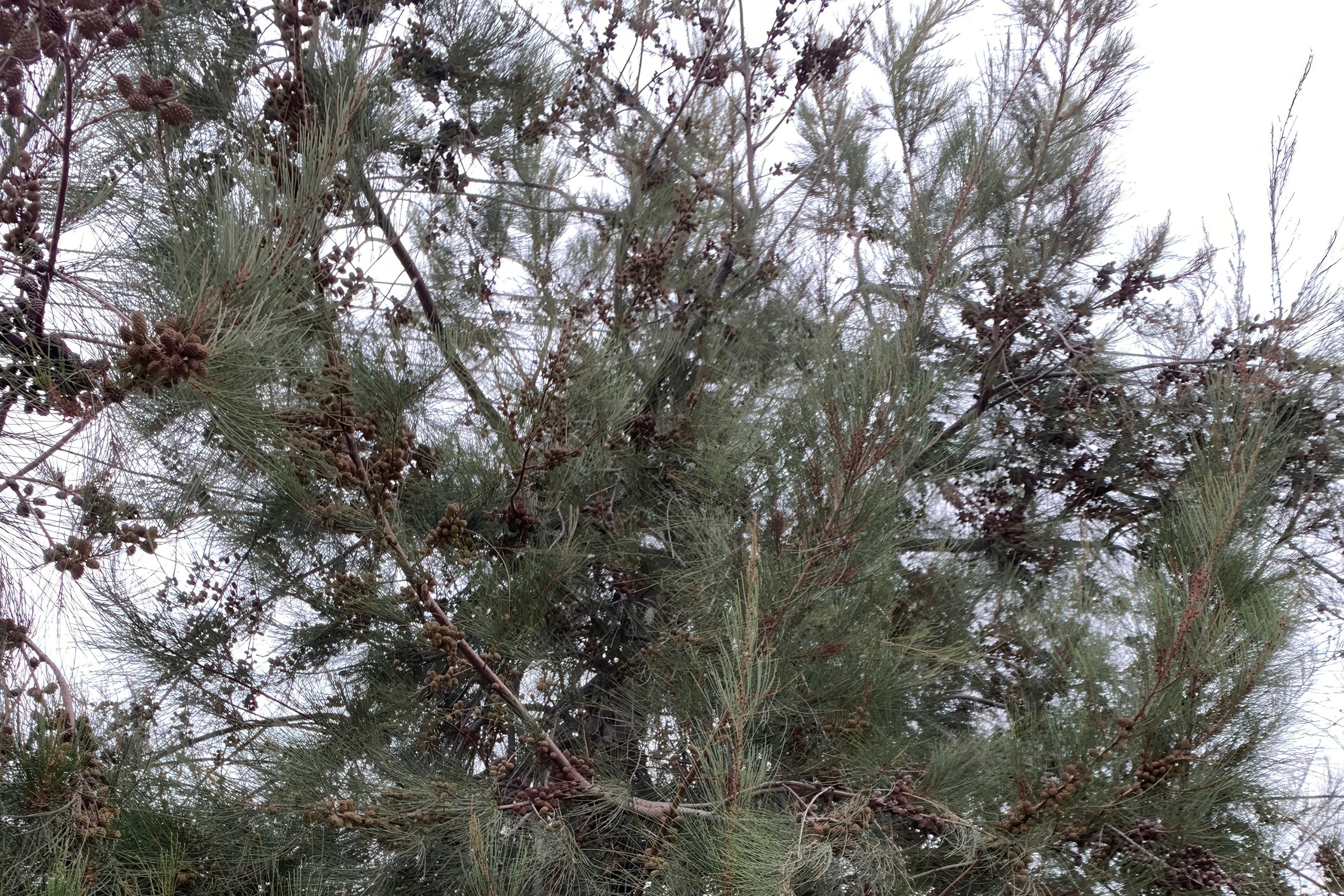
Head to places like Akrotiri or the beaches near Limassol and Larnaca to see these trees in their element they’re often planted in rows along promenades or dunes. Stand under one on a sunny day; feel the soft, needle-like branches brush your hand and hear the gentle rustle that sounds like distant waves. It’s a peaceful experience, like stepping into a natural wind chime, and in spring, the subtle flowers add a fresh, earthy scent to the salty air.
Why These Trees Matter
The coastal she-oaks may have come from far away, but they’ve added a touch of resilience and grace to Cyprus’s shores, teaching us about adaptation in a changing world. They remind us of our island’s history as a crossroads of plants and people, and by appreciating them alongside our native flora, we keep Cyprus’s green story alive a tale of strength, whispers, and the endless dance between land and sea.