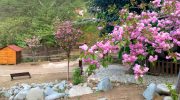
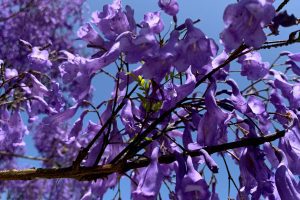
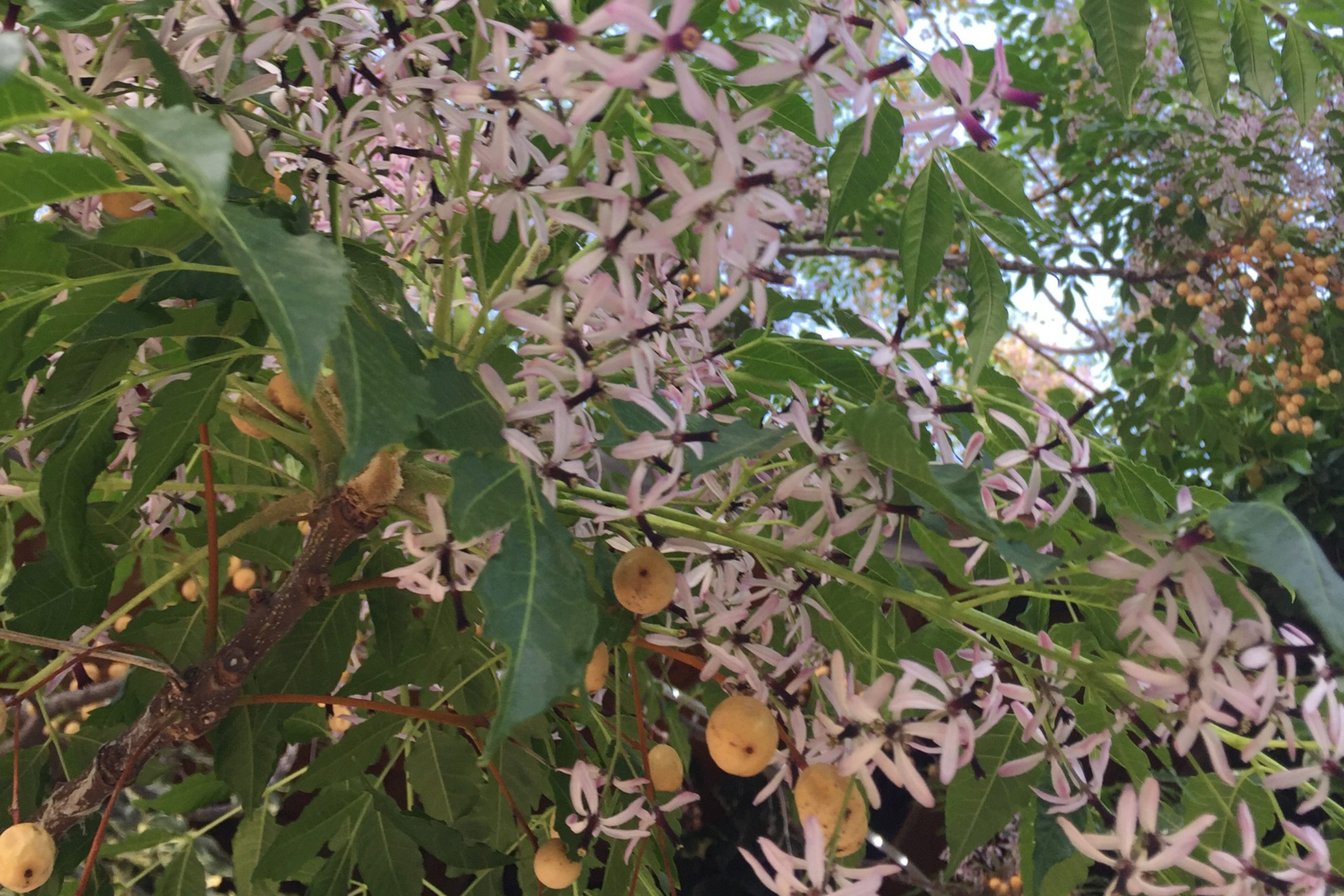
Imagine walking through a quiet Cypriot village in late April. The air carries a sweet, honey-like fragrance, and suddenly you notice a graceful tree covered in clouds of delicate lilac flowers. By autumn, the same tree hangs heavy with clusters of shiny yellow berries that glow like tiny lanterns against the green leaves. This is the chinaberry, a charming, fast-growing guest that has quietly become part of Cyprus’s everyday landscape.
The Bead-Tree in the Mahogany Family
Chinaberry, Melia azedarach, belongs to the Meliaceae (mahogany) family – the same noble group that gives us true mahogany timber and the famous neem tree of India. The genus Melia is small, and this species is the most widely planted. Locally it is known as Μαυρομάτα (Mavromata – “dark eyes”, referring to the darker centres of the flowers) or Αγριοπασχαλιά (Agrio Paschalia – wild Easter lilac). The name perfectly captures its springtime beauty.
From Asian Forests to Cypriot Gardens
Native to southern Asia (from India and China to northern Australia), the chinaberry has been valued for centuries for its shade, fragrant flowers and useful seeds. It reached the Mediterranean as an ornamental in the 19th century and arrived in Cyprus probably during the British period, planted in gardens, villages and small-holdings. Today it is fully naturalised across the island but remains non-invasive – a gentle newcomer that fits comfortably into our maquis and urban edges without crowding out native plants.
Graceful Form and Fragrant Flowers
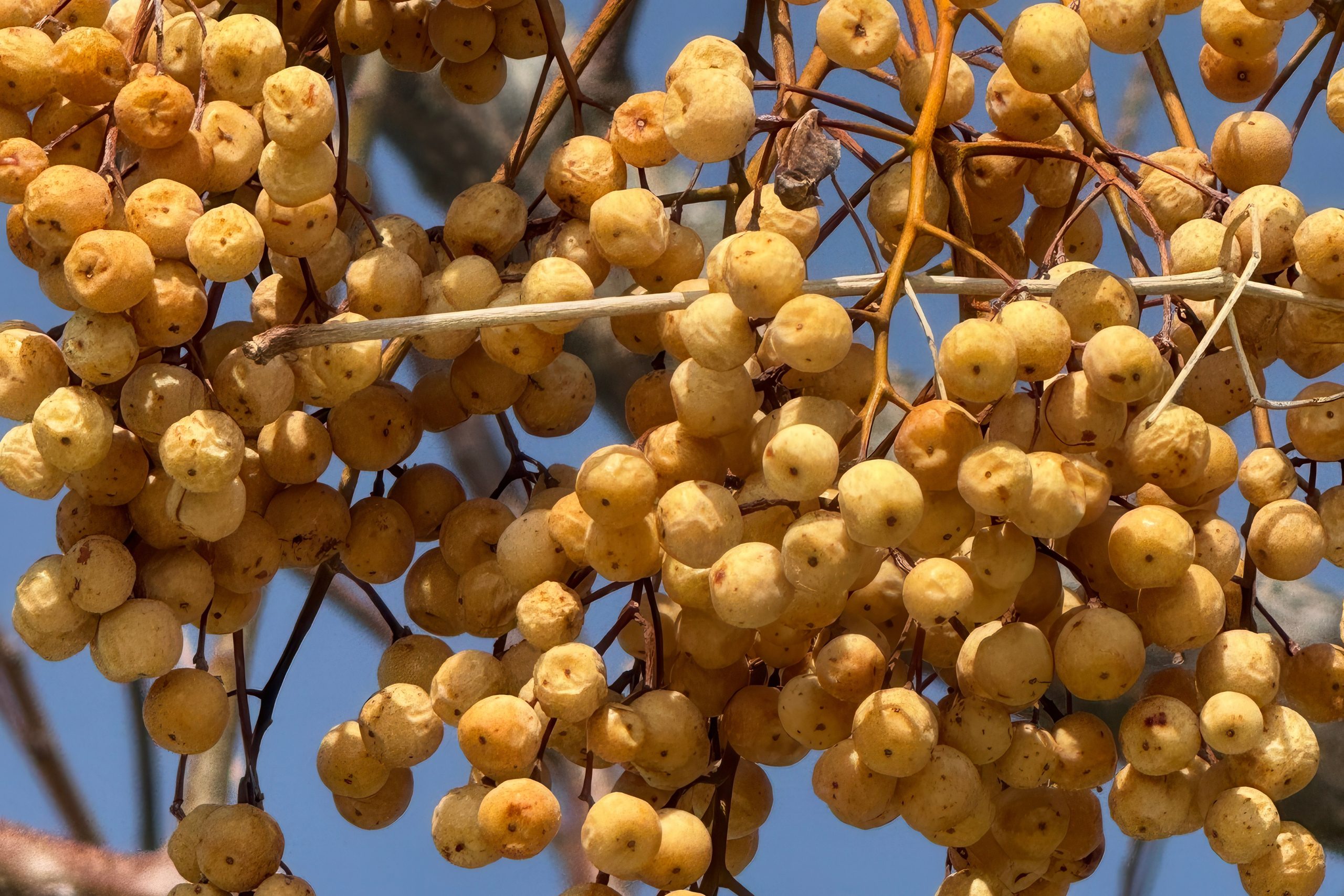
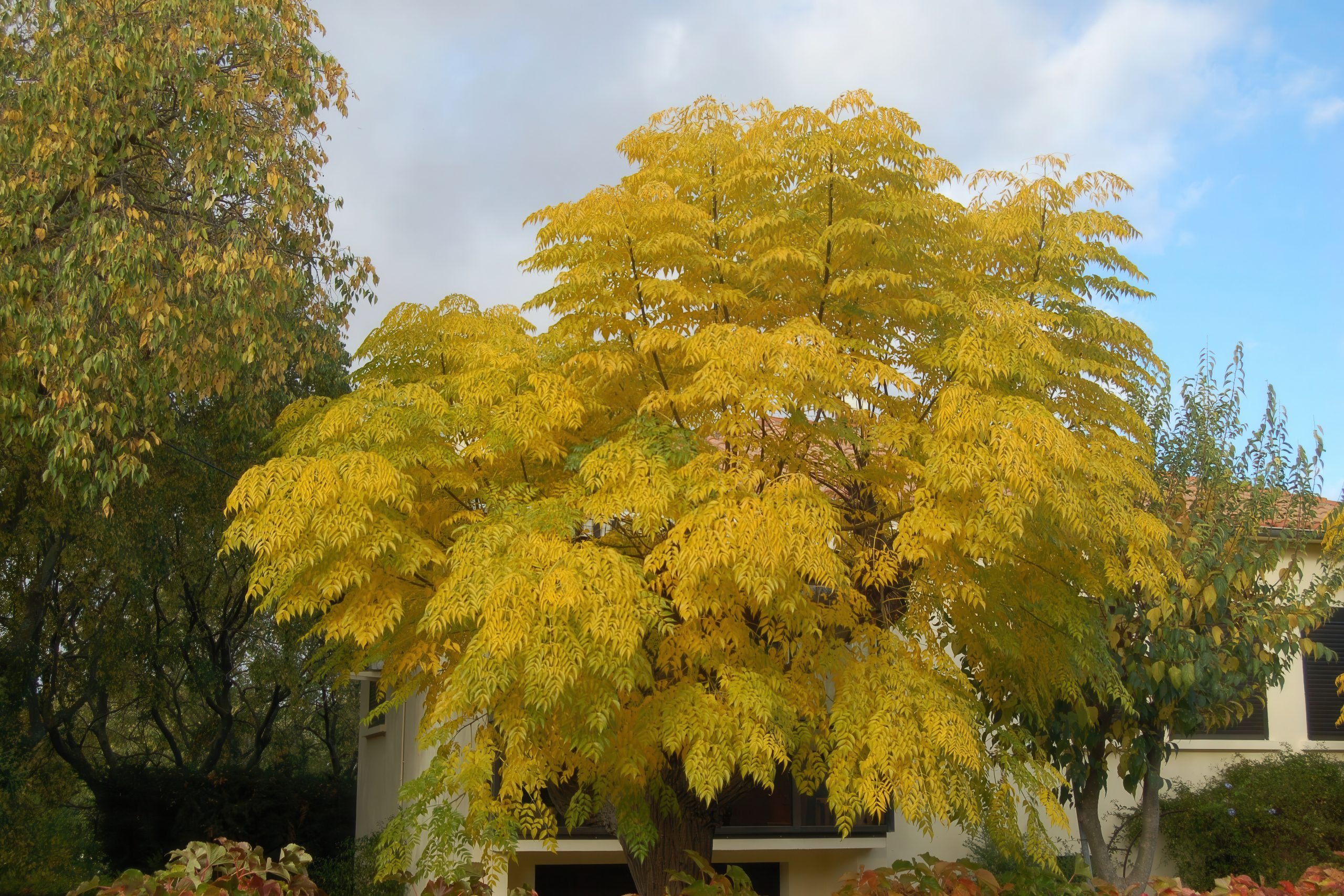
The tree grows quickly to 10–15 metres (sometimes more) with a rounded, open crown and pinnate leaves that look a little like ash or neem – fresh green in summer, turning pale yellow before they fall. In April–May the branches are smothered in loose clusters of star-shaped lilac flowers with a sweet, almost jasmine-like scent. Later come the famous golden-yellow berries (technically drupes) that persist through winter, each containing a hard, five-grooved seed. The bark is smooth and grey when young, becoming lightly furrowed with age. In Cyprus it thrives on almost any soil, tolerates drought once established, and asks for very little care.
Enchanting Tidbits
- The hard seeds were traditionally strung into rosaries and necklaces – hence the English name “bead-tree”.
- Birds love the berries and can become slightly tipsy after eating too many – a harmless natural party!
- Fishermen in older times crushed the leaves or seeds and cast them into pools to stun fish (the plant has mild narcotic properties).
- The timber resembles teak and was once used for furniture, though it is now under-appreciated.
- In traditional Asian medicine the tree has been used for centuries as an insect repellent, for skin problems and even as a mild sedative.
Traditional Wisdom and Hidden Powers
The berries are toxic to humans and livestock if eaten in quantity (never taste them!), yet they contain compounds with antibacterial and insecticidal properties. In Cyprus you will still see mature specimens in old village gardens and around archaeological sites, quietly reminding us of past generations who valued its shade and beauty. It is listed as “Naturalized non-invasive” in the Flora of Cyprus and carries no threat status on the IUCN Red List – it is a successful, well-behaved introduction.
In Today’s Cypriot Life
With hotter summers and the need for low-maintenance shade, the chinaberry fits perfectly into modern gardens, schoolyards and roadsides. Its spring lilac display lifts spirits after winter, while the golden berries add winter interest. The mavromata earns its place in today’s gardening as a graceful, drought-tolerant ornamental that brings colour and character to our towns and villages.
Discovering the Mavromata
The easiest way to meet Cyprus chinaberries is a spring drive or walk through any older village or coastal town – look for the lilac clouds in April and May. Excellent examples stand near Aphrodite’s Sanctuary in Kouklia, in the streets of Dali or Atheniou, and in many Nicosia and Limassol gardens. Park safely, breathe in the sweet scent, and watch bees dancing among the flowers. In winter the yellow berries against bare branches create a different but equally lovely picture. The trees are completely safe to admire from a distance – just admire, don’t taste!
A Tree of Quiet Charms
Though it crossed oceans centuries ago, the chinaberry has become a true Cypriot character – offering shade, fragrance and golden winter jewels without demanding much in return. Its story reminds us that thoughtful plant introductions can enrich our landscape with beauty and utility while respecting the island’s natural balance. Next time you stand beneath a mavromata in full bloom, take a moment to appreciate this gentle traveller that has found a happy home under the Cypriot sun – a living thread connecting distant continents to our everyday wonder.