Imagine strolling across the sun-drenched plains of central Cyprus on a warm spring morning. Tall, graceful trees with silvery, peeling bark rise above the dry grasses, their narrow leaves whispering in the breeze and filling the air with a fresh, camphor-like scent. These are the eucalypts of Cyprus – not ancient natives, but fascinating newcomers whose story weaves together botany, colonial history, and the island’s fight against desertification.
Getting to Know the Genus
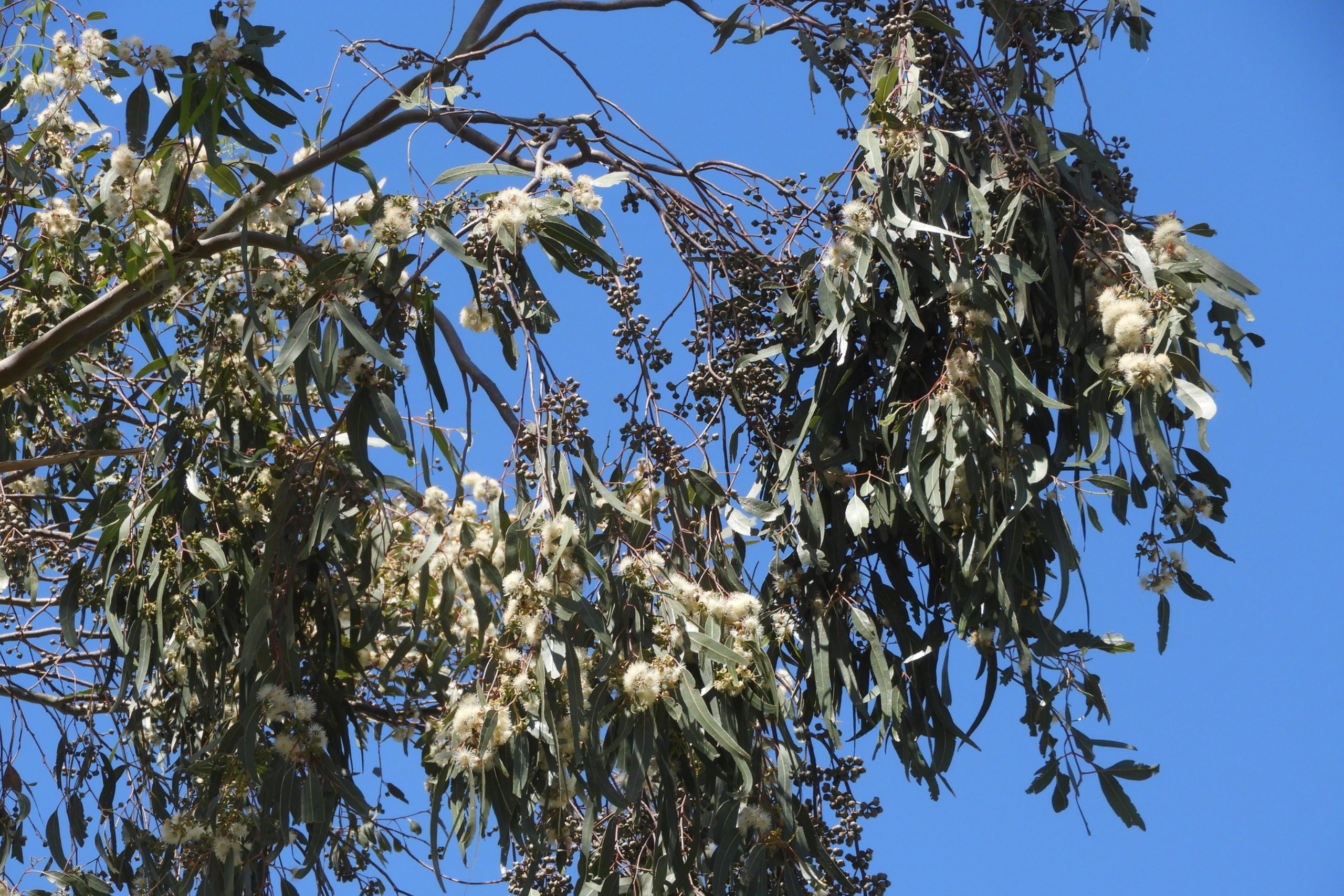
Eucalyptus belongs to the vast Myrtaceae family, a group of flowering plants that also includes myrtles, guavas, and bottlebrushes. The genus Eucalyptus alone contains over 700 species, nearly all native to Australia, where they dominate woodlands and riverbanks. In Cyprus we mainly encounter Eucalyptus camaldulensis, the river red gum, though other species such as E. gomphocephala and E. torquata appear in small numbers. Locally they are known as Ευκάλυπτος (Efkalyptos), from the ancient Greek words “eu” (well) and “kalyptos” (covered), referring to the neat little cap that protects each flower bud until it is ready to bloom.
Their Journey to Cypriot Soil
When the British took control of Cyprus in 1878, the island had lost much of its original forest cover to centuries of grazing, firewood cutting and fires. In 1876 the French arborist P.G. Madon, working for the Ottoman administration, had already recommended eucalypts in his reports. He praised their remarkable ability to drain marshy ground and improve air quality – lessons learned in malaria-plagued Algeria. British foresters followed his advice and imported thousands of saplings from Australia. They planted them especially around Nicosia, Famagusta, Limassol and the marshy edges of Lake Paralimni to combat mosquitoes and create shade in the barren Mesaoria Plain. Early plantations mixed several species, but E. camaldulensis proved the hardiest. By the early 20th century eucalypts had become a familiar sight along roads and in town outskirts, though they were never the main choice for upland reforestation.
Their Distinctive Charm
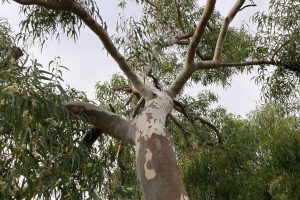
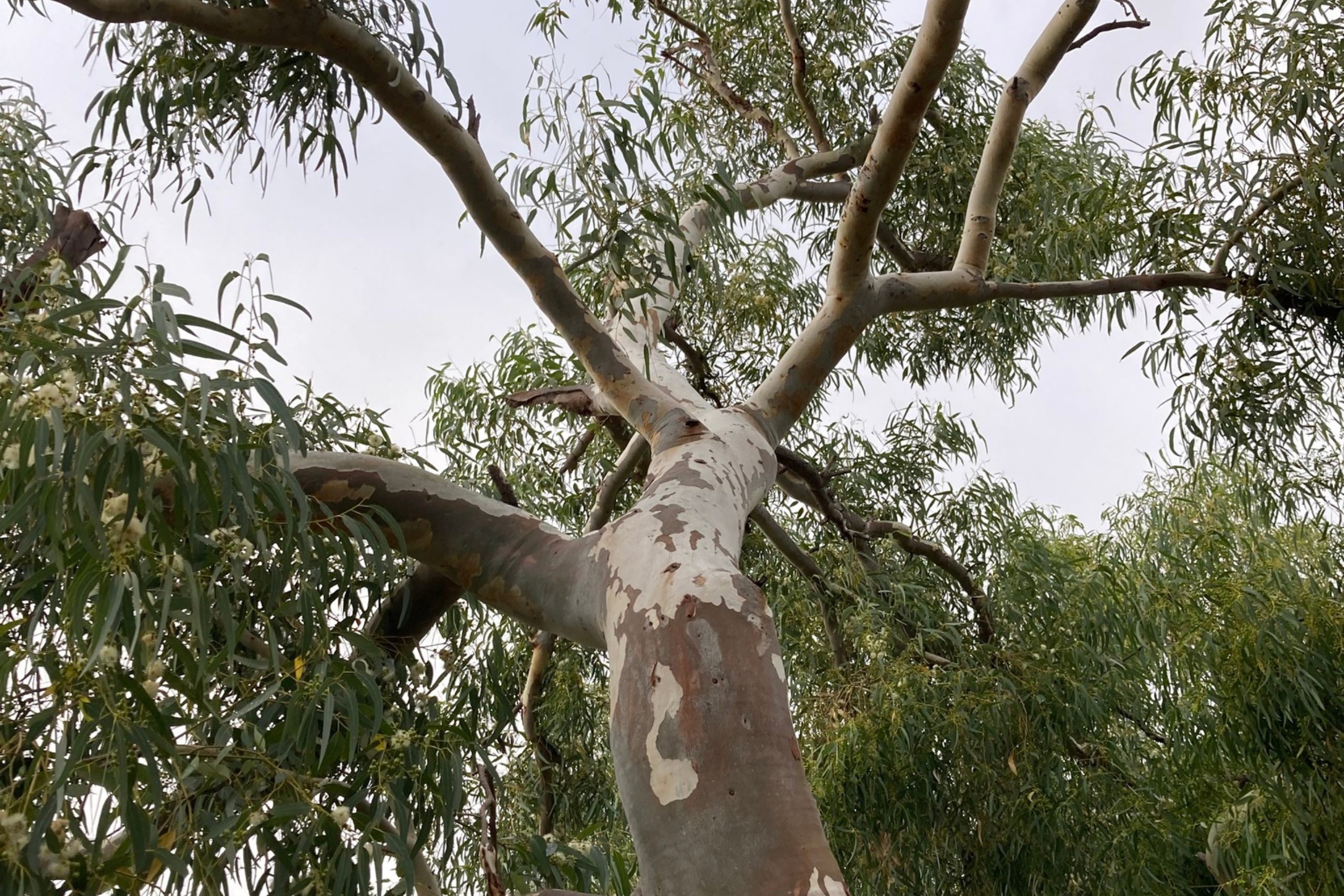
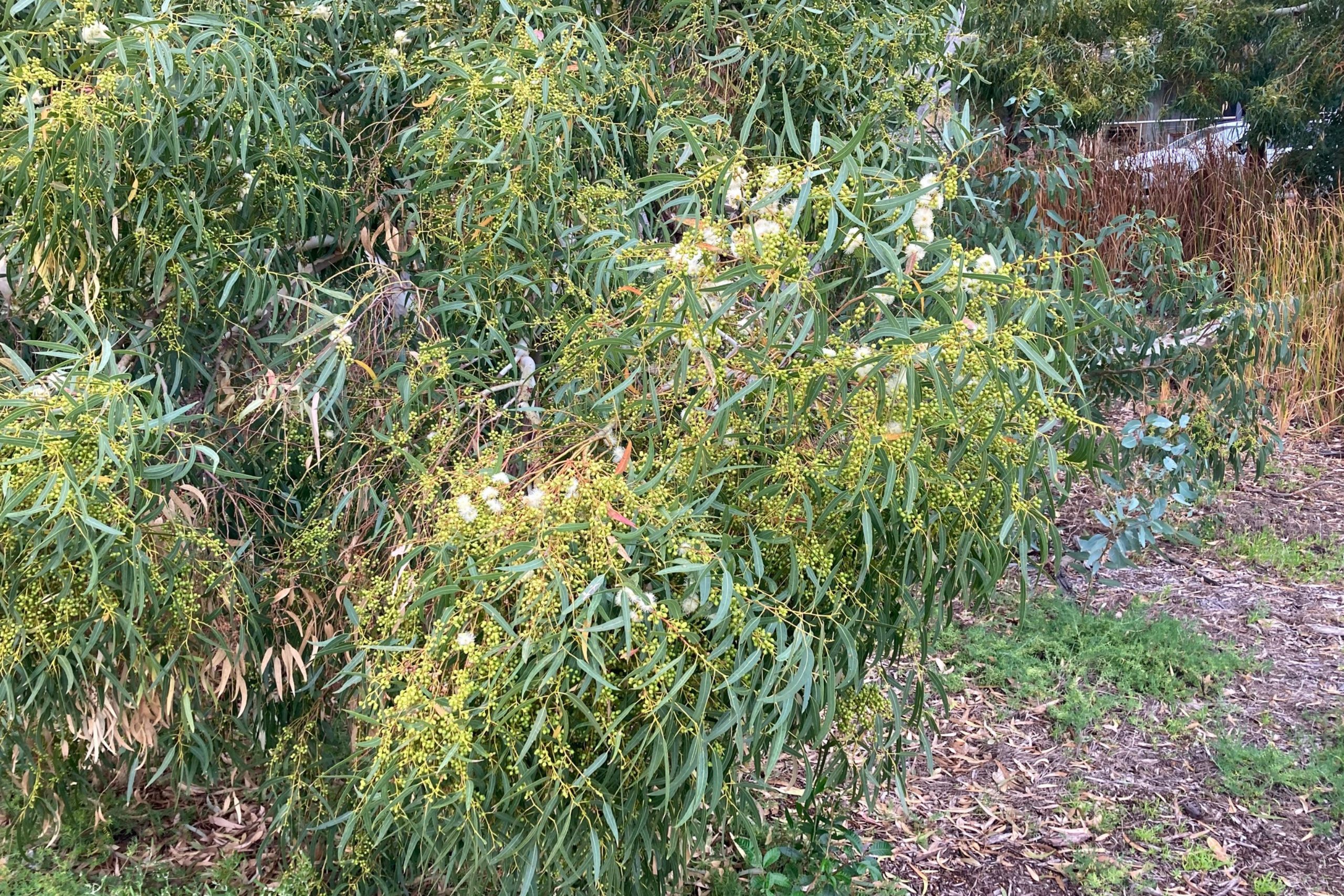
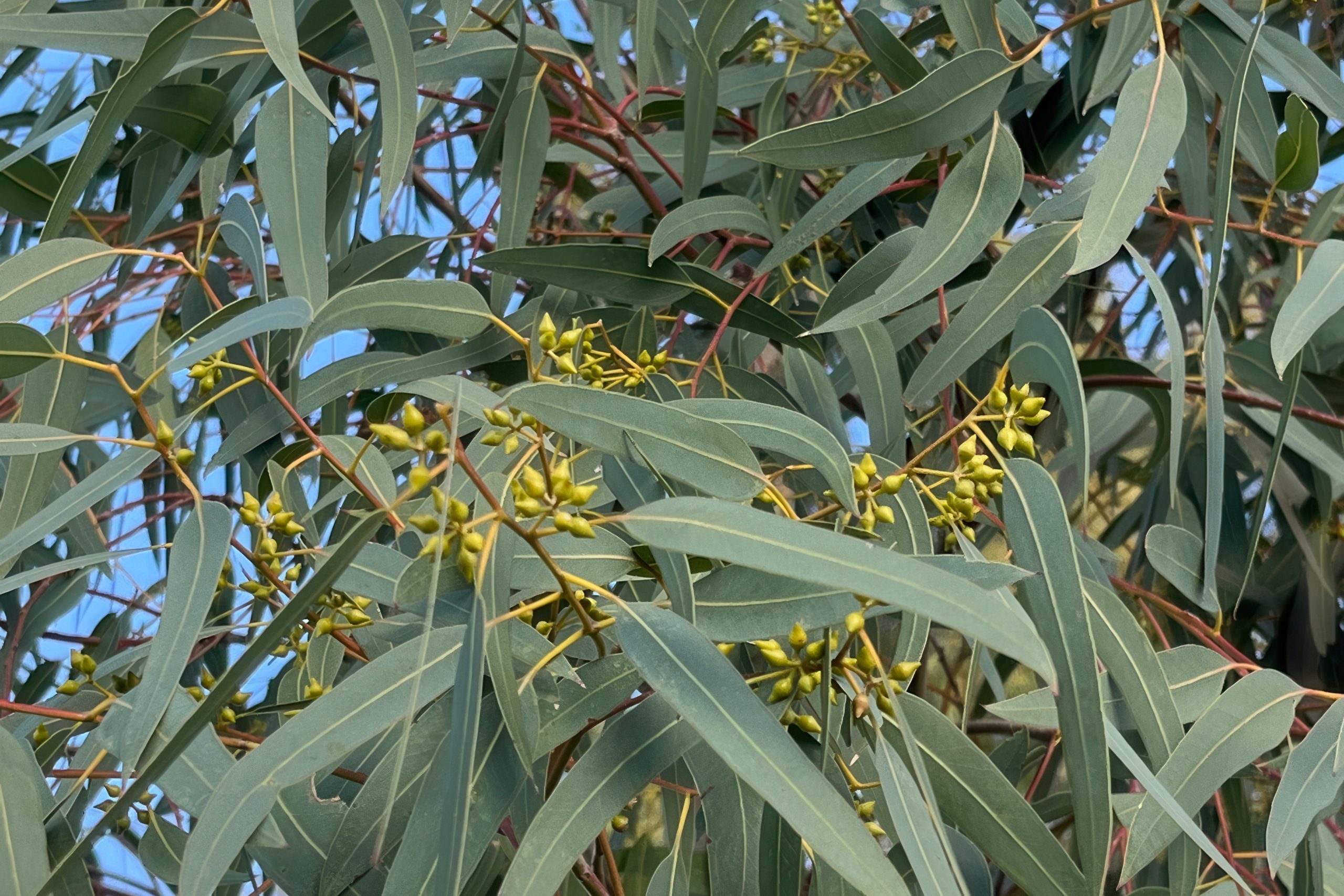
Eucalyptus camaldulensis grows into a stately tree reaching 20–45 metres, often with a smooth, mottled white-to-cream bark that sheds in long ribbons, revealing patches of yellow, pink or brown beneath. The adult leaves are narrow, lance-shaped and hang vertically to reduce water loss in the fierce Mediterranean sun. Creamy-white flowers appear in clusters, each protected by a beaked cap that pops off like a tiny lid when the stamens burst forth in a fluffy explosion. The woody fruit capsules look like miniature goblets with valves that open to release tiny seeds. In Cyprus the trees develop shallower root systems than in their Australian homeland, rarely exceeding 4–6 metres, allowing them to thrive on surface moisture without tapping deep aquifers.
Curious Tidbits
- The name “Eucalyptus” literally means “well covered” – the operculum cap gives the flower buds their distinctive look.
- In Algeria and Cyprus, eucalypts were planted to fight malaria because they dry out stagnant water so efficiently that mosquitoes lose breeding sites.
- Many species are fire champions: after a blaze they sprout vigorously from a woody swelling at the base called a lignotuber.
- The leaves contain essential oils once used in folk medicine across northern Cyprus for steam inhalations and chest rubs.
- A single mature tree can produce pollen for months, making eucalypt groves a favourite with beekeepers when other flowers are scarce.
A Closer Look
Today around 60 different eucalypt species or hybrids have been recorded in Cyprus, though only a handful are widely planted. In the Turkish Cypriot forestry programme they make up no more than 2% of new plantings, reserved for the driest, most eroded spots where few native trees survive. Recent studies show that under these groves, native shrubs such as Ziziphus lotus, wild olive and hawthorn often thrive, and birds use the tall branches as perches, spreading seeds that help restore local diversity.
Alien insects such as eucalyptus psyllids have arrived with the trees, but overall the impact on Cyprus water tables appears modest because the roots stay relatively shallow. Essential-oil research on local E. camaldulensis and E. torquata confirms high levels of the familiar medicinal compounds.
Living with Us Today
In our era of climate change and desertification concerns, eucalypts occupy an interesting middle ground. Modern projects like LIFE-ArgOassis rightly focus on native drought-tolerant species such as carob, wild olive and mastic for resilient hedgerows. Yet the existing eucalypt stands still offer practical benefits: quick shade along rural roads, windbreaks, erosion control on steep dry slopes, and year-round pollen for honey production. Some older plantations, such as parts of Athalassa Woods, show stress from prolonged drought, reminding us that even these tough Australians have limits. The trees have become part of Cyprus’s living cultural landscape, visible from village outskirts to motorway verges, quietly reminding us how human choices continue to shape the island’s green heritage.
Finding Them in the Wild
The easiest way to meet Cyprus’s eucalypts is a gentle drive across the Mesaoria Plain between Nicosia and Famagusta, or a stroll through the Athalassa Forest just southeast of the capital. Park under a grove on a warm afternoon; crush a leaf between your fingers and inhale the clean, invigorating aroma. In spring the creamy flower clusters buzz with bees, while in summer the tall trunks cast welcome pools of shade for picnics. Many roadside plantings are accessible on foot, and the trees are so distinctive that once you recognise the peeling bark and sickle-shaped leaves you will spot them everywhere – a living link to the island’s recent history. A particularly enchanting spot is Dasoudi Park near Limassol, where a dense stand of tall eucalypts creates a cool, aromatic oasis beside the sea, ideal for relaxed walks, family outings and listening to the gentle rustle of leaves mixed with the distant waves.
A Lasting Legacy
Though they arrived only a century and a half ago, the eucalypts of Cyprus have quietly become part of the island’s story of resilience and renewal. They stand as tall, aromatic witnesses to human ingenuity in the face of marsh and drought, yet they also teach us the value of balance. By planting natives alongside thoughtful use of these Australian guests, Cyprus continues to nurture a landscape that is both practical and beautiful – a green legacy worthy of wonder and careful stewardship for generations to come.