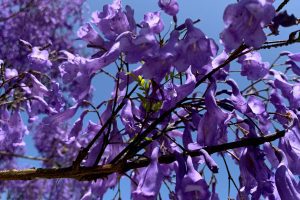
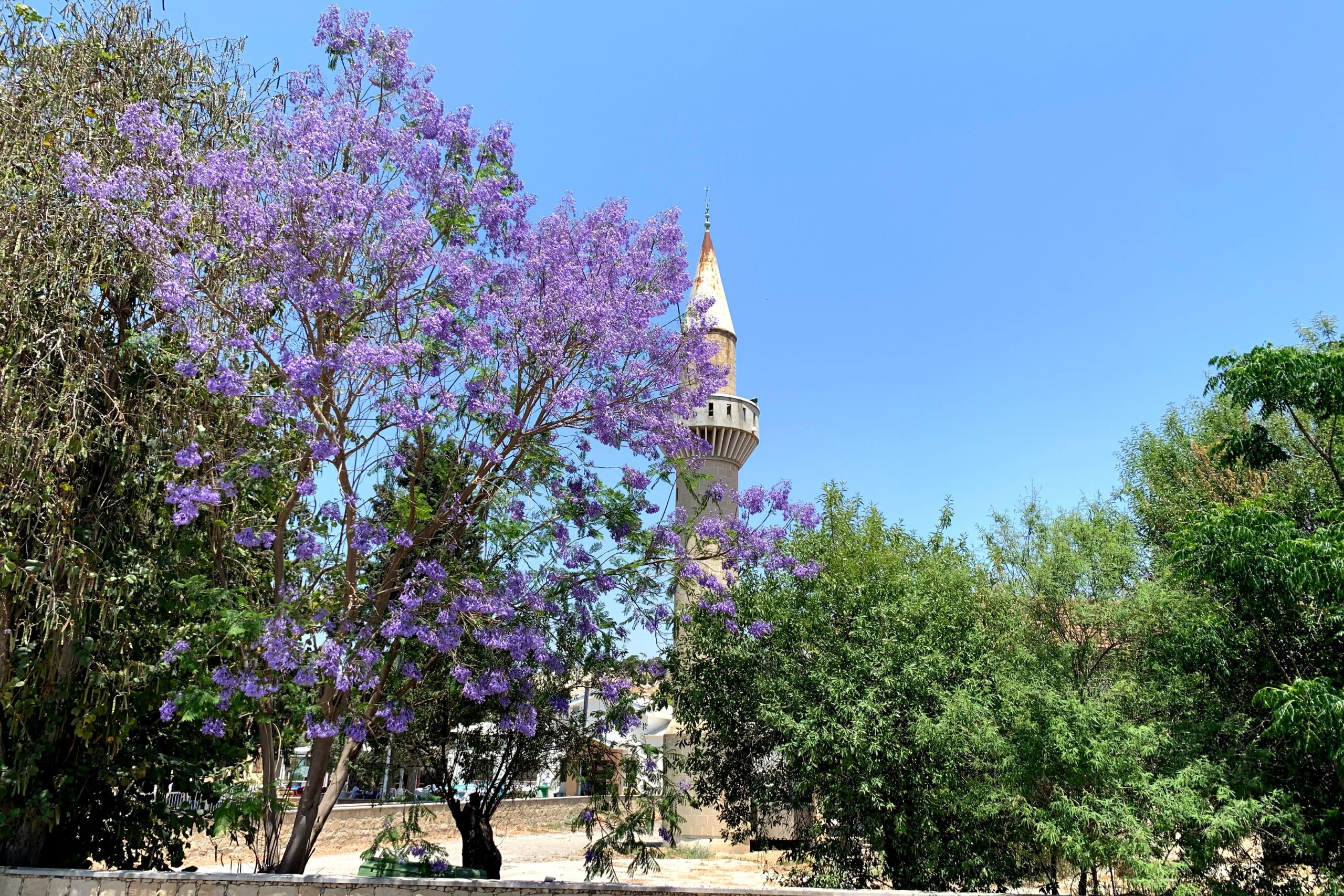
Drive through the avenues of Limassol or Nicosia in late April and you may feel you have stepped into a dream: entire streets and parks vanish beneath a shimmering canopy of lavender-blue. The source of this magic? The jacaranda – a South-American beauty whose clouds of trumpet-shaped flowers turn ordinary city corners into places of pure wonder every spring.
The Trumpet-Tree Family
Jacaranda belongs to the Bignoniaceae family the same group that gives us the African tulip tree and the catalpa. This family is famous for its showy, tubular flowers and woody pods. The genus Jacaranda contains about 49 species, nearly all native to tropical and subtropical South America. In Cyprus the star is Jacaranda mimosifolia, the blue jacaranda, sometimes still listed under the older name J. acutifolia.
Locally it is known as Τζακαράντα (Tzakaránta), a direct adoption of the scientific name. The word comes from the Tupi-Guarani languages of Brazil and means “fragrant” (or, in some translations, “hard core”, referring to its durable heartwood).
A Long Journey to the Mediterranean
Native to the foothills of the Andes in north-western Argentina, southern Bolivia and parts of Brazil and Paraguay, jacaranda first travelled to Europe in the early 19th century as an ornamental curiosity. Like many warm-climate exotics, it reached the Mediterranean via botanical gardens and private collectors. In Cyprus it became popular in the mid-to-late 20th century when towns and private gardeners began planting it for its spectacular colour and fast growth.
Unlike the colonial-era eucalypts or wattles introduced for practical purposes, the jacaranda arrived purely for beauty lining streets, shading parks and brightening villa gardens. Today it thrives in the island’s mild coastal climate and is a cherished part of modern Cypriot landscaping.
A Tree of Grace and Drama
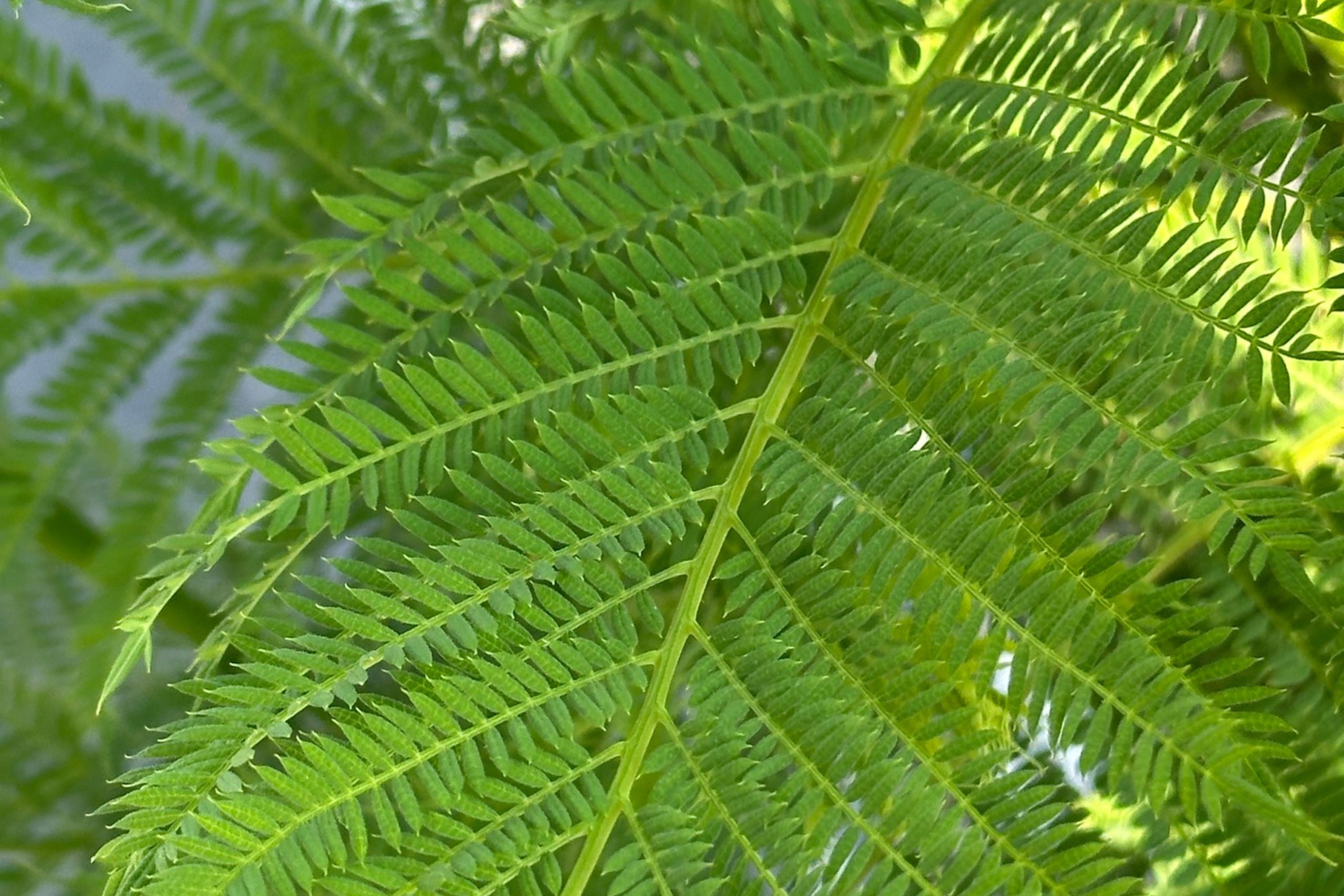
Jacaranda mimosifolia grows into a graceful, spreading tree 10–20 metres tall with a light, open crown. Its leaves are delicate and fern-like (bipinnate), fresh green in summer and turning soft yellow before they fall in winter. The real spectacle comes in spring: before the new leaves appear, or just as they emerge, the branches erupt into dense clusters of lavender-blue, trumpet-shaped flowers.
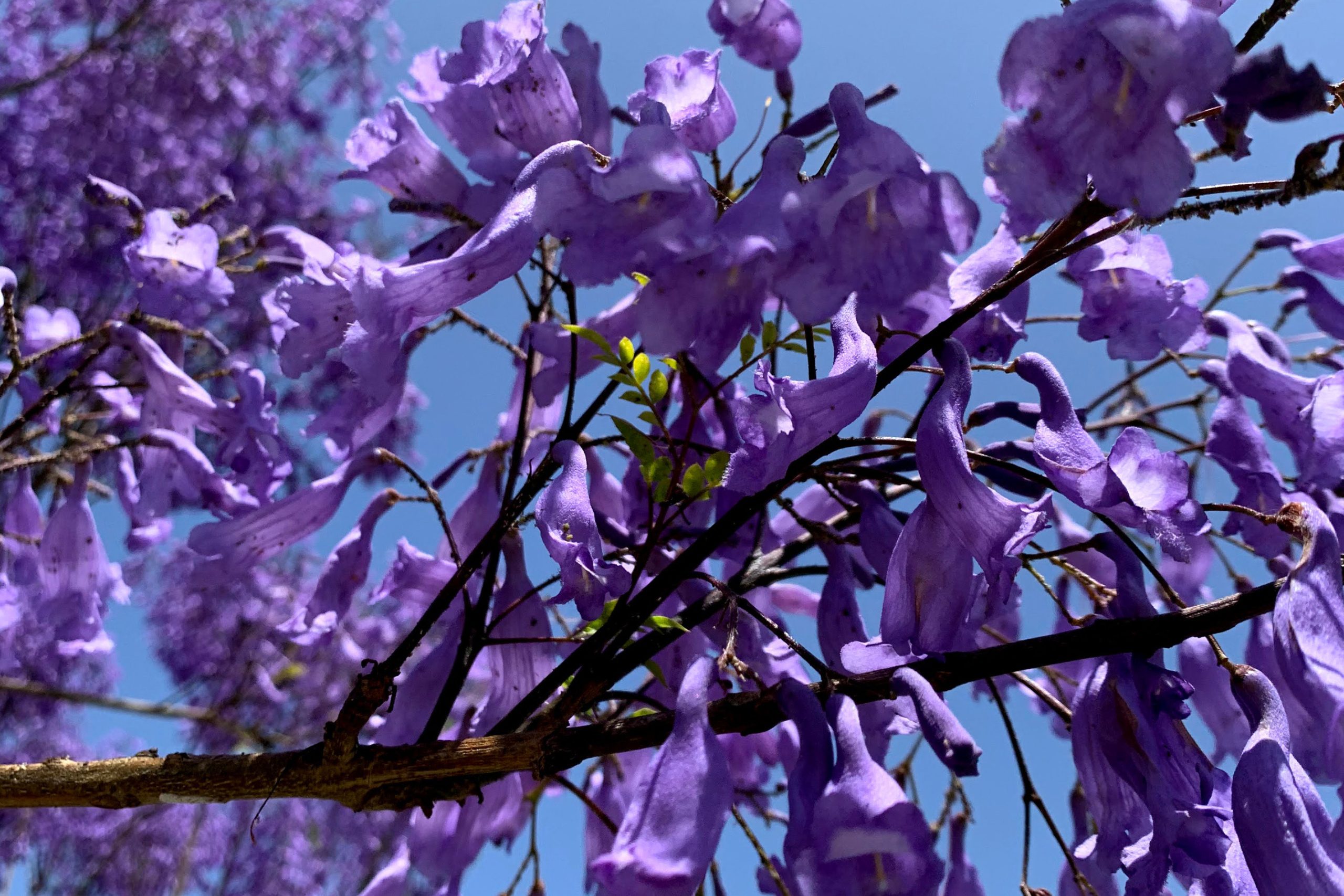
Each blossom is about 5 cm long, sweetly fragrant and irresistible to bees. Later in the year the tree produces flat, disc-like seed pods that rattle in the breeze. The bark is grey and smooth when young, becoming lightly fissured with age. In Cyprus the trees are often pruned to a single trunk for street planting, creating elegant avenues that turn purple for several glorious weeks.
Delightful Surprises
- When the flowers drop they carpet the ground in a sea of blue – many Cypriots call it “the purple rain”.
- The tree is a favourite with honeybees; jacaranda honey is light, fragrant and highly prized by local beekeepers.
- Jacarandas are surprisingly tough: they tolerate drought once established and can cope with the island’s hot, dry summers.
- The name “jacaranda” has entered popular culture worldwide – in Pretoria (South Africa) the city is nicknamed “Jacaranda City”, and Cyprus has its own joyful version every spring.
- One mature tree can produce thousands of flowers, creating a show that lasts two to three weeks and draws photographers from across the island.
A Closer Look
Jacaranda grows quickly and needs well-drained soil and full sun. It is deciduous, losing its leaves in winter, which helps it survive the Mediterranean dry season. It is not considered invasive in Cyprus and rarely spreads beyond planted areas. Like the agaves and Paulownia it is a successful introduction that stays mostly where people want it in towns, parks and gardens. It carries no IUCN threat status; in its native range it is locally vulnerable due to habitat loss, but cultivated populations worldwide are secure and thriving.
Living with Jacaranda Today
In our changing climate, jacaranda fits beautifully into Cyprus’s love of colourful, low-maintenance ornamentals. Its spring display lifts spirits after the long winter, brings tourists to photograph the purple streets, and provides light shade in summer without heavy water demands.
While different reforestation projects rightly promote native species for hedgerows and restoration, the jacaranda remains a welcome guest in urban spaces a living reminder that beauty from distant lands can enrich our everyday landscape.
Finding and Feeling Them
The easiest and most magical way to meet Cyprus jacarandas is a spring stroll or drive through Limassol’s seafront avenues, Nicosia’s parks, Larnaca’s old town streets, or the gardens around Paphos. Look for them in April and early May when the purple haze is at its peak. Park safely, walk beneath the branches and listen to the soft buzz of bees while fallen petals crunch gently underfoot.
Many roadside and park trees are easily accessible on foot, and the display is so striking that once you recognise the ferny leaves and trumpet flowers you will spot jacarandas everywhere turning ordinary journeys into colourful adventures.