Explore Cyprus with Our Interactive Map

Explore our top stories and discover ideas worth your time.

International Schools in Cyprus

International Schools in Cyprus

Cyprus hosts over 100 international schools that serve expat families, digital nomads, and local families seeking globally recognized education. These institutions offer instruction in English and follow British, American, or International Baccalaureate curricula that prepare students for universities worldwide. The island's international school sector has grown significantly over the past three decades, creating diverse options across major cities. International schools in Cyprus follow three main educational frameworks, each with distinct characteristics and outcomes. The British curriculum dominates the market and represents the most common choice among schools. Students work toward IGCSE exams around age 16, followed by A-Level qualifications at age 18 that serve as the standard for UK university entrance. This system offers structured learning with clear assessment points and strong preparation for British and Commonwealth universities. The International Baccalaureate program provides a comprehensive alternative recognized worldwide for its academic rigor and holistic approach. Four schools in Cyprus hold IB World School authorization to offer the IB Diploma: The American International School in Cyprus, Pascal English Schools in Larnaka and Lefkosia, and The English School of Kyrenia, illegally operated by the Turkish Cypriot authorities. The IB emphasizes critical thinking, cultural awareness, and personal development through programs like Creativity, Activity, Service that challenge students beyond traditional academics. Cost Breakdown and Financial Planning Annual tuition fees typically range from €5,000 to…

Read more
Waterfront Streets of Cyprus

Waterfront Streets of Cyprus

Cyprus waterfront streets stand as living examples of Mediterranean coastal architecture. These narrow lanes wind between stone homes and harbors where fishing boats bob in the water. The combination creates a picture that has defined Cypriot coastal life for centuries. The architecture reflects practical needs adapted over generations, with thick stone walls built to withstand salt air and coastal weather. Fishermen positioned their homes steps from the water, creating communities where daily life revolved around the sea. Today these streets preserve traditional building methods and materials while continuing to function as active neighborhoods. The stone structures, colorful boats, and winding pathways offer a direct connection to Cyprus's maritime heritage. Waterfront Architecture in Cyprus The relationship between Cyprus and the sea dates back thousands of years. Ancient ports like Paphos served as vital trade centers connecting the Mediterranean world. By the Bronze Age, Cypriot coastal settlements had already established sophisticated harbor systems. The Romans later expanded these facilities, recognizing the strategic importance of Cyprus as a maritime hub between Europe, Asia, and Africa. Traditional waterfront architecture developed from practical necessity. Fishermen built their homes close to harbors where they moored their boats. Stone became the material of choice, quarried from the island's abundant limestone deposits. These structures were designed to withstand salt air and coastal weather. The proximity of homes to…

Read more
Omodos Village

Omodos Village

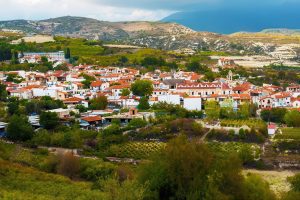
Omodos is a historic mountain village in Cyprus’s Troodos range, known for its Byzantine monastery, traditional architecture, and wine-making heritage. Located 42 kilometers northwest of Limassol at an elevation of 800 meters, the village lies within the Krasochoria district, the traditional wine-producing region of Cyprus. Its location in this wine heartland has shaped the local economy and identity for centuries. The village centers around a large cobblestone square, possibly the largest in Cyprus at 3,000 square meters, dating back to 1910. Stone houses with red-tiled roofs, wooden balconies, and flower-filled courtyards line narrow streets that wind through the settlement. The architecture reflects a careful balance between preservation and modern use, with many traditional homes now serving as guesthouses, wine cellars, and small museums. Historical Foundation According to local legend, the village formed around a miraculous discovery. Residents from the neighboring villages of Ano and Kato Koupetra, which no longer exist, observed a mysterious fire appearing in the bushes at night. When they investigated at dawn, they found no trace of fire. After this event repeated over several nights, they excavated the site and uncovered a small cave that contained a wooden cross. A chapel was built above the cave to house the sacred relic, and this structure became the foundation of the Monastery of the Cross. The monastery predates the…

Read more