Explore Cyprus with Our Interactive Map

Explore our top stories and discover ideas worth your time.

Almyras Mudstones

Almyras Mudstones

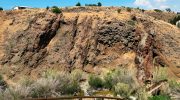
Almyras mudstone is a clay-rich badlands landscape in central Cyprus where ancient marine sediments, lifted from the Tethys Ocean, are exposed in sharply eroded hills and gullies. Its colours, microfossils, and altered volcanic ash make the area one of the island’s clearest geological records, and the same clays later supported early copper-smelting activity at Agia Varvara–Almyras. This article explains how Almyras formed, what the terrain reveals, and how people learned to use the land’s materials for industry. Quick essentials (for skimmers) Image Credit: like.philenews.com Where: Central Cyprus, mainly around Agia Varvara–Almyras, south of Nicosia  What it is: Marine mudstones and clay formations shaped into badlands  Why it matters: Records Cyprus's emergence from the sea and supports early metallurgy  Best time to visit: Autumn to spring, after rain but not during storms  What to expect: Fragile terrain, strong visual contrasts, limited formal facilities Why “Almyras” Means Brackish The word Almyras comes from the Greek term for “salty” or “brackish.” Across Cyprus, it is used for places where mineral salts influence soil and water. In geology, the name became attached to clay-rich zones where marine sediments, salts, and evaporitic minerals shaped both the land and groundwater. The most important site carrying this name is Agia Varvara–Almyras, a small hill within the Gialias River basin. While the term appears elsewhere in Cyprus, this…

Read more
Cyprus Bats

Cyprus Bats

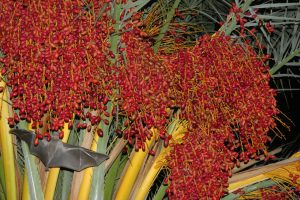
Wings in the Order of Things Bats belong to the order Chiroptera, a name that comes from the Greek words cheir (hand) and pteron (wing) literally, "hand-winged." With over 1,300 species worldwide, bats form the second largest order of mammals on Earth, surpassed only by rodents. Despite what many people assume, they are not related to mice or rats at all. Genetically speaking, bats are in fact closer to humans than they are to rodents. The order is split into two broad groups: the megabats large, fruit-eating species that navigate primarily by sight and the microbats, smaller insect-hunters that navigate through the darkness using echolocation, a biological sonar so precise it can detect a moth's wing-beat in total blackness. Cyprus is home to representatives of both groups, which makes the island's bat community particularly special in a European context. An Ancient Presence on an Ancient Island Bats have inhabited Mediterranean islands for millions of years, long before humans arrived with their vineyards and citrus groves. Cyprus itself, isolated in the eastern Mediterranean, has always attracted species crossing between Africa, the Middle East, and Europe. The Egyptian fruit bat's range stretches from the Persian Gulf through Arabia, Turkey, Cyprus, and deep into Africa, and Cyprus sits almost perfectly at the crossroads of these ancient migration routes. The island's remarkable geology riddled…

Read more

The Serpent
of the Rocks 

The Serpent
of the Rocks 

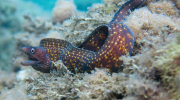
Mediterranean Moray Eel – Muraena helena  Beneath the crystal waters of Cyprus, coiled in the dark heart of a rocky crevice, a pair of amber eyes watches the world with ancient, unhurried patience. It is part fish, part serpent in appearance – and entirely its own thing. The Mediterranean moray eel has haunted these seas for millions of years, and if you know where to look, you can find it hiding in the very rocks that line the island's most beautiful coastlines.  A Fish That Does Not Look Like a Fish  The Mediterranean moray eel, known scientifically as Muraena helena and called σμέρνα (smerna) in Greek, is a large, muscular predator that lives in rocky seabeds across the eastern Atlantic and the entire Mediterranean Sea. Despite its writhing, serpentine appearance, it is very much a fish – a highly evolved one that has simply shed most of the features we normally associate with the word. No scales, no pectoral fins, no streamlined body built for open-water speed. Instead, it has developed into a specialist: an ambush hunter perfectly designed to squeeze through narrow crevices, lie motionless for hours, and strike with extraordinary speed when something edible comes within reach.  It belongs to the family Muraenidae – a group of roughly 200 species spread across the tropical and temperate seas of the world. The Mediterranean moray is the most famous and most studied member of this family in European waters, and…

Read more