Explore Cyprus with Our Interactive Map

Explore our top stories and discover ideas worth your time.

Syrtos of Cyprus

Syrtos of Cyprus

Syrtos of Cyprus (Local Variants) is a restrained, grounded dance form that emphasizes communal movement and continuity, with subtle differences from mainland Greek versions shaped by the island's unique cultural blend. Performed in circles or lines, it features slow, deliberate steps that foster group harmony and emotional expression, often accompanied by laouto and violin. This dance reflects Cyprus's historical crossroads, preserving ancient rhythms while adapting to local traditions, making it a living symbol of the island's resilient spirit. A Timeless Dance Form Syrtos in Cyprus represents a core element of the island's folk dance heritage, a form where participants link hands in a circle or line, moving with measured, flowing steps that prioritize collective rhythm over individual flair. Unlike more energetic dances, Cypriot syrtos maintains a grounded, introspective quality, with feet close to the earth and bodies swaying in unison to evoke shared emotions like joy, sorrow, or nostalgia. This restraint stems from the island's agrarian past, where dances served as communal rituals tying people to the land's cycles. Regional variants add depth: the Paphos syrtos is slower and more solemn, while the Famagusta version incorporates lighter skips, reflecting local histories and influences from Greek, Ottoman, and Venetian eras. As a dance that bridges generations, it embodies Cyprus's cultural mosaic, where movement becomes a silent language of unity. Historical Origins…

Read more
Cyprus Folk Instruments Tradition

Cyprus Folk Instruments Tradition

Cypriot folk music is not built around concerts or recordings. It is built around people standing face to face, marking time together, and using sound to guide moments that matter. At the centre of this tradition are two instruments, the viola and the laouto, whose partnership has shaped weddings, village festivals, and communal gatherings for centuries. More than musical tools, they function as social anchors, carrying memory, rhythm, and identity across generations. Understanding these instruments means understanding how music in Cyprus has always been lived, not simply performed. A Musical Language Shaped by Place Cyprus sits at a cultural crossroads, and its traditional music reflects this position clearly. The island absorbed Byzantine chant, Eastern Mediterranean modal systems, and later Western European instruments, but it never allowed one influence to erase the others. Instead, Cypriot musicians adapted what arrived to serve local needs. Music here was never designed for silent listening. It existed to accompany movement, ritual, and spoken word. That practical purpose shaped both the instruments themselves and the way they were played. Precision mattered less than presence. What counted was whether the sound could carry across a village square, guide dancers, and support voices raised in song or improvisation. The Laouto: Rhythm as Structure The laouto is the backbone of Cypriot folk music. Long-necked and steel-strung, it belongs to…

Read more
Olive Trees in Cyprus (Olea europaea)

Olive Trees in Cyprus (Olea europaea)

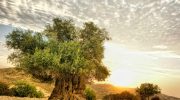
On rocky hillsides and gentle terraces across Cyprus, trees with shimmering silver-green leaves stand like wise elders, their twisted trunks telling stories of centuries under the Mediterranean sun. These are the olive trees, living treasures that have shaped the island’s landscape, diet and culture since the dawn of human settlement here. A Classic Evergreen of the Olive Family Known to science as Olea europaea, the olive belongs to the family Oleaceae within the order Lamiales. In Cyprus it thrives both as the familiar cultivated form in orchards and as the wild oleaster (Olea europaea var. sylvestris), a tougher, smaller-fruited version that grows naturally in maquis and garigue vegetation alongside carob and wild pistachio. Echoes from the Dawn of Cypriot Civilisation Olives have been part of Cyprus since at least the Bronze Age, with ancient pollen records and archaeological finds showing they were already valued for oil and fruit more than 4,000 years ago. Phoenician, Greek and Roman settlers expanded their cultivation, while the wild oleaster formed part of the original maquis shrublands described in 19th-century British forest reports. Over time, centuries of human care turned scattered wild trees into the productive groves that still cloak the island’s lower slopes today. Graceful Form and Enduring Strength The olive is an evergreen tree reaching 8–15 metres, with a short, often gnarled trunk…

Read more