Flamingoes in Cyprus
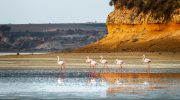
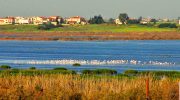
Every year, as the first autumn rains begin to fill Cyprus's ancient salt lakes, something extraordinary happens. The shallow, glittering water starts to turn pink – not from the sunset, but from thousands of long-legged, rose-coloured birds wading in perfect, unhurried formation. The Greater Flamingo has arrived. And once you have seen it, you will never quite forget it. The Family of Flame-Coloured Birds Flamingos are among the most instantly recognisable birds on Earth. They belong to the family Phoenicopteridae – an ancient and rather exclusive club with only six living species in the world, found across Africa, the Mediterranean, the Middle East, and the Americas. The name "flamingo" itself traces back to the Portuguese and Spanish word flamengo, meaning "flame-coloured," rooted in the Provençal word flama – flame. Fitting, for a bird that looks as though it has been dipped in a warm sunset. The species that visits Cyprus is the Greater Flamingo (Phoenicopterus roseus) – the most widespread and largest of all flamingo species in the world, found from the coasts of Northern Africa and the Middle East to the Mediterranean countries of Southern Europe. Its scientific genus name, Phoenicopterus, comes from Ancient Greek and means, quite simply, "crimson-feathered." An Ancient Bird with a Very Ancient History Flamingos are not newcomers to the pages of history. Greater Flamingo…
Read more