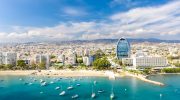
Explore Cyprus with Our Interactive Map

Explore our top stories and discover ideas worth your time.

Cyprus Slow Village Life

Cyprus Slow Village Life

Cyprus supports a unique lifestyle where professionals maintain village homes while commuting to urban jobs. Improved roads connecting mountain villages to coastal cities allow thousands to work in Nicosia, Limassol, Larnaca, or Paphos while living in traditional settlements. The B8 road links Paphos with mountain villages in just 25 to 35 minutes. The new highway from Limassol reaches Troodos foothills quickly. This pattern creates dual identities, with weekday mornings spent in offices and evenings returned to slow village rhythms. The trend reflects both economic and cultural factors, as rising urban property costs push buyers toward villages while nostalgia for traditional life draws those seeking authenticity. Villages expand with new homes while maintaining historic cores, creating hybrid communities of longtime residents and urban workers seeking refuge. Traditional Rhythms Persist in Modern Villages Village life follows patterns established over centuries. Agricultural work structures the day for those still farming, with early morning starts in vineyards, olive groves, and orchards. Older residents engage in viticulture, cheese making, and traditional crafts while younger generations commute to city jobs. Women embroider or knit in courtyards, and some still make traditional halloumi using methods unchanged for generations. The village kafeneio remains the social center, with men gathering in afternoons and evenings for coffee, backgammon, and conversation. Life centers around the church calendar, with feast days bringing…

Read more
Blue Flag Beaches of Cyprus

Blue Flag Beaches of Cyprus

Cyprus earned 66 Blue Flags in 2025, with 64 beaches and 2 marinas recognized for exceptional quality and environmental standards. The Blue Flag certification represents one of the most prestigious international awards for beaches and marinas, granted by the Foundation for Environmental Education. Cyprus consistently ranks as having the cleanest bathing waters in Europe, achieving the highest scores in the Mediterranean year after year. The European Commission's 2024 report confirmed that Cyprus ranked first in the European Union for bathing water quality in both 2022 and 2023. This recognition stems from strict compliance with 33 coastal criteria and 38 marina specific standards covering water quality, environmental management, safety, and educational activities. The number of Blue Flags decreased slightly from 78 in 2024, with 16 flags revoked due to non compliance, demonstrating that certification requires continuous effort rather than one time achievement. What the Blue Flag actually means A Blue Flag beach must meet at least 30 stringent criteria across four categories: environmental education and information, water quality, environmental management, and safety and services. Water samples must be taken every two weeks rather than the monthly minimum required by European Union directives, with results posted on information boards at each beach to ensure transparency. The beach must contain no industrial or sewage waste influence and maintain low levels of escherichia coli…

Read more
Cavo Greco Sunrise Viewpoint, Cyprus

Cavo Greco Sunrise Viewpoint, Cyprus

The Cavo Greco sunrise viewpoint sits at the southeastern edge of Cyprus, positioned at 95 meters above sea level on a small limestone mountain within Cape Greco National Forest Park. This protected area spans 385 hectares between the resort towns of Ayia Napa and Protaras. The viewpoint marks the easternmost point of both the Republic of Cyprus and the European Union, offering unobstructed panoramas of the Mediterranean Sea, Famagusta Bay, and the surrounding coastline. Visitors come here primarily for the spectacular sunrise displays that occur daily, with the sun rising directly from the sea in vibrant colors that illuminate the limestone cliffs and turquoise waters below. Historical Background The limestone cliffs and formations seen today were created through a combination of tectonic activity and the erosive forces of the sea and wind over millions of years. The karst topography has produced numerous caves and natural arches throughout the area. The cape was known as Cape Pedalion in antiquity, and according to Strabo the trapezoidal hill lying above it was sacred to Aphrodite. Archaeological evidence shows the area has been inhabited since Neolithic times, with one of the oldest settlements in Cyprus discovered here in 1992. Cape Greco was designated as a National Forest Park in 1993 to preserve its unique ecosystems and prevent further degradation. Between 1910 and 1920, the…

Read more