Explore Cyprus with Our Interactive Map

Explore our top stories and discover ideas worth your time.

Marion and Tamassos

Marion and Tamassos

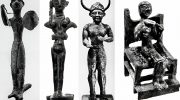
Funerary reliefs in ancient Cyprus were public status tools, not private grief markers, and Marion and Tamassos developed two distinct ways of making rank visible in stone. Marion favoured framed relief panels and inscriptions that anchored individuals within families, while Tamassos emphasised tomb architecture, guardians, and scale to project continuity and authority. This article compares how imagery, materials, and writing systems shaped remembrance in both kingdoms, and what those choices still reveal about power and belief on the island. Two Kingdoms, Two Worlds Although Marion and Tamassos existed on the same island, their landscapes shaped very different societies. Marion, located on the northwestern coast near modern Polis Chrysochous, was outward-facing. Its wealth depended on maritime trade and access to copper exported through nearby harbours. This openness brought strong Aegean influence, visible in imported pottery and artistic styles. Tamassos, by contrast, was inland. Situated close to the copper-rich foothills of the Troodos Mountains, it drew power from controlling resources rather than sea routes. Its rulers operated within Near Eastern political networks, and that reality shaped how authority and status were presented in death. These different foundations mattered. They influenced not just economics, but how memory itself was constructed in stone. Cemeteries Built to Be Seen The cemeteries of Marion were expansive and varied. Tombs stretched across eastern and western necropoleis, with…

Read more
Traditional Village Homes of Cyprus

Traditional Village Homes of Cyprus

Traditional Cyprus village homes centered on extended family units living together across multiple generations within shared compounds. These stone-built structures featured the dikhoro or double room arrangement as the main living space, surrounded by courtyards where families conducted agricultural work, food processing, and daily domestic tasks. The architecture reflected social organization where newly married couples built homes adjacent to parents' property, creating family clusters that expanded outward from original settlement cores. Children grew up surrounded by grandparents, aunts, uncles, and cousins who shared courtyard spaces and participated in collective economic activities including olive pressing, wine making, and textile production. The extended family functioned as an economic unit that pooled labor and resources while providing social security through mutual support. This traditional living arrangement persisted until the mid-20th century when urbanization, employment opportunities outside agriculture, and changing social values prompted nuclear family households to become dominant. The Dikhoro as the Heart of Domestic Life The dikhoro, meaning two areas, consisted of two parallel rooms separated by a graceful stone arch or arcade that allowed visual and physical connection while maintaining functional divisions. This arrangement provided the main living quarters where family members gathered for meals, conversation, sleeping, and household tasks. One room typically served as sleeping space for parents and young children, while the second room accommodated daytime activities including food…

Read more
Troodos Ophiolite Cyprus

Troodos Ophiolite Cyprus

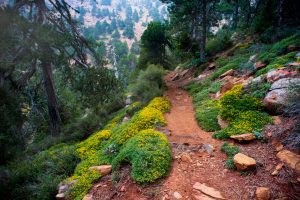
If you ever want to surprise someone in Cyprus, do not take them to a museum. Take them to Troodos. As you drive up from any direction you will first pass citrus groves, almond orchards and vineyards. Then pine appears. The air cools. The road winds higher. Somewhere above the clouds you stop, step out of the car and pick up a stone. And you are holding a piece of the Earth that once lay kilometres beneath a vanished ocean. This is not a poetic exaggeration. Troodos is one of the very few places on the planet where a complete section of oceanic crust and upper mantle stands above sea level. What scientists normally reach only with deep-sea drilling ships, submarines and expensive research programmes lies here beside hiking paths, picnic sites and village roads. Within roughly fifty kilometres you can travel from rocks that formed deep inside the mantle to rocks that erupted on the seafloor, then into sediments that later surrounded the rising island. You are not simply climbing or going down a mountain. You are walking through the internal anatomy of the Earth itself. In the 1960s geologists were still debating whether continents actually moved. The theory of plate tectonics existed but needed proof. Troodos provided it. Here, predictions matched reality: magma chambers, feeder dykes and submarine…

Read more