Explore Cyprus with Our Interactive Map

Explore our top stories and discover ideas worth your time.

Calabrian Pine in Cyprus

Calabrian Pine in Cyprus

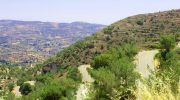
Imagine stepping onto sun-drenched slopes where tall evergreens sway in the breeze, their long needles catching golden light and filling the air with a fresh, resinous scent. This is the world of Pinus brutia, Cyprus’s most iconic pine and the backbone of the island’s woodlands. Together with its mountain cousin, it reveals a story of ancient resilience that still thrives across the Mediterranean landscape today. A Pine Built for the Island Pinus brutia, commonly known as the Calabrian pine, is a hardy evergreen conifer perfectly suited to the warm, dry conditions of the eastern Mediterranean. In the broad pine family (Pinaceae), it stands out for its fire-adapted seeds and drought tolerance. On Cyprus it reigns supreme, forming the vast majority of the island’s forests from sea level right up to the cooler heights where its relative, the black pine (Pinus nigra ssp. pallasiana), takes over. The Aleppo pine (Pinus halepensis) also appears, sometimes as a planted companion or in transitional zones. Echoes of Ancient Forests In 1881, French forester P.G. Madon climbed Mount Troodos and described a Cyprus once cloaked in “vast forests… pines of different species in dense profusion” mingling with cedar, oak and cypress down to the plains. For millennia these trees supplied timber for Phoenician mines, Ptolemaic fleets, Lusignan palaces and Venetian ships. Yet centuries of temporary…

Read more
Akrotiri Environmental Protected Area

Akrotiri Environmental Protected Area

The Akrotiri Peninsula stands at the southernmost tip of Cyprus, where wetlands, salt lakes, and coastal habitats create one of the most important wildlife sanctuaries in the Mediterranean. This protected area combines ancient traditions with modern conservation to safeguard a landscape that supports rare species found nowhere else on Earth. Akrotiri Peninsula covers 60 square kilometers within the British Sovereign Base Area, just southwest of Limassol. The area centers around the Akrotiri Salt Lake, Cyprus's largest aquatic system, surrounded by coastal dunes, Mediterranean juniper forests, saltmarshes, and reedbeds. It holds designations as a Ramsar Wetland of International Importance, a Special Protection Area for birds, and a Special Area of Conservation. Historical Background Thousands of years ago, Akrotiri existed as an island separated from Cyprus. The Kouris River carried sediment to its delta over millennia, building up land that formed a bridge connecting the western side to the mainland. Later, a second bridge formed on the eastern side from sediment deposited by the Garilis River. This double tombolo formation trapped the salt lake in the center and took at least 56,000 years to complete. A Remarkable Concentration of Wildlife The peninsula hosts over 800 plant species, representing 40 percent of all plants found on Cyprus. About 300 bird species use the area, with 70 percent of Cyprus's entire bird population passing…

Read more
Cyprus Holy Site Pilgrimages

Cyprus Holy Site Pilgrimages

Cyprus has been a destination for pilgrimage and cultural travel for more than 1,700 years. The island holds a distinctive place in Mediterranean history due to its early adoption of Christianity during the Roman period and its later development into an important center of Byzantine religious administration and art. Across the island, dozens of monasteries, churches, and heritage sites are distributed from coastal cities to mountainous regions. These locations preserve artifacts, architectural structures, icons, and long-standing traditions that reflect the development of religious life in Cyprus from late antiquity through the Byzantine and post-Byzantine periods. Visitors from different regions, including Eastern Europe and the Mediterranean, have historically traveled to these sites for cultural interest, historical study, and religious observance. Religious and cultural tourism in Cyprus brings together historical exploration and natural landscapes. Pilgrimage routes and heritage sites are located in varied environments, including ancient urban centers, rural villages, and remote mountain monasteries. Visitors encounter Byzantine frescoes, preserved manuscripts, architectural remains, and decorative art spanning several centuries. The experience provides insight into how religious institutions influenced art, education, and social life across Cyprus. Whether approached from a historical, archaeological, or cultural tourism perspective, these sites illustrate the island’s long-standing role in the development of Eastern Mediterranean heritage. Historical Background The tradition of pilgrimage to Cyprus is closely connected to developments in…

Read more