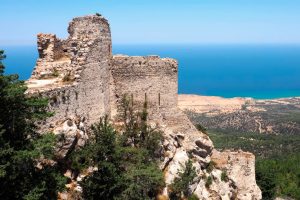
Kantara Castle is a Byzantine and medieval fortress located in the eastern Kyrenia mountain range in the Turkish-occupied part of Cyprus. The name comes from the Arabic word “qantara,” meaning bridge or arch, though some sources translate it as observation point. The castle sits at the easternmost position of three famous mountain castles in Cyprus, with Buffavento Castle to the west and St. Hilarion Castle further west.
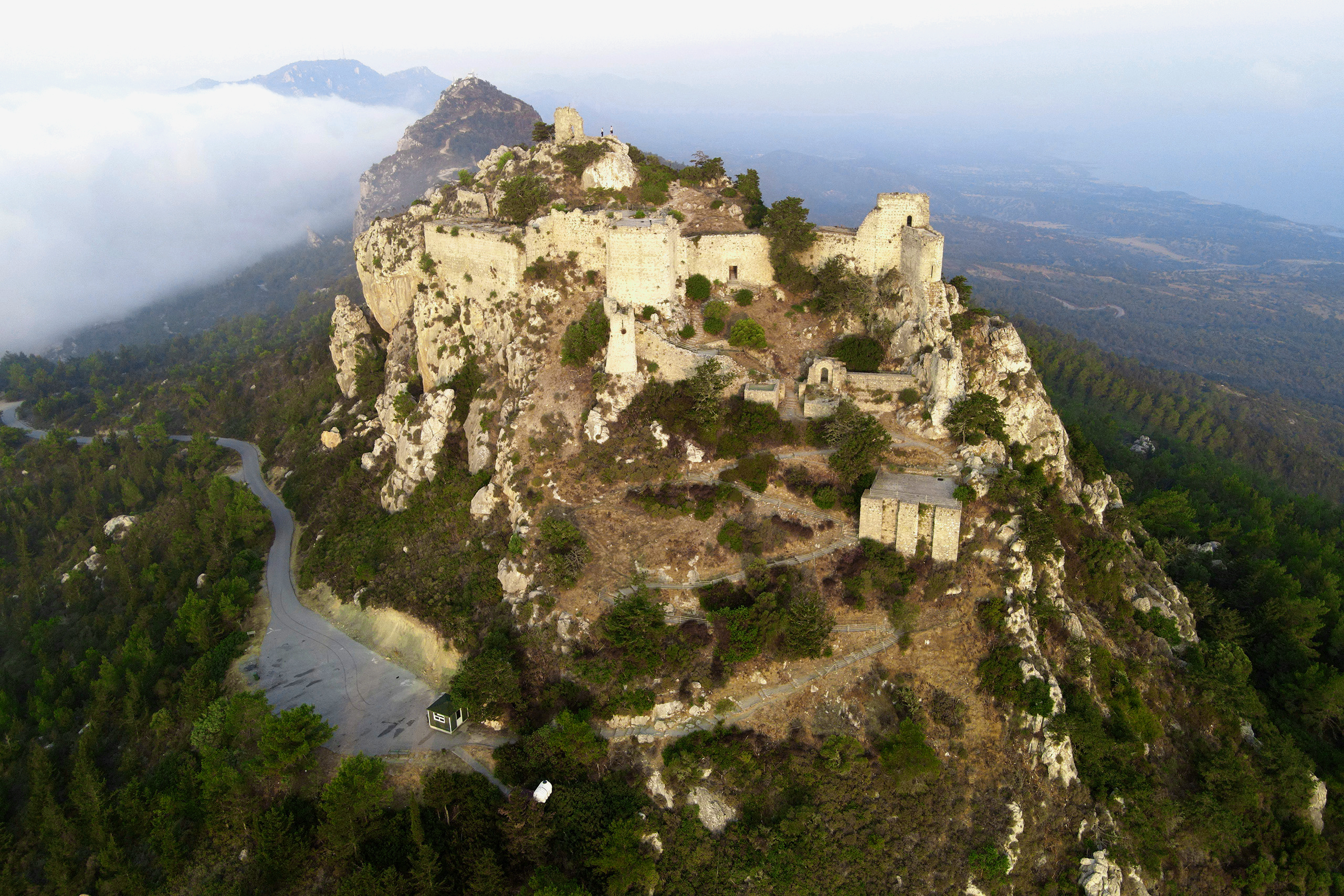
The castle occupies a strategic position with views over both the northern coast and the Mesaoria Plain. On clear days, visitors can see the Karpasia Peninsula, Famagusta Bay, and distant mainland coasts. This commanding location made Kantara essential for Cyprus’s defense for nearly 500 years.
Historical Background
The exact construction date remains unknown, but most historians place the Byzantine construction around 965 AD after Arab raiders were pushed back from Cyprus. For centuries, coastal populations had faced repeated attacks, and mountain watchtowers were needed to spot approaching ships and warn inland settlements.
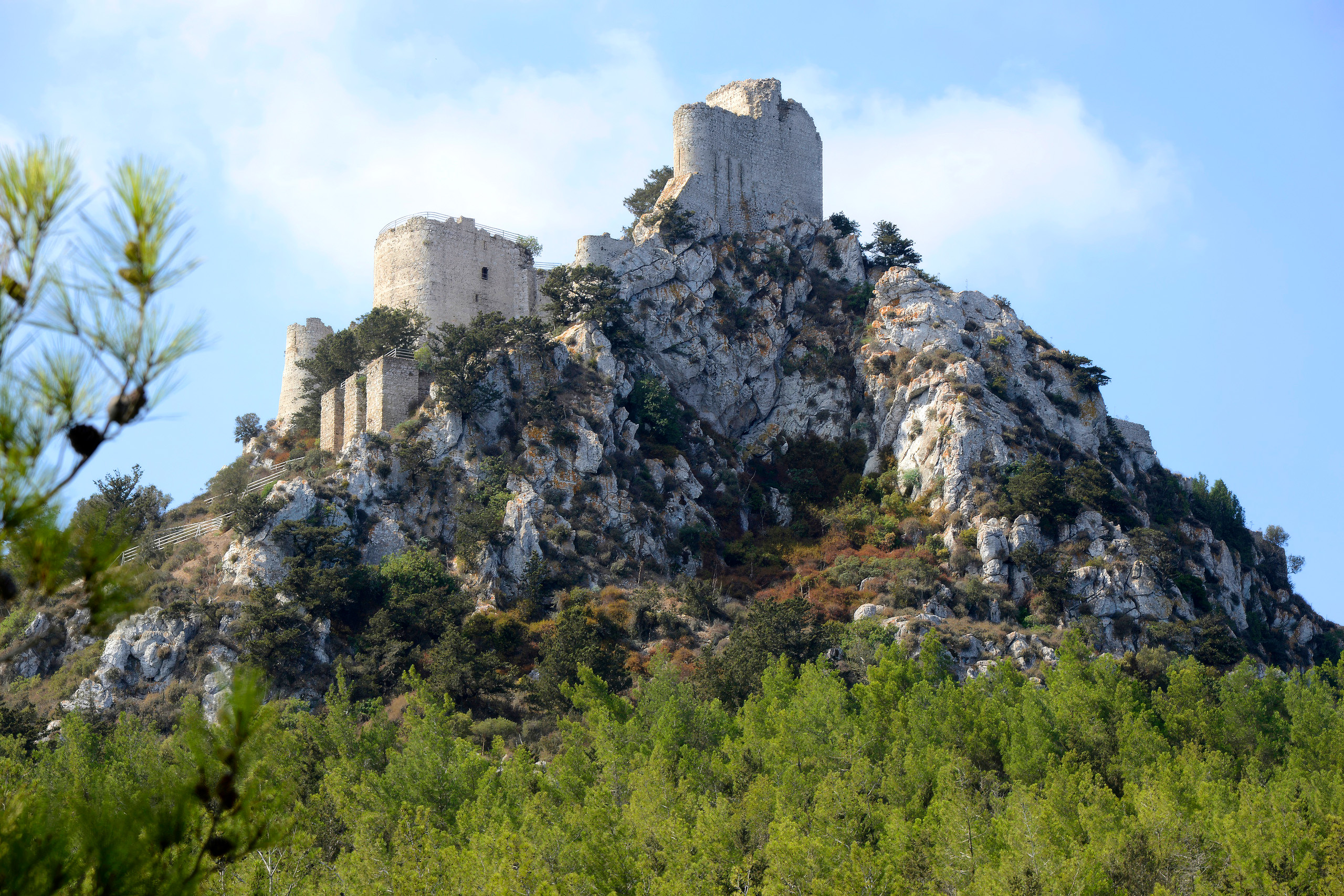
Before the fortress existed, an Orthodox monastery dedicated to St. Mary of Kantara stood on the site. Defensive walls were gradually added, turning the religious complex into a military stronghold. This mix of sacred and defensive use was common during unstable periods.
Kantara formed part of a signal network with the other Kyrenia mountain castles. Guards could see neighboring fortresses and send warning signals using fire, creating an early warning chain across northern Cyprus.
The Lusignan Era and Medieval Sieges
Under Lusignan rule, Kantara expanded from a watchtower into a major fortress. Kings James I and Peter II strengthened the defenses in the 13th and 14th centuries. New barracks, a large rainwater cistern, and a fortified entrance system with a barbican and twin towers were added.
In 1229, during a civil conflict between Frederick II and the Ibelin family, the castle was besieged and attacked with trebuchets. Several buildings were destroyed. The defenders held out for a year until their commander was killed, after which the garrison surrendered.
In 1373, when Genoese forces invaded Cyprus and captured major cities, Prince John of Antioch escaped captivity and reached Kantara. From there he organized resistance, and the castle remained outside Genoese control during that phase of conflict.
The Architecture and Defenses
Kantara was built using local granite and sandstone. Because the stone was rough, builders covered many walls with thick plaster. Higher-quality stone was used for corners, doorways, and openings.
The castle measures about 120 by 70 meters and contains around ten garrison rooms from the late 14th century. The steep terrain limited access mainly to the east through a narrow approach, which defenders fortified heavily.
The entrance sequence includes:
- An outer barbican with two square towers
- Arrow-slit galleries for defenders
- A steep, turning access path
- A main gate protected by a portcullis
A horseshoe-shaped tower north of the gate provided extra defensive coverage. Though classical in appearance, it dates to the early 13th century.
Water came entirely from rain collection. Six large cisterns stored runoff from roofs and channels. One former cistern basement was later reused as a prison and then as quarters for the garrison captain.
Venetian Decline and Abandonment
When Venice took control of Cyprus in 1489, military technology was shifting toward gunpowder and artillery. Mountain castles became less effective against cannon fire.
In 1519, engineers judged the mountain fortresses obsolete. Kantara’s garrison left in 1525. In 1560, Venetians deliberately dismantled key structures to prevent enemy reuse. After that, the site was abandoned and gradually deteriorated.
In the early 20th century, looting and stone removal caused additional damage as people searched for rumored treasures and reused building material.
The Castle Today
In 1905, French archaeologist Camille Enlart helped secure heritage status for Kantara, giving it legal protection. Today, it is maintained by local authorities in the northern part of Cyprus and is open to visitors year-round.
The northern section remains best preserved, with standing towers and wall sections. Visitors can pass through the barbican, explore towers, and walk among the garrison rooms. Southern and western parts are more ruined but still readable in layout.
Nearby mountaintops now host radar and radio installations, continuing the area’s long defensive function using modern technology.
The Views and Experience
The views from Kantara are wide and unobstructed. From the upper points, visitors can see:
- The northern coastline toward Kyrenia
- The Karpasia Peninsula stretching northeast
- The Mesaoria Plain toward Nicosia
- Famagusta Bay to the southeast
On very clear days, distant mainland mountain ranges may be visible. More often, ships can be seen moving between Cyprus and the Turkish coast.
Wind is frequently strong at the summit, especially in winter. In summer, this wind provides relief from heat but makes the exposed site feel rugged and open.
Visiting Kantara Castle
The castle lies about 20 kilometers southeast of Kyrenia in the northeastern Kyrenia range. The drive follows winding mountain roads through forested areas and small villages.
Access notes:
- Final road section is steep and narrow
- Parking is below the ruins
- Opening hours are generally sunrise to sunset
- Small entrance fee usually charged
- No facilities on site
- Bring water and sun protection
Why Kantara Matters
Kantara Castle represents a long arc of Cypriot military history, from Byzantine coastal defense to Lusignan fortification and Venetian abandonment in the gunpowder era.
It demonstrates how geography shaped defense strategy. The Kyrenia Mountains created natural lookout positions that protected northern Cyprus for centuries.
Unlike heavily reconstructed sites, Kantara remains largely unrestored. Its worn masonry, broken walls, and exposed towers preserve a direct sense of the medieval fortress landscape and provide an authentic setting for understanding Cyprus’s defensive past.