Explore Cyprus with Our Interactive Map

Explore our top stories and discover ideas worth your time.

Sweet Golden Azarole of Cypriot Maquis

Sweet Golden Azarole of Cypriot Maquis

Wander almost any rocky hillside or sunlit maquis in Cyprus during a warm spring day, and you may spot a graceful small tree loaded with clusters of snowy-white flowers that seem to glow against the green. Later in the season those flowers give way to plump, golden-orange fruits that look like miniature apples or medlars hanging like little lanterns among the leaves. This is the azarole hawthorn, a quiet treasure of the island’s wild places that has sweetened Cypriot tables and stories for thousands of years. www.inaturalist.org A Rose-Family Gem of the Mediterranean Crataegus azarolus, commonly known as the azarole, Mediterranean hawthorn or Mediterranean medlar, belongs to the vast Rosaceae family the same clan as apples, roses and cherries. In Cyprus it grows as a deciduous shrub or small tree, usually reaching 3–8 metres tall, perfectly at home in the mosaic of maquis and open woodland that covers so much of the island. Roots Deep in Ancient Soil and Texts The azarole has been part of Cyprus’s landscape since long before recorded history. When Dr F. Unger and Dr Th. Kotschy explored the island in 1862, they recorded it (often under the older name Crataegus aronia) as a common shrub whose tasty fruits were gathered and eaten by locals. Even earlier, the great ancient physician Dioscorides described a “second kind…

Read more
Community-Based Fishing Villages of Cyprus

Community-Based Fishing Villages of Cyprus

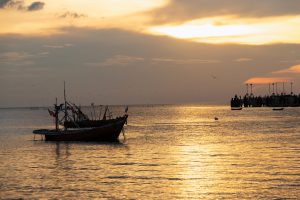
Along the Cypriot coast, fishing was never simply a job carried out at sea and forgotten once boats returned to shore. It was a shared way of life that shaped villages, relationships, and daily rhythm. In small coastal communities, fishing organised how people worked, ate, celebrated, and supported one another. Boats and nets mattered, but cooperation mattered more. Understanding Cyprus’s fishing villages means looking beyond catches and techniques to the social systems that grew around them and quietly endured. Adobe-Stock-com Villages Built Around Shared Work Community-based fishing villages developed where fishing was not an individual pursuit but a collective responsibility. Boats were small, crews were familiar, and labour depended on trust rather than contracts. Knowledge, tools, and effort were shared because survival demanded it. Cyprus’s coastline encouraged this structure. Shallow nearshore waters, sheltered bays, and predictable conditions suited small boats operated by families and neighbours. Fishing rarely rewarded isolation. Success came from working together, coordinating timing, and respecting unwritten rules shaped by experience. In these villages, fishing was not separate from life. It was life. A Way of Living Passed Down, Not Designed The roots of Cyprus’s fishing villages stretch back thousands of years. Archaeological evidence shows coastal communities relying on the sea from the Neolithic and Bronze Ages onward. Early fishers used simple vessels and local materials, learning quickly…

Read more

Lilac Clouds and Golden Berries

Lilac Clouds and Golden Berries

Imagine walking through a quiet Cypriot village in late April. The air carries a sweet, honey-like fragrance, and suddenly you notice a graceful tree covered in clouds of delicate lilac flowers. By autumn, the same tree hangs heavy with clusters of shiny yellow berries that glow like tiny lanterns against the green leaves. This is the chinaberry – a charming, fast-growing guest that has quietly become part of Cyprus’s everyday landscape. www.inaturalist.org The Bead-Tree in the Mahogany Family Chinaberry, Melia azedarach, belongs to the Meliaceae (mahogany) family – the same noble group that gives us true mahogany timber and the famous neem tree of India. The genus Melia is small, and this species is the most widely planted. Locally it is known as Μαυρομάτα (Mavromata – “dark eyes”, referring to the darker centres of the flowers) or Αγριοπασχαλιά (Agrio Paschalia – wild Easter lilac). The name perfectly captures its springtime beauty. From Asian Forests to Cypriot Gardens Native to southern Asia (from India and China to northern Australia), the chinaberry has been valued for centuries for its shade, fragrant flowers and useful seeds. It reached the Mediterranean as an ornamental in the 19th century and arrived in Cyprus probably during the British period, planted in gardens, villages and small-holdings. Today it is fully naturalised across the island but remains non-invasive…

Read more