Explore Cyprus with Our Interactive Map

Explore our top stories and discover ideas worth your time.

Fikardou Rural Museum, Cyprus, Europe

Fikardou Rural Museum, Cyprus, Europe

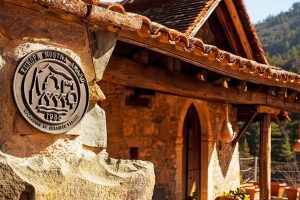
The Fikardou Rural Museum consists of two restored stone houses in the village of Fikardou, located 40 kilometers southwest of Nicosia in the Troodos Mountains. The museum preserves traditional Cypriot rural life through authentic buildings and exhibits from the 16th to 19th centuries. pixabay-com The entire village functions as a living museum, with narrow cobblestone streets and traditional stone houses that transport visitors to another era. The settlement was nearly abandoned during the 20th century when residents moved to urban areas for work and modern amenities. By the 1970s, only a handful of elderly people remained. Historical Background The village name likely derives from the Greek phrase "figa andron," which means "den of fugitives." According to tradition, two dominant clans controlled the region between 400 AD and 800 AD, and fugitives sought refuge in these remote mountains. The earliest written reference to Fikardou dates to 1825 during the Ottoman period. visitcyprus-com Historical connections exist to medieval Cyprus through the Ficardo family. The most notable member was Sir Thomas Ficardo, who served as Chancellor to King James II and Queen Catherine Cornaro in the 15th century. The village belonged to Machairas Monastery during the Byzantine Komnenos dynasty. Inhabitants focused on olive harvesting, grape cultivation, and subsistence farming. The village maintained traditional agricultural practices for centuries. The remote mountain location provided some…

Read more
Salamis Gymnasium – History & Facts

Salamis Gymnasium – History & Facts

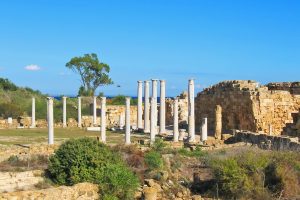
The Salamis Gymnasium stands as one of Cyprus's most remarkable ancient structures. Located just north of modern Famagusta on the eastern coast of Cyprus, this impressive complex reveals the sophisticated approach ancient civilizations took toward physical fitness and public bathing. Built over earlier Hellenistic foundations during the 2nd century AD, the gymnasium represents the pinnacle of Roman architectural achievement on the island. encyclopedia-com Salamis itself dates back to around 1100 BC. According to ancient Greek tradition, the city was founded by Teucer, son of King Telamon, after the Trojan War. Archaeologists believe the city was actually established by settlers from the nearby Bronze Age site of Enkomi following an earthquake in 1075 BC. The city benefited from Cyprus’ rich copper resources and quickly became a major trade center and the island’s capital. For nearly a thousand years, Salamis served as the main port and political center of Cyprus. Historical Background The gymnasium complex has witnessed multiple cycles of destruction and rebuilding. Archaeological evidence shows that a Hellenistic gymnasium originally stood on this site. This earlier structure was destroyed by an earthquake and rebuilt during the reign of Emperor Augustus. The building faced another catastrophe in 76 AD during the reign of Emperor Vespasian when another powerful earthquake struck the region. The gymnasium as we see it today was restored by…

Read more
Troodos Lizard

Troodos Lizard

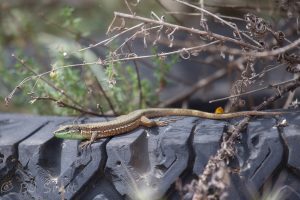
In the rugged heights of Cyprus' Troodos Mountains, a nimble creature darts across sun-warmed rocks, its scales glinting like hidden emeralds. This is the Troodos lizard, Phoenicolacerta troodica, an endemic jewel of the island's wildlife. Let’s explore this shy resident, a survivor of ancient landscapes, and discover why it captivates those who seek it out. A name Phoenicolacerta prefixes the Latin word, Phoenice, meaning "Phoenicia", the coast of the Levant, where most of the species of these lizards are found, with lacerta, "a lizard". The specific name refers to the type locality being in the Troodos Mountains of Cyprus. www.inaturalist.org A Mountain Marvel Emerges The Troodos lizard is a small reptile native only to Cyprus, thriving in the cool, forested slopes of the Troodos range. It's a member of the Lacertidae family, or true lizards, known for agile ground-dwellers, and represents one of the island's unique evolutionary tales. Imagine a lizard perfectly attuned to misty peaks and rocky crevices – that's our subject, a quiet emblem of Cyprus' isolated biodiversity. In Greek it is called Σαύρα του Τροόδους (Saura tou Troodus) which simply means The Troodos lizard. www.inaturalist.org From Ancient Seas to Island Peaks The story of the Troodos lizard begins millions of years ago, when Cyprus emerged from the Mediterranean's turbulent geological past. As the island formed through tectonic…

Read more