Explore Cyprus with Our Interactive Map

Explore our top stories and discover ideas worth your time.

The Cyprus Golden Oak (Quercus alnifolia)

The Cyprus Golden Oak (Quercus alnifolia)

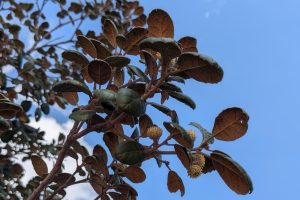
In the high, rocky landscapes of Cyprus's central mountains, one tree shines with a quiet golden glow. The Cyprus Golden Oak, an evergreen species found nowhere else on Earth, earns its name from the shimmering underside of its leaves. Walking through its groves offers a peaceful encounter with one of the island's most enduring natural wonders. Early history and naming The Cyprus Golden Oak, Quercus alnifolia, was first described in 1754 as a member of the genus Alnus (alders), hence the scientific epithet. Its local name, latzia (λατζιά), derives from Hylates — a title attributed by ancient Cypriots to the god Apollo. Hylates comes from the Greek word hyle (ὕλη), meaning forest. It’s an evergreen oak that grows only in Cyprus on basaltic and ultramafic rocks of Troodos ophiolite. Its most distinctive feature is the golden-coloured underside of its leaves, which gives the tree its common name. Notably, specimens cultivated outside their native habitat—such as those found in the Royal Botanic Gardens, Kew— fail to develop this characteristic golden coloration. Golden Oak ancestry and ecological role The Golden Oak branched off from its Turkish relatives to make a home on the volcanic rocks of the Troodos Mountains. It plays a crucial role on the mountain’s steep slopes, where its roots act as a natural anchor to stabilize the soil. Over…

Read more
Dragons, Deep Caves, and Serpent Myths

Dragons, Deep Caves, and Serpent Myths

Cyprus possesses a landscape rich with caves, springs, and natural formations that have inspired supernatural stories for thousands of years. The island's geological features, from coastal grottos to mountain springs, became the settings for tales of dragons, serpents, and mysterious creatures that guarded treasures or threatened unwary travelers. pixabay-com These legends blend ancient mythology with local folklore, creating a unique tradition of supernatural stories connected to specific natural sites. The caves and springs of Cyprus served practical purposes as water sources and shelter, but they also held deeper meaning as places where the boundary between the ordinary world and the realm of myth became thin and permeable. Historical Context Serpent and dragon myths in Cyprus trace back to multiple cultural influences. The island's position at the crossroads of civilizations meant that Greek, Phoenician, Roman, and Byzantine traditions all contributed to local folklore. Ancient Greeks associated serpents with various deities and natural forces. The Agathodaemon, a benevolent spirit depicted as a serpent, was believed to protect homes and ensure prosperity for families. This protective serpent appears in Cypriot traditions as a guardian rather than a threat. The connection between serpents and water sources has ancient origins. Many Mediterranean cultures viewed springs and wells as sacred places where supernatural beings dwelled. In Cyprus, springs emerging from limestone rocks created mysterious cave systems…

Read more
Cypriot Mouse (Mus cypriacus)

Cypriot Mouse (Mus cypriacus)

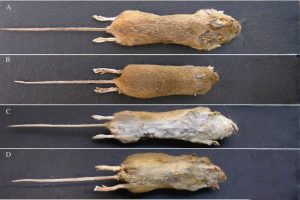
One of the rare photos of a Cyprus mouse from the original paper describing it as a new species © Cucchi, T., Orth, A., Auffray, J.-C., Renaud, S., Fabre, L., Catalan, J., Hadjisterkotis, E., Bonhomme, F., & Vigne, J.-D. (2005). FIGURE 3 in A new endemic species of the subgenus Mus (Rodentia, Mammalia) on the Island of Cyprus. In Zootaxa (Vol. 1241, pp. 1–36). Zenodo. https://doi.org/10.5281/zenodo.172876, CC0, https://commons.wikimedia.org/w/index.php?curid=168764163 Hidden among the vineyards and dry stone walls of the Troodos foothills lives a mouse that science almost overlooked entirely. Smaller than your hand, rarely seen by day, it had been sharing the island with humans for thousands of years before anyone realised it was something genuinely new to science. When they finally did, the discovery made headlines around the world. Introducing the Island's Secret Rodent The Cypriot mouse is a small mammal, no bigger than your palm, belonging to the vast family of mice known as Muridae. Think of it as a cousin to the common house mouse, but with its own unique Cypriot twist – part of the broader rodent order that includes everything from squirrels to beavers. It's a nocturnal nibbler that thrives in the island's varied landscapes, from rocky hillsides to cultivated fields, quietly going about its business without much fanfare. A Tale from Cyprus's Ancient Shores Millions…

Read more