Explore Cyprus with Our Interactive Map

Explore our top stories and discover ideas worth your time.

Piracy and Naval Conflict in Cyprus

Piracy and Naval Conflict in Cyprus

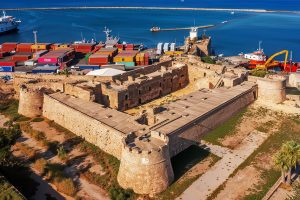
For centuries, Cyprus lived with a constant awareness of the sea. Its position at the crossroads of Europe, the Middle East, and North Africa brought trade, wealth, and cultural exchange, but it also exposed the island to piracy and naval warfare. Ships on the horizon were never neutral. They could mean commerce and connection, or sudden violence and loss. Over time, this uncertainty shaped how Cyprus was built, governed, and defended. Piracy and naval conflict were not interruptions to Cypriot history. They were defining forces. An Island That Could Not Be Ignored Cyprus sits directly along major east–west Mediterranean sea routes. Any ship moving between the Aegean, the Levant, and Egypt passed close to its shores. This made the island strategically valuable to empires and dangerously attractive to pirates. Its long coastline offered sheltered bays and natural harbours that were ideal for trade, but equally useful as hiding places for raiders. Cyprus was never isolated from maritime traffic. It was embedded within it, and that visibility made avoidance impossible. Piracy as a Constant, Not an Exception Piracy in the eastern Mediterranean did not belong to a single era. From the Bronze Age onward, coastal communities in Cyprus faced the risk of seaborne raids. Archaeological sites such as Maa-Palaeokastro show early attempts to respond, featuring Cyclopean-style walls designed to protect against…

Read more

Kition Temples – Phoenician to Hellenistic Transition

Kition Temples – Phoenician to Hellenistic Transition

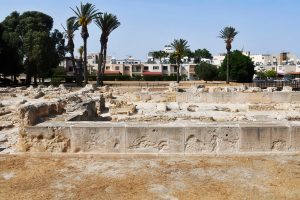
Kition, located beneath modern Larnaca on Cyprus's southeastern coast, served as a major Bronze Age settlement before the Phoenicians arrived. The site contains five successive temples dated from the late 13th to the late 11th century BC, built during the Late Bronze Age when Mycenaean Achaeans inhabited the city. arnakaregion-com These early temples were connected to copper smelting workshops, revealing an unusual integration of industrial and religious activities. The copper industry was central to Cyprus's prosperity, and scholars believe this placement suggests either worship of a deity related to copper production or a ritual significance attached to metallurgy itself. Around 1000 BC, the religious part of the city was abandoned, though life continued in other areas. This abandonment created a gap in the archaeological record until the Phoenicians revitalized the site two centuries later. Historical Background The Phoenicians arrived at Kition near the end of the 9th century BC, first as traders and later as permanent settlers. Around 850 BC, they built a large temple dedicated to Astarte on the foundations of an earlier Mycenaean temple. This temple became the most important religious building in the city and stayed in use for more than five centuries. researchgate-net The Temple of Astarte was a major architectural achievement. The rectangular building measured 35 by 22 meters, with walls made of large ashlar…

Read more
Phyti Weaving Tradition

Phyti Weaving Tradition

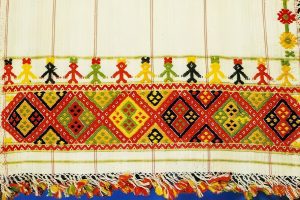
Phyti Weaving Tradition is a distinctive Cypriot craft originating from the village of Phyti, involving highly symbolic woven textiles characterized by bright colors and ritual motifs, originally created for dowries and ceremonial purposes. This handmade art form uses intricate patterns on cotton or linen fabrics to convey themes of protection, fertility, and harmony, passed down through generations of female artisans. Recognized as part of Cyprus's intangible cultural heritage, it embodies the island's blend of ancient symbolism and practical beauty, preserving a legacy of women's creativity in rural life. vkcyprus-com A Timeless Craft of Color and Symbol Phyti weaving stands as a vibrant expression of Cypriot textile heritage, where artisans produce fabrics adorned with geometric designs and bold hues that hold deep symbolic value. Centered in the village of Phyti in the Paphos District, this tradition focuses on hand-loomed cotton or linen pieces, often in red, blue, and yellow, featuring motifs like diamonds for protection or crosses for faith. These textiles were historically crafted by women for dowries - essential marriage gifts symbolizing a bride's skill and family's prosperity - or ceremonial uses like altar cloths in churches. The craft's emphasis on ritual patterns reflects a worldview where everyday items carried spiritual weight, blending utility with meaning in Cypriot rural life. cyprusbutterfly-com The process begins with "dafna," a counted thread technique…

Read more