Explore Cyprus with Our Interactive Map

Explore our top stories and discover ideas worth your time.

Wild Caper Plant

Wild Caper Plant

Imagine wandering along Cyprus' sun-baked cliffs, where a humble shrub clings to life amid rocks and sea spray, offering buds that burst with bitter and tangy flavor. This is the wild caper plant, a resilient survivor of the Mediterranean wilds, cherished for centuries in Cypriot kitchens and folklore. Join me as we explore its secrets, and discover why this thorny delight might just prick your curiosity. Konstantin-Solovev Getting to Know the Caper: Nature's Tangy Survivor The wild caper is a low-growing shrub that thrives in harsh, dry environments, producing edible flower buds and berries that add a zesty punch to meals. Known scientifically as Capparis spinosa, it's not a tree or herb but a hardy perennial, perfectly adapted to Cyprus' rugged landscapes. Think of it as nature's way of turning adversity into abundance, providing food and medicine from seemingly barren spots. What many foragers notice, though, is the constant company of ants marching across it. These insects aren’t pests – they’re part of an ancient partnership that helps the plant survive in harsh, rocky places. Ants are drawn in two main ways. First, the flowers produce plenty of accessible nectar that ants sip directly (they sneak in without pollinating, earning the label “nectar thieves”). Second – and this is where the crowds really gather – the ripe, red berries split…

Read more
Cyprus War Resistance Stories

Cyprus War Resistance Stories

Cyprus has witnessed countless conflicts throughout its 10,000 years of human habitation. The island's position at the crossroads of three continents made it a prize worth fighting for, and its people developed a long tradition of resistance against foreign rule. dzeninfra-ru From ancient sieges to modern independence struggles, Cyprus has been repeatedly conquered, defended, and fought over by armies ranging from Persian emperors to British colonial forces. These conflicts left deep marks on the landscape and shaped the national character of both Greek and Turkish Cypriots who call the island home. Historical Background Cyprus experienced its first major conflicts during the ancient period when Persian forces conquered the island's city kingdoms in the 6th century BC. The Greek population survived Persian rule and later came under Alexander the Great's control, followed by Ptolemaic Egypt and then Rome. Each conquest brought armies, resistance, and sometimes devastation. nano-banana The Arab invasions beginning in 649 AD marked one of the most unusual periods in Cypriot history. Arab forces under Muawiyah I sailed from Alexandria with a large fleet and conquered the capital Salamis-Constantia after a brief siege. During this expedition, Umm-Haram, a relative of the Prophet Muhammad, fell from her mule near Larnaca's Salt Lake and died. She was buried there, and the Hala Sultan Tekke shrine was built in her honor. Arab…

Read more
Cypriot Mouse (Mus cypriacus)

Cypriot Mouse (Mus cypriacus)

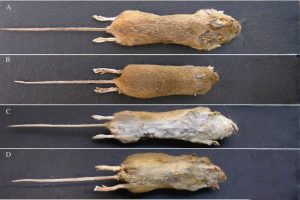
One of the rare photos of a Cyprus mouse from the original paper describing it as a new species © Cucchi, T., Orth, A., Auffray, J.-C., Renaud, S., Fabre, L., Catalan, J., Hadjisterkotis, E., Bonhomme, F., & Vigne, J.-D. (2005). FIGURE 3 in A new endemic species of the subgenus Mus (Rodentia, Mammalia) on the Island of Cyprus. In Zootaxa (Vol. 1241, pp. 1–36). Zenodo. https://doi.org/10.5281/zenodo.172876, CC0, https://commons.wikimedia.org/w/index.php?curid=168764163 Hidden among the vineyards and dry stone walls of the Troodos foothills lives a mouse that science almost overlooked entirely. Smaller than your hand, rarely seen by day, it had been sharing the island with humans for thousands of years before anyone realised it was something genuinely new to science. When they finally did, the discovery made headlines around the world. Introducing the Island's Secret Rodent The Cypriot mouse is a small mammal, no bigger than your palm, belonging to the vast family of mice known as Muridae. Think of it as a cousin to the common house mouse, but with its own unique Cypriot twist – part of the broader rodent order that includes everything from squirrels to beavers. It's a nocturnal nibbler that thrives in the island's varied landscapes, from rocky hillsides to cultivated fields, quietly going about its business without much fanfare. A Tale from Cyprus's Ancient Shores Millions…

Read more