Explore Cyprus with Our Interactive Map

Explore our top stories and discover ideas worth your time.

Sanctuary of the Great Mother (Avdimou)

Sanctuary of the Great Mother (Avdimou)

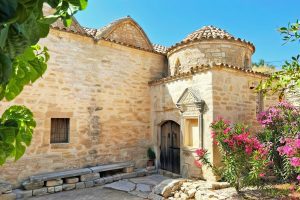
A cult site dedicated to the prehistoric fertility goddess, showing the continuity of worship from pagan fertility rites to later religious forms. facebook-com The Sanctuary of the Great Mother in Avdimou represents a timeless spiritual hub in Cyprus, where ancient veneration of a fertility goddess evolved into Christian devotion to the Virgin Mary. Located in the rural village of Prastio Avdimou near the south coast, this site embodies the island's layered religious history, blending prehistoric fertility cults with Byzantine and medieval Christian practices. It highlights Cyprus's role as a crossroads of civilizations, where pagan rites centered on life, birth, and renewal transitioned seamlessly into the worship of Panagia, the "All-Holy" mother figure, fostering a enduring tradition of pilgrimage and miracle-seeking that persists today. A Cult Site of Continuity The Sanctuary of the Great Mother, embodied in the Church of Panagia Diakinousa in Prastio Avdimou, stands as a testament to Cyprus's spiritual evolution, nestled in a serene valley amid olive groves and rolling hills. This site, spanning less than a hectare but rich in symbolic depth, draws from prehistoric roots where fertility goddesses were honored for their power over life and nature. In ancient times, Cypriots revered a "Great Goddess" depicted in cruciform statues symbolizing childbirth, with hundreds of artifacts dating to 3000-2500 BC found across the island. The Avdimou area,…

Read more
Limassol Carnival Music Dance Street Celebration

Limassol Carnival Music Dance Street Celebration

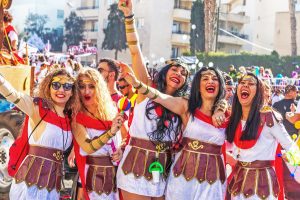
For more than a century, Limassol Carnival has transformed Cyprus’s most vibrant coastal city into a living theatre of sound, colour, and movement. For eleven days each year, folk melodies drift through narrow streets, masked dancers fill public squares, and spontaneous celebrations blur the boundaries between tradition and spectacle. The carnival is not simply entertainment. It is one of Cyprus’s most enduring expressions of community identity, cultural memory, and joyful defiance of everyday routines. limassol-org A City That Moves to Its Own Rhythm Limassol has long been known for its outward-looking character. As Cyprus’s main coastal trading hub, the city absorbed influences from Greece, Venice, the Middle East, and beyond. Carnival became the moment when these influences merged into a shared urban identity, expressed most vividly through music and dance. Unlike many European carnivals that focus primarily on visual spectacle, Limassol’s celebration is driven by sound and motion. The city becomes kinetic and audible, with mandolins echoing in alleyways, percussion groups pulsing through neighbourhoods, and folk dancers sharing streets with samba troupes. For a brief period each year, Limassol does not host the carnival. Limassol becomes the carnival. From Ancient Rituals to Urban Festivity Carnival traditions in Cyprus trace their roots to pre-Christian spring rituals associated with renewal, fertility, and the Dionysian cycle of life. Masks, role reversal, and theatrical…

Read more

Troodos Ophiolite Cyprus

Troodos Ophiolite Cyprus

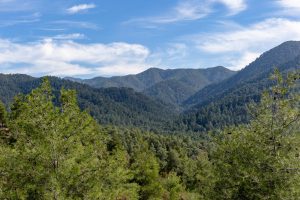
If you ever want to surprise someone in Cyprus, do not take them to a museum. Take them to Troodos. As you drive up from any direction you will first pass citrus groves, almond orchards and vineyards. Then pine appears. The air cools. The road winds higher. Somewhere above the clouds you stop, step out of the car and pick up a stone. Michal Klajban And you are holding a piece of the Earth that once lay kilometres beneath a vanished ocean. This is not a poetic exaggeration. Troodos is one of the very few places on the planet where a complete section of oceanic crust and upper mantle stands above sea level. What scientists normally reach only with deep-sea drilling ships, submarines and expensive research programmes lies here beside hiking paths, picnic sites and village roads. Within roughly fifty kilometres you can travel from rocks that formed deep inside the mantle to rocks that erupted on the seafloor, then into sediments that later surrounded the rising island. You are not simply climbing or going down a mountain. You are walking through the internal anatomy of the Earth itself. In the 1960s geologists were still debating whether continents actually moved. The theory of plate tectonics existed but needed proof. Troodos provided it. Here, predictions matched reality: magma chambers, feeder dykes…

Read more