Explore Cyprus with Our Interactive Map

Explore our top stories and discover ideas worth your time.

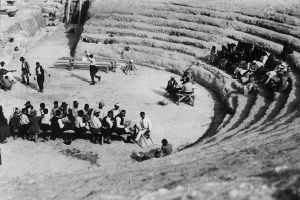
Ancient Soli, Cyprus – Hellenistic Coastal City

Ancient Soli, Cyprus – Hellenistic Coastal City

Soli was one of the ten ancient city kingdoms that ruled Cyprus from the 6th century BC until the Roman conquest. The city occupied an ideal location beside the Kambos River on Morphou Bay, with an acropolis on high ground and a lower town next to the harbor. visitncy-com Rich copper deposits lay just south of the city, good water flowed from nearby sources, and fertile soil stretched across the plains. These advantages made Soli prosperous for over a thousand years until Arab raiders destroyed it in the 7th century AD. Historical Background Several legends explain how Soli got its name. One Greek story claims the mythical Athenian hero Acamas founded the city after the Trojan War, accompanied by Phalerus. Another version tells of King Philocyprus, who ruled the nearby town of Aipeia around 580 BC. The famous Athenian lawmaker and philosopher Solon visited Cyprus during his travels and met the king. adakibrisim-com According to ancient sources, Solon noticed that Aipeia sat in a strong position on rough, elevated ground but suffered from poor access and cramped conditions. He persuaded Philocyprus to abandon the old site and move his capital down to the coastal plain, where there was more space, better water, and easier access to the harbor. Solon stayed to help plan and organize the new city. In gratitude,…

Read more
Troodos Mountains Biodiversity and Climate Core

Troodos Mountains Biodiversity and Climate Core

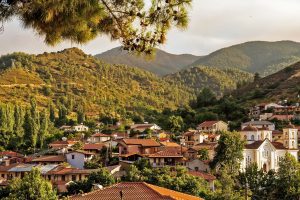
The Troodos Mountains rise from the heart of Cyprus as the island’s highest mountain system, with Mount Olympus reaching 1,952 meters above sea level. More than a scenic landscape, this mountain range forms the ecological and climatic core of the island. Its slopes regulate water supply, shape weather patterns, and support an extraordinary concentration of life found nowhere else in the Mediterranean. What makes Troodos truly exceptional is its geological origin. The mountains expose one of the most complete sections of ancient oceanic crust ever discovered on land, creating conditions that shaped a unique and fragile ecosystem over millions of years. britannica-com Historical Background The Troodos Mountains formed approximately 92 million years ago at the bottom of the ancient Tethys Ocean, nearly 8,000 meters below the sea surface. Molten rock from the Earth’s mantle rose through fractures in the ocean floor, solidifying into layers of basalt, gabbro, and peridotite. When the African and Eurasian tectonic plates collided, this section of oceanic crust was pushed upward rather than sinking back into the mantle. Geologists describe this phenomenon as an ophiolite complex, and Troodos represents the best preserved and most accessible example in the world. chooseyourcyprus-com Uplift began around 20 million years ago, with Mount Olympus at its center. Over time, erosion stripped away upper layers and exposed deeper geological formations normally…

Read more
Cyprus Ports and Maritime Trade

Cyprus Ports and Maritime Trade

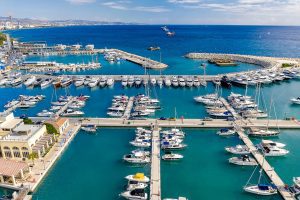
Cyprus operates as one of the Mediterranean's most important maritime hubs, with ports handling approximately 4.7 million tonnes of cargo annually and the island controlling the third largest merchant fleet in the European Union. The strategic location at the crossroads of Europe, Asia, and Africa has made Cyprus a natural transhipment center for European-Far East trade routes. Limassol serves as the main port, processing around 90 percent of the island's exports and imports with capacity for 500,000 twenty-foot equivalent units. The Cyprus ship registry ranks eleventh globally with over 2,200 ocean vessels totaling more than 25 million gross tons. Limassol city has evolved into Europe's largest third-party ship management center, with over 200 shipping companies managing approximately 20 percent of the world's third-party fleet. This concentration of maritime expertise contributes over one billion euros annually to Cyprus's economy, representing approximately seven percent of GDP. The Main Ports That Drive Cyprus Trade Limassol Port dominates Cyprus's maritime infrastructure as the busiest facility in the Mediterranean transit trade. Built after the 1974 Turkish invasion left Famagusta Port inaccessible, Limassol handles containers, iron, roll-on roll-off cargo, dry and liquid bulk, timber, and ferry passengers. Around 4,000 ships, 418,000 TEU, and 381,000 passengers pass through annually. The port can accommodate vessels up to 250 meters in length at berths with 14 meters of water…

Read more